

f you’re constantly clearing your throat, waking up congested, dealing with post-nasal drip, or feeling heavy and inflamed after eating, excess mucus may be part of what’s going on.
Mucus itself isn’t bad. In fact, it’s essential for survival. The problem starts when the body begins producing too much thick, sticky mucus that doesn’t clear properly. That’s usually a sign the body is responding to irritation or chronic inflammation.
For many people, diet plays a much bigger role in mucus production than they realize.
This article breaks down what mucus actually is, why your body makes it, which foods tend to increase mucus and inflammation, and which foods help thin, mobilize, and clear it naturally.
What Is Mucus? (and Why Your Body Produces It)
Mucus is a slippery, gel-like substance produced by specialized cells lining the respiratory tract, digestive tract, and other mucous membranes. Its job is protective
(1✓)✓ Trusted ResourcePubMed CentralHighly respected database from the National Institutes of HealthRead source.
Healthy Mucus:
- Traps dust, bacteria, viruses, and pollutants
- Protects and lubricates tissues
- Supports immune defense
- Helps move waste out of the body
You want mucus. You just don’t want excessive, thick, sticky mucus that lingers.
When Mucus Becomes a Problem
Excess mucus production usually means the body is responding to ongoing irritation or inflammation, not a one-off exposure.
This can happen when:
- The immune system is repeatedly activated
- The gut lining is irritated
- Histamine levels are elevated
- The lymphatic system is sluggish
- Tissues are chronically dehydrated
Instead of being thin and mobile, mucus becomes thick, stagnant, and difficult to clear.
Common Signs of Excess Mucus Buildup
You may be dealing with excess mucus if you experience:
- Chronic throat clearing or coughing
- Post-nasal drip
- Persistent stuffy nose without infection
- Puffy or crusty eyes in the morning
- Bad breath despite good oral hygiene
- Dull taste or smell
- Brain fog or heaviness after eating
- Feeling congested deep in the chest
These symptoms often overlap with low-grade inflammation and digestive stress.
Why Diet Has Such a Powerful Effect on Mucus
Food doesn’t directly “turn into mucus.” That’s an oversimplification.
What food does do is influence:
- Inflammatory signaling
- Immune activation
- Gut permeability
- Histamine release
- Hydration status
- Microbiome balance
When certain foods repeatedly irritate the gut or immune system, the body responds defensively. One of those defenses is increased mucus production.
This is why mucus issues often improve when inflammation comes down.
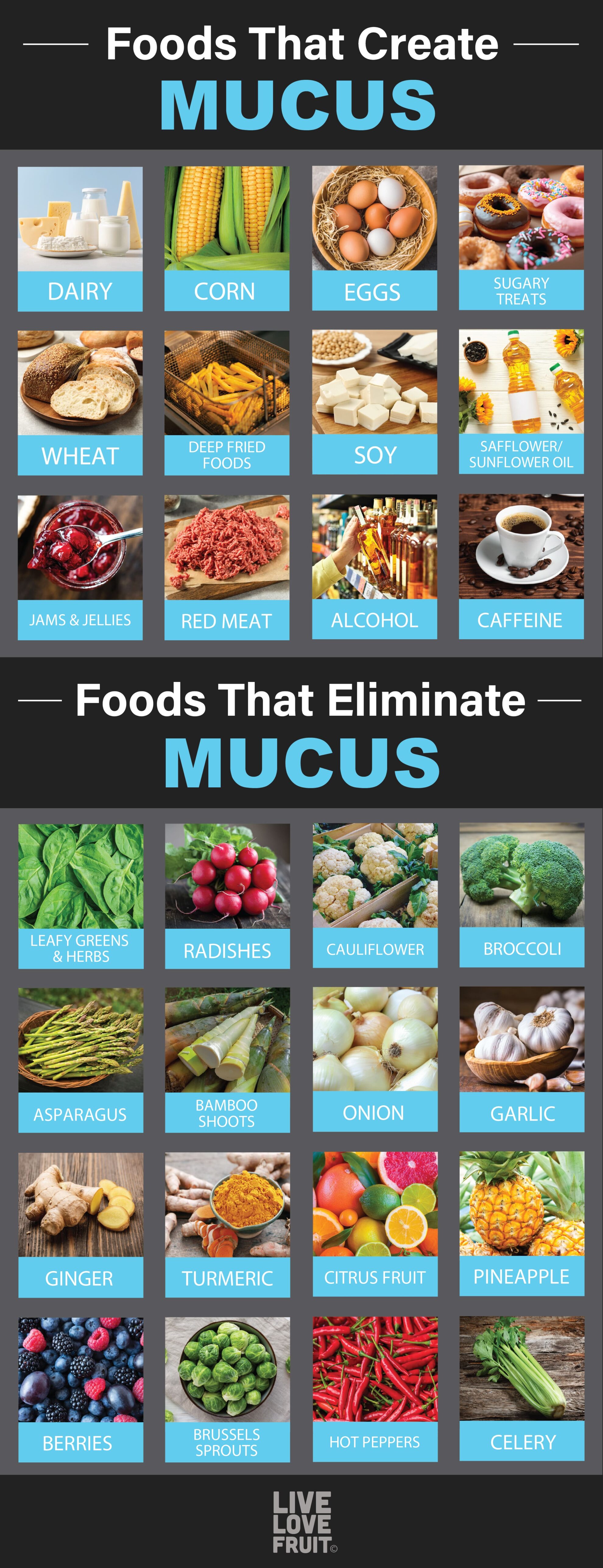
12 Foods That Commonly Increase Mucus Production
These foods don’t affect everyone the same way. The issue is frequency, quantity, and individual sensitivity.
1. Dairy (Milk, Cheese, Yogurt, Ice Cream)
Dairy is one of the most commonly reported foods associated with thicker mucus. In sensitive individuals, proteins like casein can stimulate immune activity and histamine release, leading to increased mucus production (2✓)✓ Trusted ResourcePubMed CentralHighly respected database from the National Institutes of HealthRead source. Dairy can also thicken existing mucus, making it harder to clear from the sinuses and lungs.
This doesn’t mean everyone must avoid dairy forever, but for those with chronic congestion, removing it temporarily often provides clarity.
2. Refined Wheat & Gluten-Heavy Foods
Refined wheat products such as bread, pasta, and baked goods can promote inflammation and digestive sluggishness in some people (3✓)✓ Trusted ResourcePubMed CentralHighly respected database from the National Institutes of HealthRead source. When digestion is impaired, or the gut lining is irritated, the immune system may respond defensively, and mucus production can increase as part of that response.
This effect is more pronounced in individuals with gluten sensitivity, IBS, or autoimmune tendencies.
3. Refined Sugar & Sweets
Sugar doesn’t directly create mucus, but it feeds inflammation. High sugar intake can alter immune signaling, increase oxidative stress, and change mucus consistency, making it thicker and stickier (4✓)✓ Trusted ResourcePubMed CentralHighly respected database from the National Institutes of HealthRead source. Sugar also disrupts gut bacteria balance, which can indirectly worsen mucus-related symptoms.
The more frequent the intake, the stronger the effect.
4. Fried Foods
Deep-fried foods contain oxidized fats that irritate tissues and increase inflammatory load (5✓)✓ Trusted ResourcePubMed CentralHighly respected database from the National Institutes of HealthRead source. These fats can impair digestion and burden detox pathways, making it harder for the body to clear mucus efficiently.
Fried foods also tend to displace more supportive, water-rich foods that help keep mucus thin.
5. Conventional Eggs
Eggs are a common food sensitivity, particularly egg whites. In sensitive individuals, eggs may trigger immune activation that presents as congestion, throat clearing, or sinus pressure (6✓)✓ Trusted ResourcePubMed CentralHighly respected database from the National Institutes of HealthRead source. This isn’t universal, but it’s common enough to warrant a trial removal for those dealing with chronic mucus.
Pasture-raised eggs are often better tolerated, but sensitivity is still individual.
6. Corn & Corn Derivatives
Corn is heavily processed and frequently consumed in refined forms such as corn syrup, corn starch, and corn oil. These forms can be inflammatory and are commonly hidden in packaged foods, contributing to chronic immune activation and mucus production (7✓)✓ Trusted ResourcePubMed CentralHighly respected database from the National Institutes of HealthRead source.
Whole corn may be less problematic, but frequent exposure can still be an issue for sensitive individuals.
7. Processed Soy
Highly processed soy products such as soy protein isolate, soy oil, and soy additives can irritate the gut lining and disrupt hormone and immune balance (8✓)✓ Trusted ResourcePubMed CentralHighly respected database from the National Institutes of HealthRead source. This irritation may contribute to increased mucus production, especially when soy is consumed daily in processed forms.
Fermented or whole soy tends to be better tolerated than isolates.
8. Alcohol
Alcohol dehydrates tissues, increases histamine release, and disrupts immune regulation (9✓)✓ Trusted ResourcePubMed CentralHighly respected database from the National Institutes of HealthRead source. Even small amounts can thicken mucus and worsen congestion in sensitive people. Alcohol also burdens the liver, which plays a role in managing inflammation.
This is why mucus symptoms often worsen the morning after drinking.
9. Excess Caffeine
Moderate caffeine intake isn’t necessarily harmful, but excessive consumption can contribute to dehydration. Dehydrated tissues produce thicker, more stubborn mucus that’s harder to move and clear (10✓)✓ Trusted ResourcePubMed CentralHighly respected database from the National Institutes of HealthRead source.
Caffeine may also increase stress hormones, which can indirectly influence immune and inflammatory responses.
10. Processed Red Meat
Conventional red meat often contains inflammatory fats, additives, and residues that stress digestion and immune function (11✓)✓ Trusted ResourcePubMed CentralHighly respected database from the National Institutes of HealthRead source. Frequent consumption may contribute to systemic inflammation, which can worsen mucus-related symptoms.
Grass-fed, minimally processed meat tends to be better tolerated, but moderation still matters.
11. Industrial Seed Oils
Oils such as sunflower, safflower, corn, canola, and soybean oil are high in omega-6 fatty acids. When consumed in excess, these fats can promote inflammatory signaling and impair mucus clearance (12✓)✓ Trusted ResourcePubMed CentralHighly respected database from the National Institutes of HealthRead source.
These oils are most problematic when consumed daily through packaged and restaurant foods.
12. Artificial Additives & Emulsifiers
Additives like carrageenan, polysorbates, and artificial flavorings can irritate the gut lining and alter immune signaling (13✓)✓ Trusted ResourcePubMed CentralHighly respected database from the National Institutes of HealthRead source. Over time, this irritation may increase mucus production as the body attempts to protect sensitive tissues.
These compounds are common in ultra-processed foods and beverages.
14 Foods That Help Reduce and Clear Mucus Naturally
These foods support hydration, circulation, immune balance, and mucus mobility, helping the body clear excess mucus rather than suppressing it.
1. Radishes (Daikon, Red, Horseradish)
Radishes have traditionally been used to support respiratory health. Their sharp compounds stimulate circulation and help loosen thick mucus, making it easier to expel (14✓)✓ Trusted ResourcePubMed CentralHighly respected database from the National Institutes of HealthRead source.
2. Leafy Greens
Leafy greens are rich in chlorophyll, minerals, and anti-inflammatory compounds that support detox pathways and tissue repair. They also provide hydration and fiber, both of which help prevent mucus stagnation (15✓)✓ Trusted ResourcePubMed CentralHighly respected database from the National Institutes of HealthRead source.
3. Garlic
Garlic supports immune modulation and may help reduce microbial load. Its sulfur-containing compounds help thin mucus and support the body’s natural defense systems (16✓)✓ Trusted ResourcePubMed CentralHighly respected database from the National Institutes of HealthRead source.
4. Ginger
Ginger improves circulation and helps thin mucus, making it easier to clear from the lungs and sinuses. It also supports digestion, which indirectly reduces mucus production (17✓)✓ Trusted ResourceScienceDirectThe premier platform for scientific, health and technical literatureRead source.
5. Turmeric
Turmeric helps regulate inflammatory signaling when consumed consistently. Lower inflammation often translates to less excessive mucus production (18✓)✓ Trusted ResourcePubMed CentralHighly respected database from the National Institutes of HealthRead source.
6. Pineapple
Pineapple contains bromelain, an enzyme that may help break down thick mucus and reduce sinus congestion. Fresh pineapple is more effective than canned (19✓)✓ Trusted ResourcePubMed CentralHighly respected database from the National Institutes of HealthRead source.
7. Citrus Fruits
Citrus fruits support hydration and provide vitamin C, which supports immune function and mucus clearance. Contrary to popular belief, citrus does not cause mucus in most people (20✓)✓ Trusted ResourcePubMed CentralHighly respected database from the National Institutes of HealthRead source.
8. Berries
Berries are rich in polyphenols that help calm inflammation and oxidative stress, supporting healthier mucus production (21✓)✓ Trusted ResourcePubMed CentralHighly respected database from the National Institutes of HealthRead source.
9. Celery
Celery is extremely hydrating and provides electrolytes that help keep mucus thin and mobile (22✓)✓ Trusted ResourcePubMed CentralHighly respected database from the National Institutes of HealthRead source.
10. Onions
Onions contain quercetin, a compound that may help regulate histamine release and reduce congestion (23✓)✓ Trusted ResourcePubMed CentralHighly respected database from the National Institutes of HealthRead source.
11. Broccoli & Cauliflower
These cruciferous vegetables support detoxification pathways and immune balance through sulfur-containing compounds (24✓)✓ Trusted ResourcePubMed CentralHighly respected database from the National Institutes of HealthRead source.
12. Brussels Sprouts
Brussels sprouts support gut-immune signaling and inflammation control, both of which influence mucus production (25✓)✓ Trusted ResourcePubMed CentralHighly respected database from the National Institutes of HealthRead source.
13. Hot Peppers
Capsaicin stimulates mucus movement and helps clear congestion by increasing circulation and secretion flow (26✓)✓ Trusted ResourcePubMed CentralHighly respected database from the National Institutes of HealthRead source.
14. Asparagus
Asparagus acts as a prebiotic, supporting gut health and lymphatic flow, both of which help reduce mucus buildup (27✓)✓ Trusted ResourcePubMed CentralHighly respected database from the National Institutes of HealthRead source.
One of my favorite ways to reduce mucus is with this mucus-cleansing juice recipe. One of my top recommended juices for those experiencing excess mucus build-up.
Why Cutting Mucus-Forming Foods Alone Isn’t Enough
Removing foods that commonly increase mucus can make a noticeable difference, but for many people, it’s only part of the solution.
That’s because excess mucus isn’t caused by a single food. It’s a systemic response. And if the underlying drivers remain, mucus production often persists even after dietary changes.
Here’s what else matters.
1. Hydration Quality Matters More Than Most People Realize
Most people associate hydration with the amount of water they drink, but hydration quality is just as important as quantity.
Mucus becomes thick and sticky when tissues are dehydrated or mineral-depleted. Even people who drink plenty of water can still be functionally dehydrated if electrolytes are low.
Supporting hydration means:
- Drinking fluids consistently throughout the day
- Including mineral-rich foods like celery, leafy greens, citrus, and herbs
- Avoiding excessive caffeine and alcohol, which increase fluid loss
Thin, well-hydrated mucus moves. Thick mucus stagnates.
2. The Lymphatic System Needs Movement to Clear Mucus
Unlike the circulatory system, the lymphatic system doesn’t have a pump. It relies on movement and muscle contraction to move waste and excess fluids out of tissues.
When lymph flow is sluggish, mucus clearance slows, especially in the chest, sinuses, and gut.
Gentle daily movement can make a big difference:
- Walking
- Rebounding
- Stretching
- Deep breathing
You don’t need intense workouts. Consistency is what supports drainage.
3. Mouth Breathing Can Worsen Mucus Buildup
Breathing through the mouth dries out airway tissues, which can trigger the body to produce more mucus as a protective response.
Nose breathing, on the other hand:
- Humidifies incoming air
- Filters particles
- Helps regulate nitric oxide production
If you wake up congested or with a dry mouth, mouth breathing may be contributing more than you realize.
4. Digestive Stress Can Drive Mucus Production
The gut and immune system are deeply connected. When digestion is strained, due to constant snacking, overeating, or eating while stressed, the gut lining becomes irritated.
This irritation can signal the immune system to increase protective mucus production, not just in the gut, but systemically.
Supporting digestion includes:
- Allowing time between meals
- Eating in a relaxed state
- Chewing thoroughly
- Choosing foods that are easier to digest
Better digestion often equals less mucus.
5. Histamine Load Plays a Role for Many People
Histamine isn’t just about allergies. It’s a normal immune compound involved in inflammation and mucus secretion.
For some people, a high histamine load (from food, stress, alcohol, or poor sleep) can amplify mucus production even if trigger foods are removed.
Supporting histamine balance includes:
- Reducing alcohol intake
- Prioritizing sleep
- Managing stress
- Eating fresh foods rather than leftovers
6. Environmental Irritants Still Matter
Even the cleanest diet can’t fully offset constant exposure to irritants like:
- Air pollution
- Smoke
- Harsh cleaning chemicals
- Synthetic fragrances
These irritants can inflame respiratory tissues and trigger mucus production as a defense mechanism.
Reducing exposure where possible supports long-term improvement.
If cutting mucus-forming foods doesn’t fully resolve symptoms, it doesn’t mean the approach failed. It means the body is still responding to other inputs.
Excess mucus is feedback.
When you combine dietary changes with hydration, movement, proper breathing, digestive support, and environmental awareness, the body is far more likely to recalibrate on its own.
How Long It Takes to Notice Improvement
Most people notice changes fairly quickly when they remove major triggers.
- 3–5 days: mucus feels thinner
- 1–2 weeks: less congestion and throat clearing
- 3–4 weeks: noticeable reduction in chronic symptoms
Consistency matters more than perfection.
The Bottom Line
Excess mucus isn’t your body failing. It’s communicating.
When you remove inflammatory triggers and support clearance with the right foods, the body often recalibrates on its own. No extreme cleanses. No fear-based rules. Just consistent, supportive choices.





Very helpful . I'm a ova-vegetarian I stay away from dairy I had ten pounds to lose I went on low carb meat/egg/cheese diet I dropped the weight fast, but the issue was mucus I was up all night coughing up mucus. I even got a sinus headache . I stopped the diet and went back to my vege diet with lot's of chili peppers and I was fine no more mucus. I think it is amazing how many people were sold sinus surgeries which I think can be very risky , when they could just do some of the simple things you've stated here see if they don't get well. Coconut milk is the richest of the milks I think so that is wonderful to have hot spicy chai drink
Yes, totally! Thanks for the comment 🙂
That's funny. I've had the opposite experience. I've been on a low carb diet for several months now, but before going low-carb I always suffered from allergies and was congested most of the time. I even went to an allergist who said I was just allergic to everything, and I just accepted that was my lot in life. But since being on the low carb diet, I've had no allergies, no congestion. However, I was travelling and was hungry, my options were limited, so I caved and had a burger and fries, big mistake! I've been congested since I ate it yesterday and phlegmy. I went online looking to see if anyone else experienced this and came across this post.
Thanks for this very useful information.
Please continue this good work with a post on causes and cures of itching all over the body indicating role of garlic consumption daily.
Hi, Carly
I like beans and I had pinto beans and black beans , can you tell me if that’s why I have the gas? Also I eat papaya, mango and pineapples with flaxseed ground for breakfast is that gas forming also?
Beans are always gas forming unless you soak and sprout them yourself, and then cook them. Papaya, mango and pineapple with flax would not cause gas.
Carly, I do appreciate your article and the answers you have given. I have been battling mucus for maybe two years and now my breathing has become quite laboured. I will be following your advice to eliminate wheat and the little dairy I still use, go green and see how it pans out. Thanks for the help.
Let me know how it goes!
Hi Carly, the past couple of weeks I've been dealing with acute bronchitis. And Alot of mucus in lungs. I will admit I've eaten subway and fried chicken and mushrooms this week. I even made cabbage soup. Didn't realize that was hurting me. I drink green tea alot, like Lipton and others. Does it have to be organic tea. What's a good brand that you can recommend. I have a hard time coughing up phlegm and swallow it 80% of Time. It gives me stomach spasm and anxiety. So it's a struggle.
Hey Lynn – Yogi and Traditional Medicinals are two great tea companies. I'd stay away from conventional brands like Lipton, Red Rose, etc. Fried foods and everything else you mention is probably not helping your mucus issues. Stick with the suggestions in this article and see if your conditions improve.
Hi Carly, great article thanks for sharing.
Quick questions, what is your take on the book Prof. Arnold Ehret's mucusless-diet healing system?
I love my coffee but every morning I wake up and immediately start to get a running nose and need to blow as my digestive system starts to wake up is this normal?
Also I love my morning jolt of caffeine is there a good substitute for that instead of coffee? Would Matcha or Yerba Mate tea be a good substitute?
I could go on an on but I am convinced that a plant-based diet is the way to go as it can have a HUGE impact on overall well-being. I remember my tinnitus went away after a few weeks when I started juicing and focused heavy on leafy greens etc. It was like someone turned a switch off but it's back again and I know these long hard cold Canadian winters drive me to eat the wrong foods 🙁
Thanks again
Hey Bruno – I have never read that book, but based off an ingredient list online of what he recommends, it looks great to me! If you're looking for a good coffee substitute, definitely go ahead and try getting some maca powder. That stuff will give you a serious buzz! Hope you can do your best to stay plant-based! 🙂