
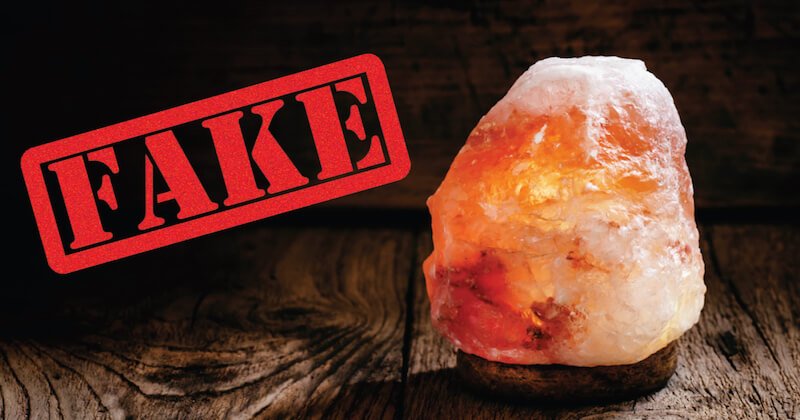
If you’ve been thinking about buying a Himalayan salt lamp, or you already have one sitting on your nightstand, there’s something you need to be aware of:
A surprising number of them aren’t real.
With the surge in popularity of salt lamps over the past decade, the market has quietly filled with cheap imitations. Many of these look convincing at first glance, but they’re often made from dyed materials, low-grade salt, or even synthetic substitutes.
And here’s the part most people don’t realize until it’s too late:
If your salt lamp is fake, you’re not just wasting your money; you’re also not getting any of the qualities people are actually buying them for.
Let’s break down what’s real, what’s not, and how to tell the difference.
Do Himalayan Salt Lamps Actually Work?
Before we even get into spotting fakes, we need to address something important.
Himalayan salt lamps are often associated with a range of benefits, including air purification, improved mood, better sleep, and reduced exposure to electromagnetic fields.
But here’s the honest, grounded truth: Some of these claims are widely believed, but not strongly backed by scientific evidence.
That said, that doesn’t mean they’re useless.
Many people report that salt lamps:
- Create a calming, warm ambient light
- Help make a space feel more relaxing
- Contribute to a more intentional, low-toxin environment
There’s also a theory that salt lamps may attract moisture from the air (due to salt’s hygroscopic nature), which could bind small particles. While the effect may be minimal, it still exists.
So instead of thinking of a salt lamp as a medical device, it’s more accurate to see it as:
- A wellness aesthetic piece
- A mood-enhancing light source
- A natural décor item with potential functional benefits
And that makes it even more important that you’re actually buying a real one.
Why Fake Himalayan Salt Lamps Are So Common
Himalayan salt lamps became trendy fast. Wellness influencers, home décor brands, and even big-box stores started selling them.
Demand exploded.
And whenever demand explodes, low-quality manufacturers follow.
Fake salt lamps are appealing to sellers because:
- They’re cheaper to produce
- They don’t require sourcing from Pakistan
- They’re more durable (less breakage = fewer returns)
- Most buyers don’t know how to tell the difference
Some are made from low-grade salt deposits. Others are dyed to mimic the pink/orange glow. And in some cases, they’re not even salt at all.
Which brings us to the part you actually came here for.
7 Sure Signs Your Himalayan Salt Lamp Is a Fake
1. The Return Policy Is Suspiciously Strict
Real Himalayan salt lamps are fragile. They can chip, crack, or break, especially during shipping.
Reputable sellers know this, which is why they usually offer:
- Reasonable return policies
- Exchanges for damaged items
- Clear customer support
If you see a company with a strict “no returns” policy, it should raise a flag.
It doesn’t guarantee the lamp is fake, but it often suggests the seller doesn’t want to deal with complaints.
2. It Feels Too Durable
This is one of the easiest tells.
Authentic salt lamps are surprisingly delicate. If you’ve ever accidentally knocked one, you’ll know they can chip or crumble.
If your lamp:
- Feels unusually solid
- Doesn’t scratch or chip easily
- Handles impact without damage
…it’s worth questioning what it’s actually made of.
Real salt behaves like salt, not like plastic or stone resin.
3. The Light Is Too Bright
A genuine Himalayan salt lamp gives off a soft, warm, ambient glow. It’s not meant to light up a room.
If your lamp:
- Is very bright
- Lights up your entire space
- Looks more like a standard lamp than a glow
…it’s likely not made from authentic Himalayan salt.
The natural mineral density of real salt diffuses light, creating that muted, cozy effect people love.
4. It Never “Sweats” (Even in Humid Conditions)
Salt is naturally hygroscopic, meaning it attracts moisture from the air.
Because of this, real salt lamps can sometimes:
- Feel damp
- Develop moisture on the surface
- “Sweat” in humid environments
Now, this doesn’t happen constantly, and not all climates will trigger it.
But if you live somewhere even moderately humid and your lamp has never shown any signs of moisture, it could be a red flag.
5. The Color Looks Too Perfect
Real Himalayan salt lamps vary in color.
You’ll typically see:
- Uneven shades of pink, orange, or amber
- Natural imperfections
- Slight variations throughout the crystal
If your lamp looks:
- Uniform in color
- Artificially bright orange or pink
- Too “perfect” or polished
…it may be dyed or manufactured.
Nature rarely produces perfection, and that’s actually a good thing here.
6. It’s White, But Suspiciously Cheap
White Himalayan salt lamps do exist.
They’re rarer, and because of that, they’re typically more expensive than the pink/orange varieties.
So if you find a white salt lamp priced the same (or cheaper) than standard ones, that’s a major red flag.
There’s a good chance it’s not authentic Himalayan salt.
7. There’s No Mention of Pakistan
Authentic Himalayan salt comes from the Khewra Salt Mine in Pakistan.
This is one of the most important details, and one of the easiest to verify.
Reputable products will usually mention:
- Pakistan is the country of origin
- Khewra or Himalayan region sourcing
If there’s no mention of origin at all, or it’s vague, that’s something to pay attention to.
Real vs Fake Himalayan Salt Lamps: What’s the Difference?
Here’s a quick way to visualize it:
Real Himalayan Salt Lamp:
- Soft, warm glow
- Slightly uneven color
- Fragile and prone to chipping
- May absorb moisture in humid conditions
- Sourced from Pakistan
Fake Salt Lamp:
- Bright or harsh light
- Uniform or artificial color
- Durable and impact-resistant
- No moisture interaction
- No clear origin listed
Common Myths About Himalayan Salt Lamps
This is where things get a bit murky online.
Myth #1: They Purify the Air Like an Air Filter
This is one of the biggest claims, and also one of the most exaggerated.
While salt can attract moisture, the idea that a small lamp can significantly purify the air in a room isn’t strongly supported.
Myth #2: They Eliminate EMFs
You’ll often see claims that salt lamps neutralize electromagnetic fields from electronics.
There’s no solid scientific evidence supporting this.
Myth #3: Bigger Automatically Means Better
Size does matter, but only relative to the room.
A massive lamp in a tiny room isn’t necessarily more effective, and a small lamp in a large room won’t do much.
Where To Buy Legitimate Himalayan Salt Lamps
You can find salt lamps anywhere – I bought some from a local rock shop where I live, but you do need to be careful about sourcing.
Ifyou’re looking to purchase a Fair Trade salt lamp, this company sells them.
If you’re looking for a genuine salt lamp, these are some good options:
The BODY Source Genuine Himalayan Salt Lamp
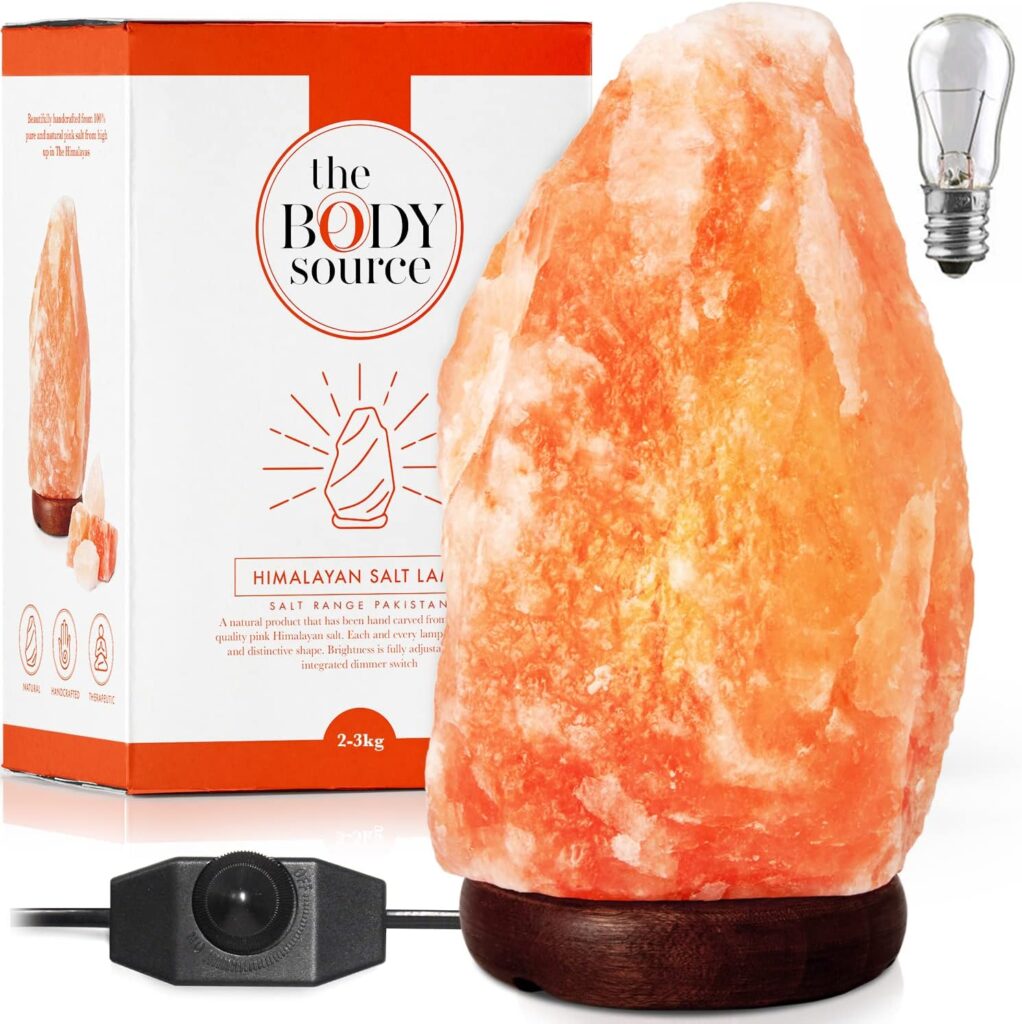
The Body Source rock salt lamp is expertly hand-carved from authentic Himalayan salt blocks found and sourced only from Pakistan. Every lamp has a unique and distinctive shape. The small is approximately 8-10″ tall and 7-11 Ib in weight; the medium 6-8″ tall and 4-7 Ib in weight; the large 10-12″ tall and 11-15 Ib in weight. Fully adjustable brightness.
Price at time of publish: $30 small; $35 medium; $45 large
D’aplomb Rectangle Himalayan Salt Lamp
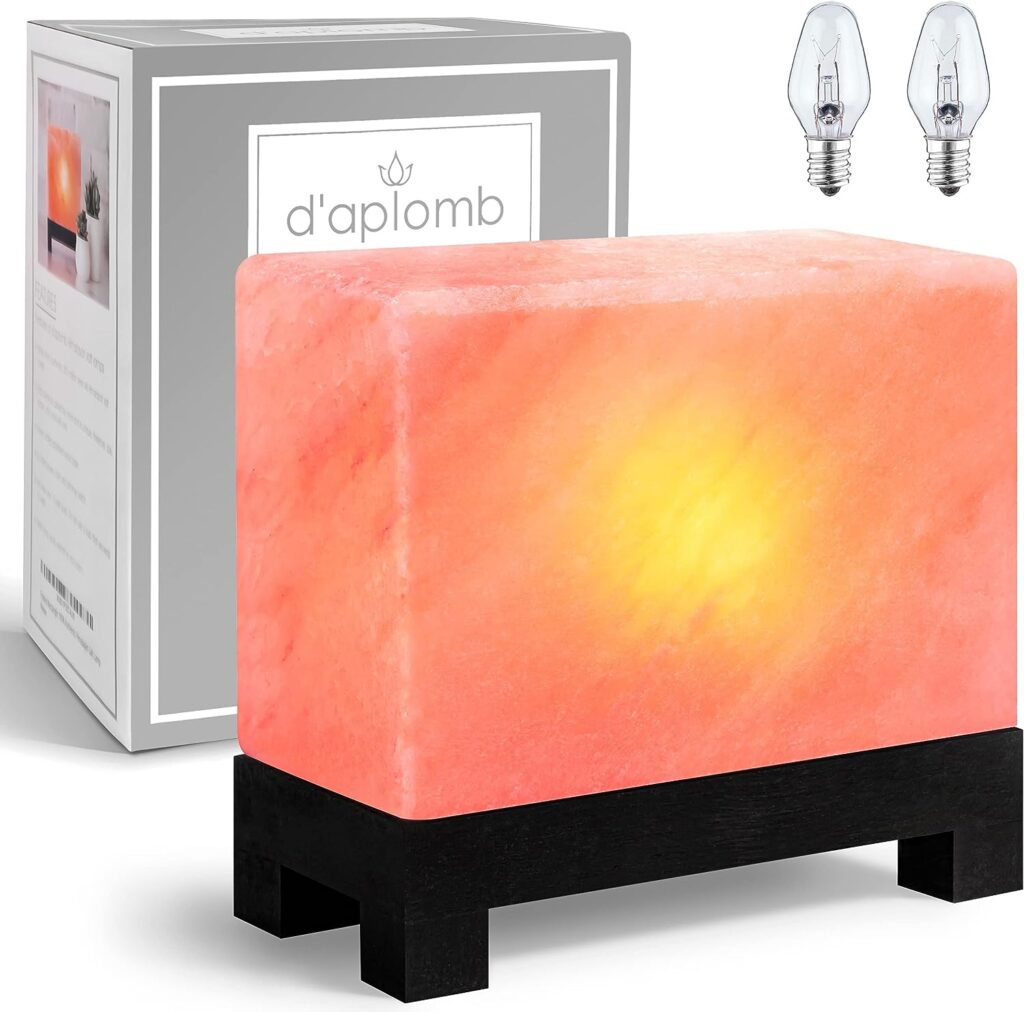
This Authentic Salt Lamp is made from 250 million-year-old salt from the Himalayan Mountains (the only source of true Himalayan Salt). Each piece is unique with slight shape, size, and color, variations. Approximate size: 7.5 in. x 3.5 in. x 5.75 in. Weight: approx. 11.5 lbs. Comes with a crafted wood base and dimmer switch.
Price at time of publish: $56
Artnaturals Himalayan Rock Salt Lamp
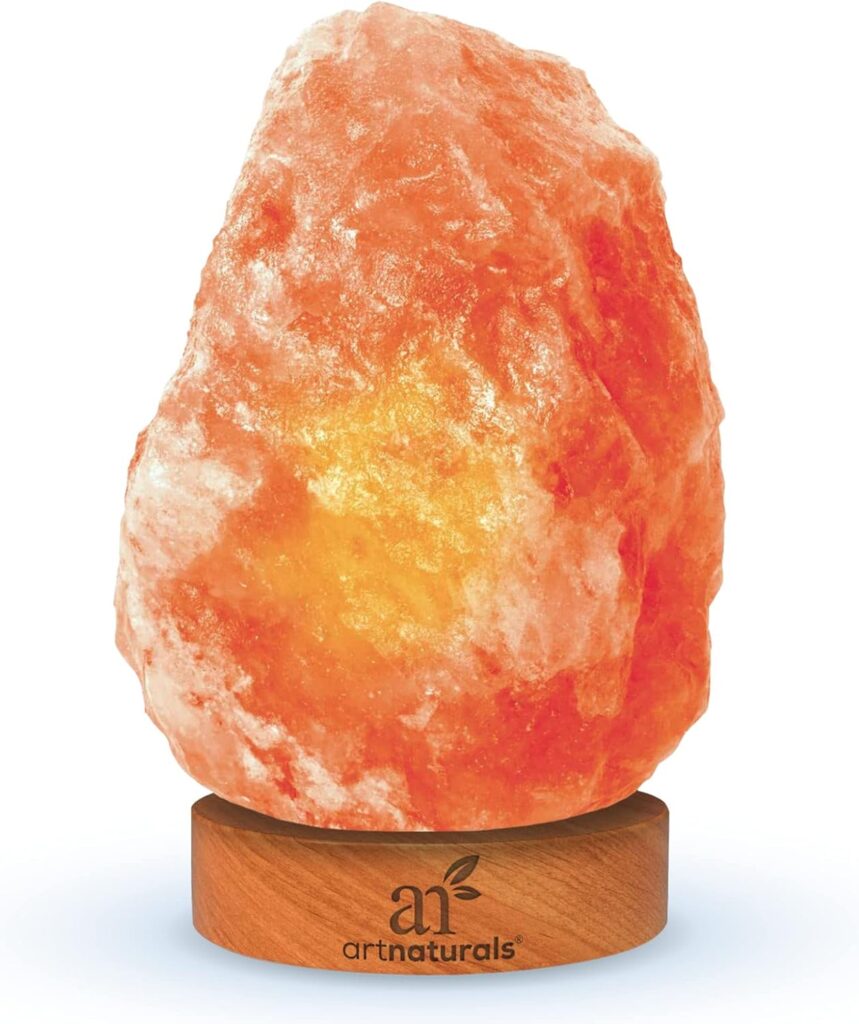
This Himalayan salt lamp is carved from a block of the purest Himalayan pink salt. Excavated from Pakistan’s Khewra mine located in the heart of the Himalayas. Loaded with powerful minerals and free from toxins, this Himalayan salt lamp is safe to use in the nursery and with kids. Comes with a dimmer switch and is nestled on a wood base.
Price at time of publish: $24.95
The Bottom Line
Himalayan salt lamps have become one of those products that sit right at the intersection of wellness and marketing, which makes them easy to misunderstand. There’s nothing wrong with owning one. In fact, a real salt lamp can add a beautiful, calming presence to your space.
But they’re not magic, and they’re definitely not all created equal. The biggest mistake people make isn’t buying a salt lamp. It’s buying one without knowing what to look for.
If you take the time to check for the subtle details (the glow, the texture, the origin), you’ll avoid wasting your money on something that only looks the part. And that alone puts you ahead of most people.






Leave a Reply