
Low-level vitamin deficiencies can drain your energy and lead to brain fog. Even if you’re eating a balanced, whole-foods diet, you may still be missing vital nutrients.
In fact, according to the United States Department of Agriculture (USDA), 90% of Americans are deficient in potassium, 80% in vitamin E, and 70% in calcium. Over 50% of Americans are deficient in vitamin A, C and magnesium. When considering these statistics, the probabilities are very high that you’re included in at least one of these groups (1). When it comes to vitamin D, about half of the general population is deficient (regardless of age).
What Causes Vitamin Deficiencies?
A number of factors can affect your body’s vitamin stores, but more often than not, it’s because the foods we’re eating don’t contain enough vitamins to fully sustain us.
Thanks to poor farming practices that have been utilized since the 1960’s, our soil has become increasingly nutrient deficient. Magnesium is one mineral that is nearly devoid of all food products, as well as minerals like calcium, phosphorous, manganese and zinc.
Food processing also strips food of essential vitamins and minerals (this is why so many companies need to add vitamins and minerals back into the food). Eating lots of packaged foods and not enough fresh, ripe fruit and vegetables will easily set anyone up for a vitamin deficiency.
Then comes in the non-diet related factors that often tie in with vitamin deficiencies. These include long-term use of proton-pump inhibitors (PPIs), cholesterol-lowering statins, diuretics, and other medications that can interfere with the body’s ability to produce, absorb, or utilize crucial nutrients.
Digestive disorders like Chron’s disease, celiac disease, inflammatory bowel disease, leaky gut syndrome and irritable bowel syndrome will also reduce the ability of your body to absorb nutrients from food. This leads to – you guessed it – deficiencies.
You can also deplete your vitamin and mineral stores if you drink a lot of coffee or alcohol, deal with lots of stress in your life, or do a lot of chronic dieting.
The Basic Components of A Healthy Diet
There are six elements to nutrition and they include carbohydrates, fats, minerals, protein, vitamins and water. Understanding the importance of the primary six components of nutrition can help you plan a healthy, balanced diet, that leaves you nourished instead of deficient.
1. Carbohydrates
Carbohydrates are our primary source of energy. They’re generally divided into two categories: simple carbohydrates, which digest quickly, and complex carbohydrates, which digest slowly. In terms of your body’s daily intake, you should aim for between 50-60% consisting of carbohydrates.
The best carbohydrates sources include plant foods like fresh, ripe fruit, starchy vegetables, beans and legumes, as well as gluten-free grains like quinoa and buckwheat. So, for example, if you eat 2,000 calories a day, 900-1300 of those calories should be coming from carbohydrates.
2. Fat
While many people claim that fats are bad for you, its the kind of fats that matter. Fats help nourish the nerves in your body, and also help your body synthesize fat-soluble vitamins like A, E, D and K. Always stay away from trans-fat and saturated fat (most commonly found in animal products or highly-processed foods).
Healthy fats like monounsaturated and polyunsaturated fats include things like avocado, hemp seeds, chia seeds, coconut, olives, nuts and other seeds like sunflower, sesame and pumpkin. You should aim for 20-35% of your daily diet coming from healthy fat sources (so 400-700 calories from fat if you’re eating 2,000 calories per day).
3. Protein
Protein is required for healthy muscles, skin and hair. In addition, it contributes to normal chemical reactions within your body. Protein is constructed of amino acids, and amino acids are abundant in all plant foods (so, no, you don’t need to worry if you’re a vegan or vegetarian and not getting enough protein). An average adult needs around 50 grams of protein daily, so make sure you’re eating enough calories each day to meet these needs.
4. Vitamins
Vitamins are essential for health, and are therefore considered a primary component of nutrition. Essential vitamins include vitamins A, B complex, C, D, E, K and folate. If you’re not getting enough vitamins, you run the risk of developing deficiencies, which could lead to osteoporosis, scurvy, a weakened immune system, premature aging, and even certain cancers.
Almost all fruit and vegetables are loaded with these vitamins (aside from vitamin D, which you should be getting from the sun). When it comes to vitamin K (and you’re a vegan), make sure you’re also eating fermented foods like sauerkraut, kombucha or kimchi. That way, you’ll be getting enough vitamin K2 (which is often only found in meat).
5. Minerals
Minerals are vital for proper human health. They help your body grow and develop and are divided into two groups: major minerals and trace minerals. Major minerals include calcium, chloride, magnesium, potassium, phosphorus, sodium and sulphur. These are all needed in large quantities.
Trace minerals include things like chromium, copper, iodine, iron, manganese, molybdenum, selenium and zinc, which are needed in small quantities. Generally, these can all be attained by eating a wide variety of plant-based foods, except that a select few like magnesium and zinc should be taken in supplement-form (in my personal opinion – based on the fact that most people are majorly deficient).
6. Water
The human body is composed of 60 percent water, and the brain 70 percent water. Without water, we wouldn’t exist. Your body uses over 2 and a half quarts of water every day, so drinking enough is essential. Almost every enzymatic and chemical reaction that takes place in the body is dependent on water, and also acts as a transport medium for moving around antibodies, hormones, and oxygen. Aim for at least 3-4 litres of water every day.
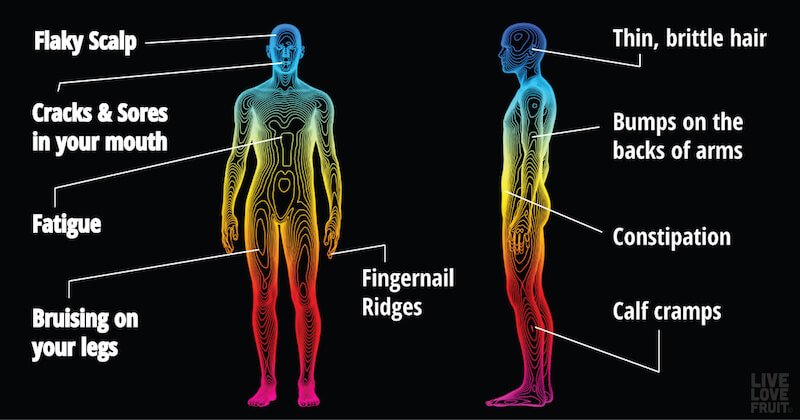
10 Signs You Have A Vitamin Deficiency
Making sure you have a balanced diet is important, not only for us to feel good in the present, but for long-term health. Here are 10 signs your body might be lacking nutrients, and what to do if you think something’s wrong.
1. Your Nails
If your nails don’t look like they’re doing too good, it could be an indication that you’re deficient in a nutrient or two. If you have white spots on your nails, it could just be the result of trauma to the nail. However, if the spots appear on all of your nails, and you don’t remember banging your nails against anything, it could be leukonychia, a condition where white lines or dots appear on your finger or toenails. This could likely be the result of a zinc or calcium deficiency or fungal disease.
Another common issue with nails is if they’re thin or have raised ridges (or they’re curved inwards). This could be an indication that you’re iron deficient or anemic. Or, if you’re someone who takes a lot of over-the-counter heartburn medication, it could be that your stomach acid is too basic, and you have a hard time absorbing all the vitamins and minerals you need.
How To Fix It: If you’re low in zinc, look to eat more pumpkin seeds, chickpeas, cashews, cacao powder, mushrooms and spinach. If you’re low in calcium, eat more foods like broccoli, chia seeds, bok choy, almonds, sesame seeds, brazil nuts, black beans, chickpeas, kohlrabi, collards, spinach and turnip greens. Foods rich in iron include things like pumpkin seeds, hemp seeds, chia seeds, dill weed, parsley and almonds.
If your stomach acid is too basic, take some apple cider vinegar with water with a meal, or take a digestive enzyme (both can help with heartburn, and not upset stomach acid).
2. Leg Cramps
Lots of people suffer from leg cramps in their calves, especially at night time. This could be an indication that you’re low in potassium. If you’re physically active during the day, and not sufficiently replenishing your body, you’ll be losing fluids and electrolytes through perspiration.
How To Fix It: You can address this problem by eating foods rich in potassium like dates, bananas, broccoli, grapefruit and spinach.
3. Numbness in Hands and Feet
While numbness in the hands and/or feet will have most people thinking they’re pre-diabetic, it can actually be a sign of a simple vitamin B deficiency. Low levels of certain B vitamins like B6, B12 and folic acid can affect the nerve endings in your skin, which creates an effect of numbness in your hands and feet.
How To Fix It: To help combat this deficiency, try including plenty of dark leafy vegetables in your diet (think spinach, kale, collards, cilantro, dill, parsley, etc.), as well as other foods like sweet potatoes, banana, walnuts, prunes, pistachios, broccoli, mango, avocado, asparagus and oranges.
4. Cracks and Sores in Your Mouth
If you’re noticing an increase in the amount of ulcer-like lesions in your mouth, or cracks on the sides, your body might need more B12.
How To Fix It: While B12 is found readily in animal foods, it is a little harder to find in plant foods. Nutritional yeast contains plenty of B12, as well as spirulina. Over 40% of the population suffers from a B12 deficiency, so even if you do eat meat, you might have low levels. Alcohol, antibiotics, vaccines and other prescription drugs can reduce the absorbability of B12 into the body. In that case, I suggest supplementing with a high-quality B12 supplement such as VeganSafe B12.
5. Bruising On Your Legs
If you lightly bump into something and wind up with a massive bruise, consider if you’re getting enough vitamin C. Vitamin C makes collagen (among a variety of other functions), which is involved in making blood vessels. If you bruise easily, you might have weakened capillaries as a result of low vitamin C levels.
How To Fix It: If you need more vitamin C, don’t just turn to citrus fruits. While these are good sources of vitamin C, even better sources come from foods like strawberries, broccoli, mango, pineapple, bell pepper, brussels sprouts and papaya.
6. Fatigue and Lack of Energy
Most people feel overly tired these days. While it is often the result of too much stress (which in itself makes us nutrient deficient), it can also be that you’re not getting certain nutrients in your diet. Iron deficiency, or anemia, is a well-known cause of fatigue. If you’re tired all the time, but you’re still getting enough sleep, your vitamin D levels could be chronically low.
How To Fix It: Make sure to eat enough iron-containing foods like beans, pumpkin seeds, chia seeds, parsley, potatoes, quinoa, swiss chard, figs and almonds. In the case of vitamin D, make sure you get out in the sun for at least 15-30 minutes every day. If you live in more Northern climates during the winter, take a high-quality vitamin D3 supplement.
7. Thin, Brittle Hair
If you’re suffering from thin, brittle hair, you might not be getting enough B vitamins, or eating enough iron and protein. Vitamin B7 (biotin) is needed for strong, healthy hair, but folate (also called folic acid) may also cause thin, brittle strands if you’re running low. Iron and protein are also needed to supply blood flow to the scalp for healthy hair growth, and protein is needed to maintain the structural integrity of the hair and keep it strong.
How To Fix It: If you’re low on B vitamins, make sure you’re eating enough leafy greens and herbs (they’re loaded with them!). As for iron and protein, make sure you’re eating foods like sesame seeds, morel mushrooms, beans, hemp seeds, chia seeds, spinach, parsley, pumpkin seeds, sprouts, spirulina, quinoa, avocado and kale.
8. Flaky Scalp
If you have flakes falling on the floor every time you scratch your head, you may suspect dandruff, but it could be a sign of dry scalp. With a dry, flaky scalp, the skin gets irritated and flakes off. With dandruff, the cause is too much oil on the scalp. That excess oil causes skin cells to build up, and then shed. If your condition is in fact, a dry, flaky scalp, you might not be getting enough essential fatty acids in your diet, and you could also be a little dehydrated.
How To Fix It: Make sure you’re getting enough healthy fats in your diet by eating avocados, flaxseeds, chia seeds, hemp seeds and coconut. Also, ensure that your water intake is around 3-4 litres of water daily.
9. Constipation
If you have less than three bowel movements per week, then your health will definitely be feeling the ill-effects. A common cause of constipation is a lack of fibre in the diet. Magnesium also plays a role in moving stool along, and so does drinking enough water every day.
How To Fix It: Along with eating magnesium-rich foods like cacao, hemp seeds, and pumpkin seeds, consider taking a 200-300 mg supplement of magnesium glycinate until regularity improves. Fibre is found abundantly in almost all plant foods, so make sure you eat enough fresh fruit and vegetables every day (and a lot of them!).
10. Bumps on The Backs of Arms
The appearance of small, red or white bumps in your skin can also be a sign that you’re vitamin deficient. These bumps (which usually look like acne), can appear on people’s arms, faces, and thighs, and can be an indication that your vitamin A and zinc reserves are too low. Vitamin A and zinc are vital for maintaining skin health, and play key roles in wound repair.
How To Fix It: Get more vitamin A in your diet by including plenty of colourful vegetables on your plate. This includes things like carrots, sweet potatoes, as well as dark green leafy vegetables. These foods are rich in beta-carotene, a phytonutrient that is a precursor to vitamin A production in the body. As for zinc, you can find it in quinoa, pumpkin seeds, green peas, chickpeas, cashews, cocoa powder, mushrooms and spinach.






Leave a Reply