• Skip to primary navigation
  • Skip to main content
  • Skip to primary sidebar
  • Skip to footer
live love fruit logo

Live Love Fruit

Eat Vibrantly. Live Vibrantly

About Start Here Work With Me

  • Home
  • Start Here
  • About
  • Health
  • Remedies
  • Recipes
  • A-Z Conditions
  • Fitness
  • Environment
  • Self Improvement
  • My LLF
  • Shop
Category: > Health > 20 Plant-Based Foods Rich in Iron To Stay Energized and Anemia-Free

20 Plant-Based Foods Rich in Iron To Stay Energized and Anemia-Free

Jun 6, 2015 Carly Fraser Save For Later Print

Last Updated: Feb 11, 2019

88.5K shares
  • Facebook1.5K
  • Twitter
  • LinkedIn

Plant-Based Foods Rich in Iron

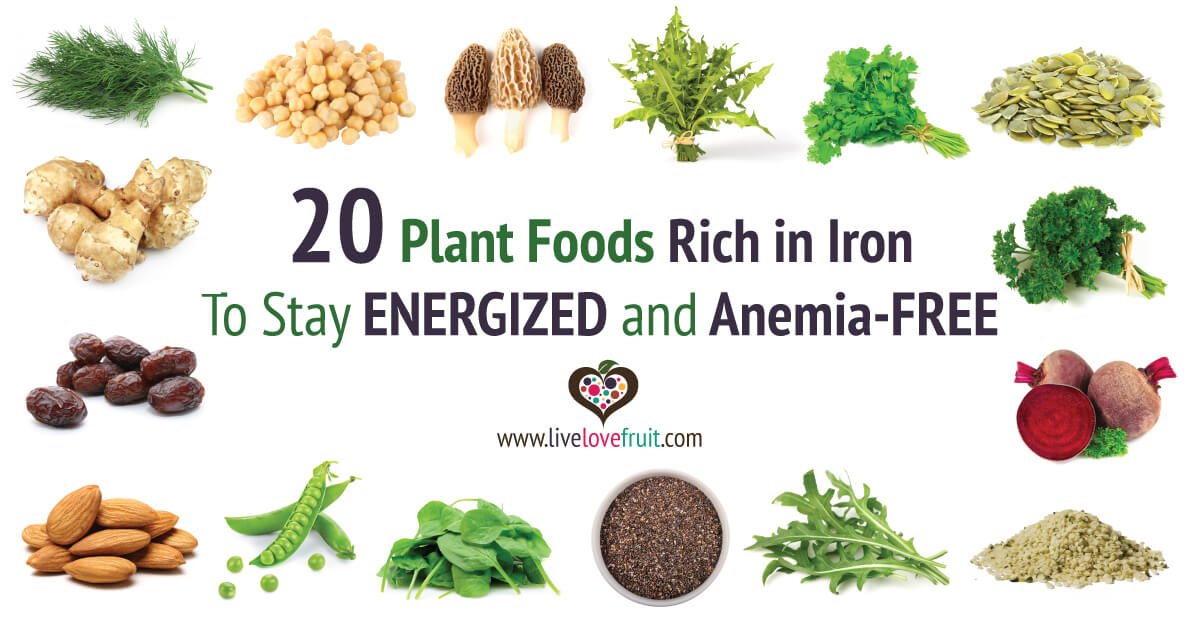
When people switch to a plant-based diet, they aren’t only concerned about protein, but they wonder how (and if) they’ll get enough iron. Fortunately for us plant-eaters, iron is incredibly abundant in the plant-food world. In fact, there are over 20 plant-based foods rich in iron (among many others), all of which help us stay energized and anemia-free!

Iron and Its Role In The Human Body

Iron is found in the red blood cells of your blood called hemoglobin and in muscle cells called myoglobin. Hemoglobin in blood carries oxygen from your lungs to all tissues throughout the body. Myoglobin on the other hand, holds and stores oxygen for use during activity.

Iron is needed for proper immune function, and plays a role in activating enzymatic reactions needed for the synthesis of collagen and some neurotransmitters. It is also essential for respiration and energy metabolism.

When we don’t get enough iron from our diet, stores can become depleted, decreasing hemoglobin levels and setting the stage for iron-deficiency anemia.

The Difference Between Heme and Non-Heme Iron

Heme and non-heme iron are different in the sense that heme iron (iron attached to heme proteins) comes from animal products (dairy, meat, eggs, fish) and non-heme iron (iron not attached to heme proteins) comes from plant foods.

While heme iron is more readily absorbed by the body (7-35%) than non-heme iron (2-20%), there are many different factors that affect its absorbability rate (see sub-section below).

It is also important to note that the human body has no mechanism to rid itself of excess iron, and so it has evolved to tightly regulate its absorption. For example, when iron stores are low, iron absorption is boosted in the intestines, but when it is high, iron absorption is blocked. But this mechanism only works for non-heme iron. A chronic consumption of animal products inundates the body with a surplus of heme iron, preventing the body from regulating its intake.

Consuming too much heme-iron (as is the case with most of the population) creates an environment where the intestines can no longer regulate iron influx, and the body becomes “iron toxic” as the iron passes right through the intestinal barrier. Too much iron in the body leads to decreased absorption of vitamin E, diabetes, gut disturbances, hair loss, increased free radical production, liver disease and heart disease.

How Much Iron Should I Consume?

It is generally recommended for men to consume 8-11mg of iron, and woman 8-18mg. Pregnant women should aim for around 30mg daily.

Plant-Based Foods Rich In Iron

*Note: below demonstrates how many milligrams of iron are in 100 grams of food

1. Morel Mushrooms – 12.2 mg
2. Pumpkin Seeds – 11.2 mg
3. Hemp Seeds – 9.6 mg
4. Chia Seeds – 7.7 mg
5. Dill Weed – 6.6 mg
6. Parsley – 6.2 mg
7. Almonds – 3.7 mg
8. Raisins – 3.5 mg
9. Jerusalem Artichokes – 3.4 mg
10. Dandelion Greens – 3.1 mg
11. Medjool Dates – 3.0 mg
12. Chickpeas – 2.9 mg
13. Sea Vegetables (Kelp, Nori, Spirulina, Dulse, etc.) – 2.8 mg
14. Spinach – 2.7 mg
15. Green Peas – 1.8 mg
16. Cilantro – 1.8 mg
17. Kale – 1.7 mg
18. Arugula – 1.5 mg
19. Quinoa – 1.5 mg
20. Beets – 1.0 mg

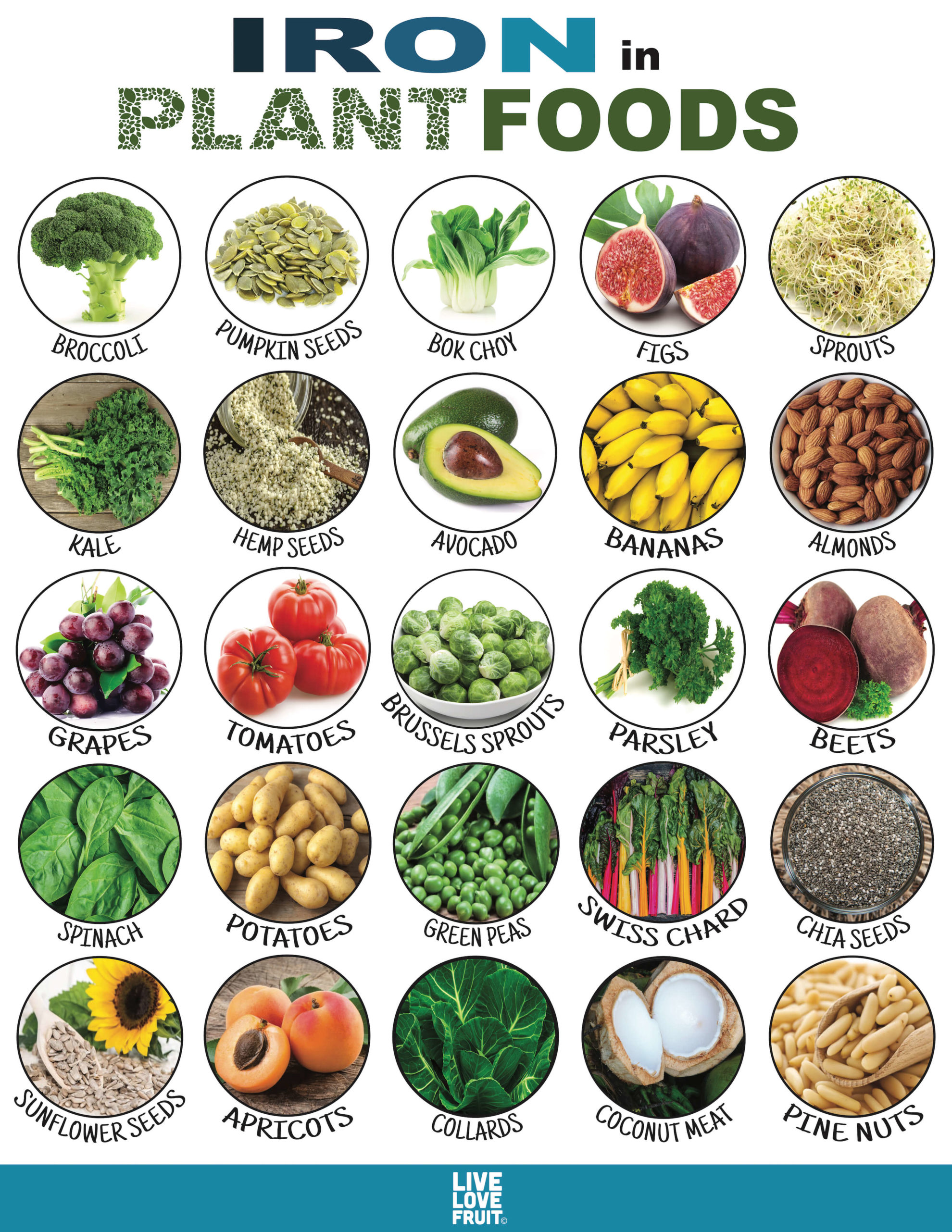
It is also important to note that other fruit and vegetables contain iron, just not at these high levels. These vegetables and fruit include blackberries, pumpkin, red cabbage, cremini mushrooms, bananas, broccoli, beets, carrots, eggplant, sweet potato, avocado, figs, potatoes, corn, pineapple, nectarine, watermelon, tomatoes, oranges, cherries, papaya, celery and apples. When consuming a high-raw plant-based diet, and eating the quantities that should be eaten (over 2,000+ calories per day), then getting enough iron is as easy as 1-2-3.
Foods That Increase (and Decrease) Iron Absorption

Foods that increase iron absorption include those rich in vitamins C and A. Foods rich in vitamin C include citrus fruits (oranges, limes, grapefruit, lemons), tomatoes, kale, red peppers, cauliflower, brussels sprouts, papaya and strawberries. As for vitamin A, choose foods like sweet potatoes, carrots, broccoli, peas, beets, apricots, peaches and lemons.

There are also foods that reduce the body’s ability to absorb iron like red wine, tea and coffee, isolated soy products (soy flour, soy milk, isolated soy concentrate, etc.), and dairy products (when I was vegetarian I was highly anemic. I ate a lot of dairy, and when I went vegan, my anemia went away and I no longer had to take an iron supplement).

Iron Supplementation – Is It Needed?

Unless you have had a confirmed diagnosis and are in dire need of iron supplementation, I wouldn’t supplement on your own. In the case that you do supplement, I would still encourage you to look at your diet and consider fixing it until your body figures out what’s wrong. Iron issues can be fixed, if you start from the root of the problem. Taking a supplement is only a cover-up to a problem that is more deep-rooted in the ways you eat.

A study found that even if you do supplement your diet with iron (even if anemic), it can lead to a significant increase in oxidative stress which can lead to DNA damage and increase your risk for developing cancer. You can easily get your iron from the plant foods mentioned above to establish an environment in your body that promotes healthy iron levels.

Sources:
http://www.ucsfhealth.org/education/hemoglobin_and_functions_of_iron/
http://www.ncbi.nlm.nih.gov/pubmed/20888091
http://www.ncbi.nlm.nih.gov/pubmed/17823849
http://www.ncbi.nlm.nih.gov/pmc/articles/PMC2725368/
http://www.ncbi.nlm.nih.gov/pubmed/16081371

88.5K shares
  • Facebook1.5K
  • Twitter
  • LinkedIn

Filed Under: Food Education, Health Tagged With: heme and non-heme iron, hemoglobin and iron, iron-rich foods, Plant-based diet, plant-based foods rich in iron, prevent anemia naturally

Carly Fraser

About the Author

Carly Fraser has her BSc (Hons.) Degree in Neuroscience, and is the owner and founder at Live Love Fruit. She currently lives in Winnipeg, Manitoba, with a determined life mission to help inspire and motivate individuals to critically think about what they put in their bodies and to find balance through nutrition and lifestyle. She has helped hundreds of thousands of individuals to re-connect with their bodies and learn self-love through proper eating habits and natural living. She loves to do yoga, dance, and immerse herself in nature.

View Profile

Reader Interactions

Related Posts

  • These 15 Plant-Based Foods Contain More Iron Than Meat
  • leafy greens in collander on table
    20 Iron-Rich Plant Foods
  • Various organic vegetables ingredients and empty iron cooking pot
    Top 25 Plant-Based Vegan Iron Sources
  • diagram of different plant foods rich in zinc
    24 Zinc-Rich Plant Foods to Boost Immunity and Fight Disease
  • Try This Iron-Boosting Green Smoothie To Get Rid of Anemia And Remedy Iron Deficiency
  • 25 Calcium Rich Plant Foods
    25 Calcium-Rich Plant Foods That DON'T Come From Dairy!
  • fresh green kale leaves on white plate on wooden background
    Top 6 Plant-Based Foods For Healthy Blood

Comments

  1. Sarah says

    Feb 11, 2019 at 3:09 pm

    Great article! But this grammatical error is driving me bonkers. “Iron and It’s Role in the Human Body” should be the possessive “its” with no apostrophe, “Iron and Its Role in the Human Body.” Please fix this. Thanks!

    Reply
    • Carly Fraser says

      Feb 11, 2019 at 3:11 pm

      Ahh, good catch! Thanks Sarah – fixed!

      Reply
  2. Barbara says

    May 5, 2023 at 7:47 am

    I’m 81 years-old and just came back from my female doctor. I asked her about Restless Leg Syndrome that keeps me up at night. She said iron deficiency is most commonly associated with RLS and ordered a blood test. Guess what I have? I’ve also been complaining for months that I am always tired. Learned that iron deficiency affects building red blood cells which carry oxygen throughout the body which affects energy. Loved your article with great, trusted resources! I was always taught that as women age, we don’t need iron.

    Reply
    • Carly Fraser says

      May 31, 2023 at 6:12 pm

      Yess, iron is an important one! Always get your ferritin, iron and hemoglobin levels checked.

      Reply

Trackbacks

  1. You've Got To Try This Delicious Gingersnap Cookie Smoothie (Raw and Gluten-Free!) says:
    Sep 23, 2015 at 4:29 pm

    […] It contains beneficial carbohydrates and protein to refuel tired muscles and a groggy brain. The dates contain plenty of iron to help build stronger blood, and the ginger promotes healthy […]

    Reply
  2. Try This Iron-Boosting Green Smoothie for Anemia And Blood Building says:
    Oct 27, 2015 at 1:15 pm

    […] that ingredients containing higher iron concentrations are readily absorbed by the body. Pairing high-iron foods with high-vitamin C foods ensures this process will […]

    Reply

Leave a Reply Cancel reply

Your email address will not be published. Required fields are marked *

Primary Sidebar

Free Ebook

Success! Please check your inbox to download your FREE eBook.

Reduce Chronic Inflammation Naturally!

The Ultimate Guide to Fight Inflammation and Restore Your Health!

21 Ways to Reduce Chronic Inflammation

Recent Posts

Glow salt lamp, dark vintage wooden background, selective focus

Fake Himalayan Salt Lamps: What You Need To Know

foods that cause gout flare ups

10 Foods That Cause Gout Flare Ups

Conceptual health image combining nutrition and human anatomy. A realistic bowl of fresh leafy greens (spinach) on a rustic wooden surface, photographed in soft natural light. To the right, a semi-transparent blue human anatomical figure with visible internal organs and circulatory system highlighted in red at the chest and upper torso.

25 Magnesium-Rich Plant Foods and Why You’re Probably Magnesium Deficient

Ultra-realistic food and wellness photography, natural daylight. Clear glass mason jar filled with a warm golden-orange homemade tonic, slightly cloudy liquid, realistic texture. Ingredients arranged naturally around the jar on a rustic wooden kitchen surface: fresh ginger root slices, fresh turmeric root, lemon halves and slices, ground cinnamon and cinnamon sticks, cayenne pepper powder, small bowl of maple syrup, unbranded glass bottle of apple cider vinegar with label turned away, and a clear glass of water. Soft steam rising gently from the drink.

This Ginger Lemon Tonic Supports Natural Detox Pathways in the Lymph, Colon, and Bladder

Fresh Medjool Dates in bowl. Grey wooden background. Close up.

10 Amazing Health Benefits of Dates (and Why You Need To Start Eating Them!)

Panic Attacks and Anxiety Linked To Low Vitamin B6 and Iron Levels

Popular Posts

bowl of cereal being sprayed with pesticide

Glyphosate in Food: Complete List of Products and Brands Filled with Dangerous Weed-Killer

Man spraying pesticides on tea plants with other side of image showing dry loose tea bags

Pesticides in Tea: Is Your Favorite Tea Contaminated with Harmful Chemicals?

Monsanto’s Harmful Chemical Glyphosate Found In 100% Of California Wines Tested

whole dandelion plant with flowers and roots on cutting board on a table

Dandelions Are Not Weeds! Top 10 Health Benefits of Dandelion

A brightly lit store shelf filled with colorful baby care bottles in pastel and vibrant shades of yellow, teal, blue, pink, and white. All bottles are unbranded with smooth, generic shapes and blank labels. The liquids inside are glossy and translucent, giving a polished retail look. The scene is sharp and high-resolution with shallow depth of field, realistic reflections, and clean packaging. Subtle unease added by one bottle faintly cracked and leaking a dark liquid, contrasting with the cheerful colors.

Johnson & Johnson Finally Admits: Our Baby Products Contain Cancer-Causing Ingredients

10 Plants That Attract Dragonflies for Mosquito Control

companion planting chart

Use This Companion Planting Chart to Help Your Garden Thrive

France Bans Neonicotinoid Pesticides

France Bans All Five Neonicotinoid Pesticides Linked to Bee Deaths

A powerful, photorealistic underwater scene showing a large whale swimming slowly through a dark blue ocean filled with floating plastic waste such as bottles, bags, fishing nets, and debris. The whale appears weakened and distressed, with plastic tangled around its body.

Whales Dying From Plastic Pollution Are a Grave Reminder to Give Up Our Addiction to Plastics

illustrated piriformis muscle showing trigger points and radiating pain

How To Get A Deep Piriformis Stretch To Get Rid of Sciatica, Hip & Lower Back Pain

RECOMMENDED

Cymbiotika B12
Cymbiotika the omega
Cymbiotika D3+K2+CoQ10
Cymbiotika coated silver

Thank you! Please check your inbox to confirm your subscription!

Want to reduce inflammation and restore your health?

Join Live Love Fruit and we'll show you how!

Footer

Stay Connected!

Follows
  • 316k Followers
  • 1.9k Followers
  • 138k Followers
  • 696 Followers
  • 11.3k Followers
  • Home
  • About
  • Start Here
  • Write For LLF
  • Contact

Any medical information published on this website is not intended as a substitute for informed medical advice and you should not take any action before consulting with a healthcare professional.
Content on Live Love Fruit may not be reproduced in any form.
Ads provided by AdThrive. Displayed ads do not constitute endorsement or recommendation by Live Love Fruit.

Copyright © 2012 - 2026 Privacy Policy | Terms of Service | Full Disclaimer | Affiliate Disclosure

88.5K shares
  • 1.5K