
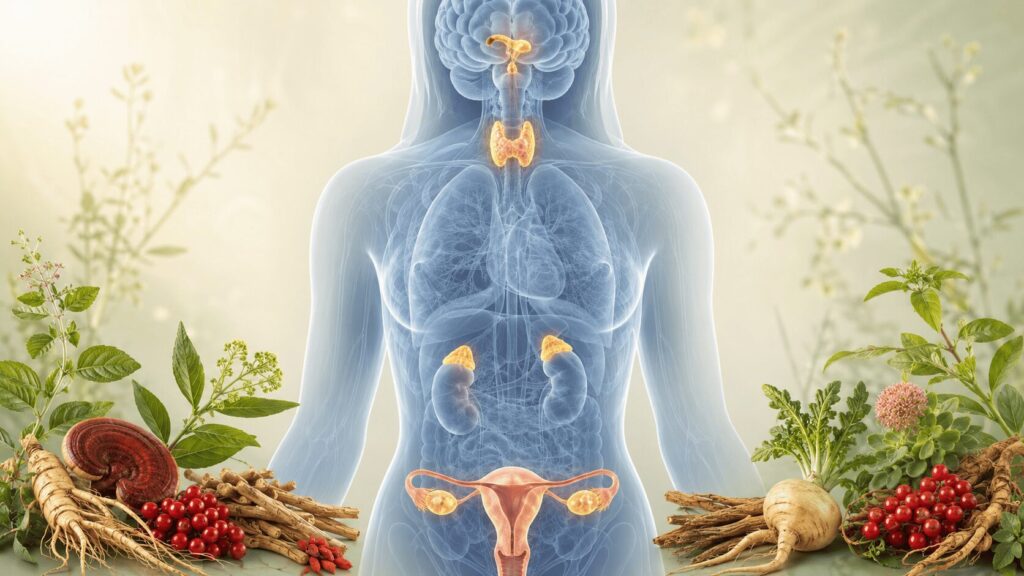
Hormones influence nearly every system in a woman’s body, including her menstrual cycle, mood, sleep, appetite, metabolism, stress response, sexual function, and fertility. When something feels off, it is tempting to blame a vague “hormone imbalance” and reach for a supplement that promises to fix everything.
The truth is more nuanced. No herb can automatically raise low hormones, lower high ones, and restore every endocrine pathway to normal. Symptoms such as fatigue, anxiety, irregular periods, low libido, acne, poor sleep, and weight changes can have many causes. They may reflect stress, perimenopause, a thyroid disorder, endometriosis, polycystic ovary syndrome (PCOS), pregnancy, under-fueling, iron deficiency, medication effects, or something unrelated to hormones.
That does not make adaptogens useless. It means they need to be understood correctly.
Adaptogenic herbs are primarily studied for their possible effects on the body’s response to physical and psychological stress. By supporting stress resilience, sleep, energy, or metabolic health, some adaptogens may indirectly ease symptoms that women interpret as hormonal. A smaller number have preliminary research involving PMS, sexual function, perimenopause, or menopause.
Below are 10 of the most relevant adaptogens for women, what the research actually shows, and the cautions that are too often left off supplement labels.
What Are Adaptogenic Herbs?
The term “adaptogen” describes a proposed function rather than a specific family of plants. Traditionally, an adaptogen is expected to help the body resist a broad range of stressors, reduce the damaging effects of stress, and avoid significantly disrupting normal function. Researchers often discuss adaptogens in relation to the hypothalamic-pituitary-adrenal axis, or HPA axis – the signaling network involved in the stress response and cortisol regulation
(1✓)✓ Trusted ResourcePubMed CentralHighly respected database from the National Institutes of HealthRead source.
The category is not as clear-cut as supplement marketing makes it sound. “Adaptogen” is not a diagnosis, a regulated medical claim, or proof that an herb works. Some plants, including Rhodiola rosea, Panax ginseng, Eleutherococcus senticosus, Schisandra chinensis, and ashwagandha, are widely recognized in adaptogen literature. Other ingredients are called adaptogens mainly because of traditional use or modern marketing.
Maca and shatavari, for example, are commonly grouped with adaptogens, but they do not have the same depth of research on stress response as ashwagandha. Reishi and cordyceps are fungi, not herbs, although they are regularly sold in the same adaptogenic category. This article includes them because readers encounter them in women’s hormone formulas, while keeping those distinctions clear.
How Adaptogenic Herbs May Support Hormone Balance
Stress is not the only cause of hormone-related symptoms, but the stress response can interact with sleep, blood sugar, appetite, sexual function, and reproductive signaling. A stressful month may leave you sleeping poorly, craving quick energy, feeling less interested in sex, and noticing a more difficult premenstrual phase. Supporting the stress response can therefore make a real difference without directly changing estrogen or progesterone.
Adaptogens may offer support through several possible pathways:
- Stress and cortisol: Some extracts have lowered perceived stress or cortisol in short clinical trials.
- Sleep: Better sleep can improve energy, mood, appetite regulation, and resilience during PMS or perimenopause.
- Fatigue and mental performance: Stimulating adaptogens may help some people experiencing stress-related exhaustion or brain fog.
- Metabolic health: Certain herbs can affect blood glucose, which may be relevant to energy swings or insulin resistance but can also create medication interactions.
- Sexual well-being: Maca and Asian ginseng have preliminary evidence for libido or sexual function, although this does not mean they correct sex-hormone levels.
- Menopausal symptoms: A few small studies have reported improvements in symptom scores, but herbal supplements are not established replacements for evidence-based menopause treatment.
This is why choosing an adaptogen by a specific symptom makes more sense than buying a generic “hormone balance” blend.
10 Best Adaptogens for Hormone Balance in Women
1. Ashwagandha for Stress, Sleep, and Perimenopause
Ashwagandha (Withania somnifera) is one of the most studied adaptogens and the strongest starting point when stress and poor sleep are the main concerns. Reviews of clinical trials suggest that some standardized ashwagandha extracts can reduce perceived stress, sleeplessness, fatigue, and cortisol compared with placebo (2✓)✓ Trusted ResourcePubMed CentralHighly respected database from the National Institutes of HealthRead source.
There is also early female-specific research. In one eight-week randomized trial, perimenopausal women taking a standardized root extract reported greater improvement in mild to moderate climacteric symptoms than women taking a placebo (3✓)✓ Trusted ResourcePubMed CentralHighly respected database from the National Institutes of HealthRead source.
Best fit: Feeling stressed, “wired but tired,” sleeping poorly, or experiencing mild perimenopausal symptoms alongside stress.
Important caution: Ashwagandha can cause drowsiness or digestive upset and has been linked, rarely, to liver injury. It may affect thyroid function and interact with thyroid medication, sedatives, anticonvulsants, immunosuppressants, and drugs for blood pressure or diabetes. It should be avoided during pregnancy and breastfeeding, and people with thyroid or autoimmune disorders should get medical guidance first (4✓)✓ Trusted ResourcePubMed CentralHighly respected database from the National Institutes of HealthRead source.
2. Rhodiola Rosea for Stress-Related Fatigue and Brain Fog
Rhodiola rosea is often described as a more stimulating adaptogen. It has traditionally been used for endurance, fatigue, mood, and work performance, which makes it appealing to women whose main complaint is exhaustion rather than anxious, restless energy.
Some trials and reviews report improvements in stress-related fatigue, concentration, or burnout symptoms. However, study quality varies considerably. The National Center for Complementary and Integrative Health concludes that there is not yet enough reliable evidence to determine whether rhodiola is useful for any health condition (5✓)✓ Trusted ResourcePubMed CentralHighly respected database from the National Institutes of HealthRead source.
That does not mean every positive result is false. It means the evidence is too inconsistent to promise that rhodiola will lower cortisol, correct adrenal function, or improve reproductive hormones.
Best fit: Stress-related mental fatigue, low motivation, or brain fog when a stimulating herb is tolerated well.
Important caution: Rhodiola may cause headache, dizziness, dry mouth, agitation, or insomnia, so it is usually better suited to earlier in the day. Anyone taking antidepressants, stimulants, or blood pressure medication should check for interactions. Safety during pregnancy and breastfeeding is unknown.
3. Maca Root for Libido and Menopausal Well-Being
Maca (Lepidium meyenii) is a cruciferous root native to the Peruvian Andes. It is frequently marketed as a hormone balancer, but one of the most useful findings about maca is that it may improve certain symptoms without measurably changing reproductive hormone levels.
In a small randomized crossover trial involving 14 postmenopausal women, 3.5 grams of maca per day improved psychological and sexual-function scores, but did not change estradiol, follicle-stimulating hormone, luteinizing hormone, or sex hormone-binding globulin (6✓)✓ Trusted ResourcePubMed CentralHighly respected database from the National Institutes of HealthRead source. A systematic review found limited positive evidence for menopausal symptoms, while emphasizing that the small number and modest quality of trials prevented firm conclusions (7✓)✓ Trusted ResourcePubMed CentralHighly respected database from the National Institutes of HealthRead source.
In other words, maca may support libido or subjective well-being for some women, but saying it “boosts estrogen” is inaccurate.
Best fit: Low sexual desire, reduced sexual well-being, or menopausal mood symptoms when stress is not the only issue.
Important caution: Long-term safety data are limited, and maca products can vary by variety and preparation. Gelatinized maca has had much of its starch removed and may be easier to digest, but “gelatinized” does not mean it contains gelatin. Women who are pregnant, breastfeeding, receiving fertility treatment, or managing a hormone-sensitive condition should ask a qualified clinician before using concentrated maca.
4. Holy Basil for Stress and Sleep Quality
Holy basil (Ocimum tenuiflorum), also called tulsi, has a long history of use in Ayurvedic traditions. It is often chosen by people who want a gentler, less stimulating form of stress support.
In an eight-week randomized, placebo-controlled trial, a standardized holy basil extract improved self-reported stress and sleep measures and reduced the cortisol response during a laboratory stress test. The extract was well tolerated in that study (8✓)✓ Trusted ResourcePubMed CentralHighly respected database from the National Institutes of HealthRead source. This is meaningful early evidence, but it does not show that holy basil balances estrogen, progesterone, or testosterone.
Holy basil has also been studied for blood glucose and other metabolic markers. That may eventually prove relevant to women with insulin resistance, but it also means anyone using glucose-lowering medication should be cautious.
Best fit: Everyday stress, mild sleep disruption, or a preference for a calming adaptogen that can also be consumed as tea.
Important caution: Concentrated extracts may affect blood sugar or blood clotting. Avoid medicinal amounts during pregnancy unless specifically cleared by a knowledgeable healthcare professional, and get advice before combining it with anticoagulants, antiplatelet drugs, or diabetes medication.
5. Shatavari for Emerging Perimenopause Support
Shatavari (Asparagus racemosus) is an Ayurvedic root traditionally used as a female reproductive tonic. It is often described as a rejuvenative or adaptogenic herb, although its modern clinical evidence is newer and much smaller than its reputation suggests.
Recent randomized trials have reported improvements in menopausal or perimenopausal symptom scores with standardized shatavari extracts. A 2024 placebo-controlled study found improvement in several menopause symptoms over eight weeks, and newer studies have continued to explore hot flashes, sleep, menstrual discomfort, and quality of life (9✓)✓ Trusted ResourcePubMed CentralHighly respected database from the National Institutes of HealthRead source.
Best fit: Perimenopausal or menopausal symptoms when a clinician is comfortable with the specific standardized product.
Important caution: Shatavari should not be treated as proven estrogen replacement. Anyone with an asparagus allergy, a hormone-sensitive condition, kidney disease, or a history of reactions to Ayurvedic herbs should be cautious. Safety in pregnancy and breastfeeding cannot be assumed from traditional use alone.
6. Asian Ginseng for Fatigue and Sexual Function
Asian ginseng (Panax ginseng), including Korean red ginseng, is a classic adaptogen used for fatigue, cognition, stress resilience, and sexual function. Its active compounds, called ginsenosides, differ among products depending on the plant’s age and how the root is processed.
A systematic review of ginseng in menopausal women found some positive evidence for sexual function and sexual arousal, with less consistent findings for hot flashes and other symptoms (10✓)✓ Trusted ResourcePubMed CentralHighly respected database from the National Institutes of HealthRead source. Broader research suggests a possible small benefit for general fatigue, but many trials are small and shorter than three months (11✓)✓ Trusted ResourcePubMed CentralHighly respected database from the National Institutes of HealthRead source.
Best fit: Fatigue or reduced sexual well-being, particularly during midlife, when a stimulating adaptogen is appropriate.
Important caution: Insomnia is the most common side effect. Asian ginseng may lower blood glucose, affect blood clotting, worsen some autoimmune conditions, or interact with medications. It is not recommended during pregnancy or breastfeeding, and it may be a poor fit for someone who already feels anxious, overstimulated, or unable to sleep.
7. Schisandra for Stamina and Menopausal Sweating
Schisandra chinensis is a berry used in traditional Chinese medicine and in early Russian adaptogen research. It is commonly promoted for stamina, concentration, liver support, and resistance to physical stress.
Human evidence remains limited. A small trial in women suggested that a schisandra extract may improve menopausal symptoms including hot flashes and sweating, but this finding needs confirmation in larger studies. Memorial Sloan Kettering notes that too few human trials have been conducted to draw strong conclusions about most uses [12].
Best fit: Women interested in stamina or menopausal sweating who take few or no medications and understand that the evidence is preliminary.
Important caution: Schisandra can affect CYP enzymes and P-glycoprotein, systems the body uses to process many medications. That creates a meaningful interaction risk, especially with drugs that have a narrow therapeutic range. It is not a casual add-on for someone taking several prescriptions.
8. Eleuthero for Mental and Physical Endurance
Eleuthero (Eleutherococcus senticosus) is sometimes called Siberian ginseng, although it is not a true Panax ginseng. It is one of the original plants studied under the modern adaptogen concept and is used for work capacity, endurance, and recovery from stress.
Clinical results are mixed. In one controlled trial of people with chronic fatigue, symptoms improved in both the eleuthero and placebo groups, with no significant overall difference. European regulators recognize traditional use for symptoms of fatigue and weakness, but the evidence does not show that eleuthero balances female reproductive hormones [13].
Best fit: Temporary mental or physical fatigue when sleep, iron status, thyroid function, and adequate nutrition have already been considered.
Important caution: Eleuthero may cause insomnia, irritability, headache, palpitations, or changes in blood pressure. It deserves extra caution in people with cardiovascular disease. Reports of breast tenderness and uterine bleeding have occurred in trials, although rates were not clearly different from placebo. Do not use an energizing herb to push through unexplained or worsening fatigue.
9. Reishi Mushroom for Stress Resilience and Immune Support
Reishi (Ganoderma lucidum) is a medicinal mushroom, not an herb. It is often included in adaptogenic blends for sleep, stress, immune support, and fatigue, but there is very little direct research on female hormone balance.
Small human studies have examined reishi for quality of life or fatigue in specific patient groups. Those findings cannot be generalized to healthy women with PMS or menopause symptoms, and reishi should never be presented as a cancer treatment or replacement for medical care [20].
Best fit: Someone interested in a non-stimulating adaptogenic mushroom who understands that evidence for hormone-related symptoms is insufficient.
Important caution: Reishi may increase bleeding risk and interact with anticoagulants, antiplatelet drugs, blood pressure medication, diabetes medication, or immunosuppressants. Product identity matters because powders, fruiting-body extracts, mycelium, and spore products are not interchangeable.
10. Cordyceps for Exercise Fatigue and Energy
Cordyceps refers to a group of fungi traditionally used for fatigue, aging, and physical performance. Most commercial supplements contain cultivated Cordyceps militaris or a laboratory-grown mycelial product rather than wild Ophiocordyceps sinensis.
Laboratory and animal findings are abundant, but convincing human evidence for the broad benefits claimed on labels is lacking. The National Library of Medicine notes that purported benefits have not been established in human clinical trials, and there is no good evidence that cordyceps balances reproductive hormones in women (21✓)✓ Trusted ResourcePubMed CentralHighly respected database from the National Institutes of HealthRead source.
Best fit: Exercise-related fatigue may be the most plausible area of interest, but cordyceps should be viewed as experimental rather than essential for hormone health.
Important caution: Cordyceps can cause digestive upset, dry mouth, nausea, or rash. Because it may affect immune activity, blood clotting, or blood sugar, people with autoimmune disease, transplant recipients, and those using immunosuppressive, anticoagulant, antiplatelet, or glucose-lowering medication should seek medical advice first.
Which Adaptogen Is Best for Your Symptoms?
No adaptogen is best for every woman. Use the main symptom – not a broad promise of “balance” – to narrow the options.
| Main concern | Adaptogen most often considered | Evidence snapshot | Key reason for caution |
| High stress and poor sleep | Ashwagandha | Best human evidence in this list for stress; early perimenopause data | Thyroid, liver, autoimmune, pregnancy, and medication concerns |
| Stress-related fatigue or brain fog | Rhodiola | Mixed, low-to-moderate quality studies | Can feel stimulating or worsen insomnia |
| Low libido or menopausal sexual concerns | Maca or Asian ginseng | Preliminary positive trials; does not prove hormone changes | Limited long-term data and medication interactions |
| Everyday stress with mild sleep issues | Holy basil | One promising eight-week stress trial | May affect blood sugar or clotting |
| Perimenopause symptoms | Shatavari or ashwagandha | Emerging, product-specific trials | Evidence is still early; not hormone replacement |
| Stamina or menopausal sweating | Schisandra | Very limited human evidence | Significant potential for drug interactions |
| Temporary mental or physical fatigue | Eleuthero | Mixed clinical results | Insomnia, palpitations, blood pressure concerns |
| Non-stimulating mushroom option | Reishi | Insufficient hormone-specific evidence | Bleeding and immune interactions |
| Exercise fatigue | Cordyceps | Human benefits remain unproven | Product variability and immune/glucose effects |
What About Chasteberry, Black Cohosh, and Red Clover?
These herbs appear on many lists of adaptogens for women, but they belong in a different category.
Chasteberry, or vitex, is not an adaptogen. It is a hormone-active botanical that may influence dopamine and prolactin signaling. Some evidence suggests it may reduce PMS-related breast tenderness, but higher-quality research is still needed. It may be unsafe during pregnancy or breastfeeding and may not be appropriate for women with hormone-sensitive conditions (22✓)✓ Trusted ResourcePubMed CentralHighly respected database from the National Institutes of HealthRead source.
Black cohosh is not an adaptogen. It is primarily studied for menopause symptoms. A 2023 review found possible benefits for overall symptoms and hot flashes, but concerns remain about product quality and rare reports of liver damage (23✓)✓ Trusted ResourcePubMed CentralHighly respected database from the National Institutes of HealthRead source.
Red clover is not an adaptogen. It contains estrogen-like isoflavones, but studies on hot flashes and bone density have been inconsistent (24✓)✓ Trusted ResourcePubMed CentralHighly respected database from the National Institutes of HealthRead source.
How to Use Adaptogens Safely
1. Start With One Clear Goal
Choose the symptom you most want to improve: stress, sleep, fatigue, libido, or hot flashes. If you start five herbs at once, you will not know which one helped or which one caused a reaction.
2. Choose a Standardized, Tested Product
The exact species, plant part, extraction method, and concentration matter. A study of a standardized root extract does not validate a gummy containing an undisclosed “proprietary blend.” Look for the full Latin name, plant part, extract ratio or marker compounds, lot number, and independent quality testing. NSF, USP, and ConsumerLab are among the organizations that perform supplement quality testing, although a quality seal confirms manufacturing and label accuracy – not effectiveness [25].
3. Do Not Assume More Is Better
Clinical studies use very different doses and extracts, so a universal dose chart can be misleading. Follow the instructions for the specific standardized product and confirm the amount with a pharmacist, physician, or qualified herbal practitioner when medications or medical conditions are involved.
4. Give It a Defined Trial
Most adaptogen studies last approximately six to twelve weeks. Set a review date instead of taking a supplement indefinitely. Track the symptom you are targeting, any side effects, sleep quality, cycle changes, and other major variables. Stop if the herb makes you feel worse.
5. Do Not Use Supplements to Override Your Body
An energizing adaptogen should not be used to mask exhaustion caused by inadequate calories, overtraining, iron deficiency, thyroid disease, poor sleep, or an unsustainable schedule. The goal is not to force more output from a depleted body.
Who Should Avoid Adaptogenic Herbs?
Do not start adaptogens without professional guidance if you are pregnant, breastfeeding, trying to conceive, preparing for surgery, receiving fertility treatment, or managing a hormone-sensitive cancer.
You also need an interaction check if you take:
- thyroid medication
- antidepressants, stimulants, sedatives, or anticonvulsants
- anticoagulants or antiplatelet drugs
- immunosuppressants
- blood pressure or diabetes medication
- menopausal hormone therapy or hormonal contraception
The phrase “natural hormone support” can make supplements sound gentler than medication, but biologically active herbs can cause side effects and interactions. Natural does not mean risk-free.
For bothersome hot flashes and night sweats, it is also important to know that The Menopause Society’s 2023 evidence review did not recommend supplements or herbal remedies as established nonhormonal treatments because the data were inconsistent [26]. Menopausal hormone therapy remains the most effective treatment for vasomotor symptoms for appropriate candidates, and effective prescription nonhormonal options are also available.
When “Hormone Imbalance” Symptoms Need Medical Evaluation
Herbs should complement a proper assessment, not delay it. Make an appointment if you have:
- periods that suddenly become very irregular or stop
- very heavy bleeding, bleeding between periods, or bleeding after menopause
- persistent bleeding after sex
- severe pelvic pain
- new facial hair, rapid hair loss, or severe acne
- nipple discharge when you are not breastfeeding
- ongoing infertility
- unexplained weight change, tremor, heat intolerance, or heart palpitations
- fatigue that persists despite adequate sleep and nutrition
- depression, anxiety, or premenstrual symptoms that interfere with daily life
Depending on the pattern, a clinician may consider pregnancy, anemia or low iron stores, thyroid dysfunction, high prolactin, PCOS, perimenopause, medication effects, fibroids, endometriosis, or other causes. Treating the actual problem is more effective than guessing which hormone needs to be “balanced.”
Frequently Asked Questions About Adaptogens for Women
How Long Do Adaptogenic Herbs Take to Work?
Adaptogens are not usually immediate symptom relievers. Some people notice changes in stress, sleep, or energy within two to four weeks, while many trials assess results after six to twelve weeks. If nothing has changed by your predetermined review date, taking more or adding multiple herbs is not automatically the answer.
Can You Take More Than One Adaptogen at a Time?
Combination products are common, but starting one ingredient at a time is safer and more informative. Blends increase the number of possible side effects and interactions, and proprietary formulas may hide the amount of each herb. A combination may be reasonable when it has been intentionally selected by a qualified professional.
Do Adaptogens Increase Estrogen?
Not as a class. Adaptogens do not all act the same way, and most have not been shown to raise estrogen. Maca, for example, improved certain symptoms in a small trial without changing measured estrogen or androgen levels. Do not assume an herb is estrogenic – or safe with a hormone-sensitive condition – based on the word “adaptogen.”
What Is the Best Adaptogen for Cortisol?
Ashwagandha has the most supportive human evidence among the herbs on this list for reducing perceived stress and cortisol in stressed adults. Holy basil also has an encouraging placebo-controlled trial. However, cortisol naturally changes throughout the day, and vague symptoms are not enough to diagnose “high cortisol.” Persistent signs of an endocrine disorder require medical evaluation.
Can Adaptogens Help PMS, PCOS, or Menopause?
They may help a related symptom such as stress, sleep disruption, fatigue, or libido, but they are not proven treatments for PMS, PCOS, or menopause as a whole. PCOS, in particular, is a metabolic and reproductive condition that deserves individualized care. Chasteberry may be more directly relevant to certain PMS symptoms, while evidence-based menopause care may include lifestyle measures, hormone therapy, or prescription nonhormonal treatment depending on the person.
The Bottom Line
Adaptogenic herbs may have a place in a thoughtful hormone-health plan, especially when chronic stress, poor sleep, or fatigue is amplifying symptoms. Ashwagandha has the strongest stress-related evidence in this group. Maca, Asian ginseng, and shatavari have preliminary female-specific research, while evidence for schisandra, eleuthero, reishi, and cordyceps is much thinner.
The most honest way to use adaptogens is to match one carefully chosen product to one clear goal, check for interactions, and reassess after a defined period. They should not be used to self-diagnose a hormone disorder, replace adequate food and sleep, or avoid care for persistent symptoms.
Your body does not need to be bullied into “balance.” It needs the cause of the problem to be understood.





I Had been diagnosed with asthma but I feel that there's something else to taken other than inhalers. Can you please tell me if there are juices to drink to clean and loose all excessive mucus.and relieve the tigthNess of the chest. Thanks
Yes, please check out my mucus article: https://livelovefruit.com/mucus-and-inflammation/
Developed COPD from inhaling secondhand smoke working at a law firm. Minimize developing chest mucus by wearing two thick double cloth masks when in the street and around vehicle exhaust fumes and turning on HEPA air purifiers when I open the windows. Live in NYC. Is there a juice / herbal extract/concoction to fully heal my lungs? I don’t use an inhaler, no need for it. Don’t like chemicals.
Hi Beatrice – if you use the search bar on my website, and type in COPD or lungs, you will come up with plenty of recipes and articles related to what you’re dealing with!
What about contraindications?
Sorry, can you specify what you mean by that?
I was told for autoimmune disease some of these herbs are not recommending.i have Addison’s Disease.
Please follow the recommendations of your doctor or other healthcare practitioner before using herbs if you have a chronic health condition.
Are there any supplements that we can get all of these items in one. Or how would you recommend taking these?
You can take them separately or get an adaptogen blend somewhere online?