

Stress is something we all experience. Whether it’s sitting in traffic during rush hour, or having to finish a paper last minute, stress manifests its ugly face in all kinds of ways.
Our body’s response to stress is a completely natural thing. It stems deep down to our primal fight or flight response designed to help us fleet or fight a dangerous external stimulus. Except, in this day and age, the external stimulus isn’t necessarily dangerous – it’s just that your nervous system is preparing you to handle an otherwise challenging task.
So, instead of thinking of the stress response as something to fend off a hungry wolf or bear, you can think of it more (for the society we live in) as a preparedness tool. That is, unless, you’re actually going on a hike and getting stalked by an animal (in that case, your fight and flight response is definitely working for the intended reason it was designed).
Rethinking Stress
This preparedness tool, often wrongly interpreted by our brains, is not the enemy. It allows us to work better during times of angst and pressure. It stimulates our senses, jolts our nerves and increases our attention to detail (1). It also might make us bite our nails or encourage us to pick up some other nervous habit.
In a way, we need stress to provide our bodies with these responses. Otherwise, we wouldn’t be able to make it through the traffic, or write our papers on time. However, it’s how we perceive stress that really impacts the way we’re affected by it.
One study found that although high levels of stress increase the risk of dying, it only does so in people who perceive stress to be harmful. In those who don’t view stress as harmful, they tend to live longer (2).
So it’s the stressing over stress that makes stress so stressful!
But how do you view stress as non-stressful?
Non-Stressful Stress?
Changing how you think about stress might seem like a daunting task, but you can do so by following a couple simple steps:
1. Don’t sweat the small stuff. Is it really worth getting yourself all worked up, just because you have to write down some words on a paper? Or is it worth getting angry over the fact that someone wanted in your lane? Once you start catching yourself making these unnecessary reactions to external scenarios that might trigger the stress response, you’ll no longer activate that stress response (by not eliciting the old reactions). Just learn to let it be.
2. Dismantle “stressful” situations. Ask yourself if the stressor is going to negatively impact your life in some way, and whether that is enough to justify the physical response. Answering these questions honestly is usually enough to dampen the stress.
3. Deal with stressors. If you have a deadline, or debt, or anything else that needs to be dealt with – start dealing with them (and don’t wait until the last minute). Start working on your paper, essay or project at least a couple months before it is due. Stretch out the time so that you have plenty of space to keep the creative flow going (and so that you don’t stay up the entire night before to get it done). If you have debt, start slowly paying it off (even if it’s a minimum payment).
4. Don’t reaffirm your stress. If you keep saying how stressed out you are, you’re continually reaffirming that thought in your head (and that can make the stress more real than it actually is). By doing so, you’re giving it life and power over you. So instead of telling yourself how stressed out you are, focus on other things that will improve, or even get rid of that stress in your life.
Keep in mind that this doesn’t apply to physical stressors like lack of sleep, consuming too much caffeine or working out a little too much. While you can reduce the total stress response by getting rid of the psychological component of stressing about the physical stress, you can’t get rid of the mechanical stress put on your body by these physical factors.
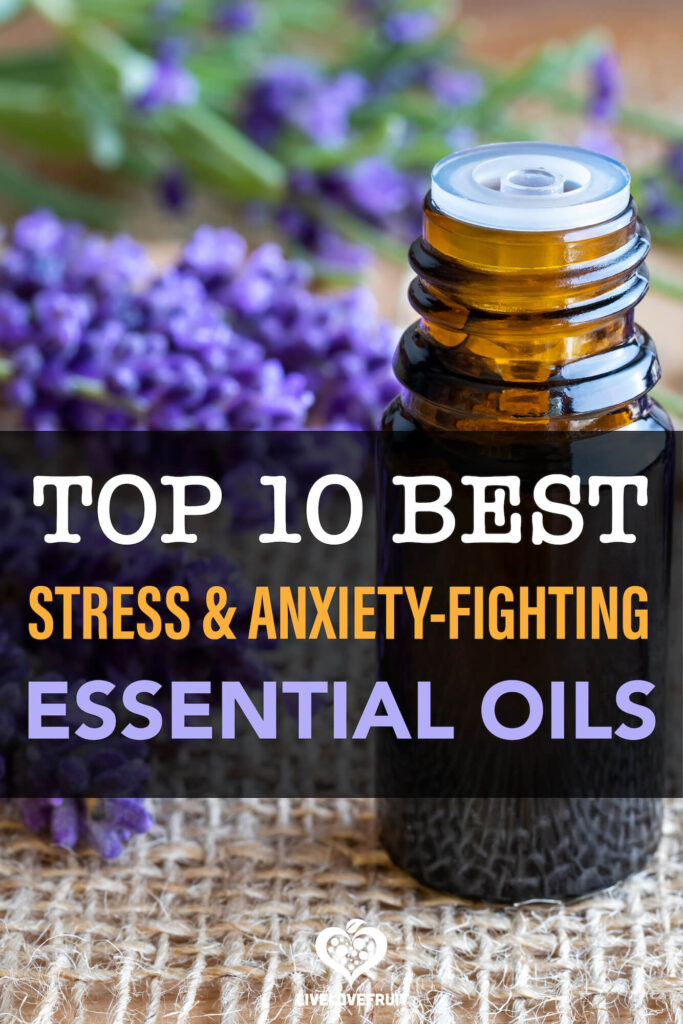
Top 10 Stress-Busting Essential Oils
While you’re working on how to view “stressful” situations as non-stressful, you still might need a little help in the mean time. When in times of need, try out some of these essential oils. They’re the best at helping relieve stress, anxiety and tension.
1. Lavender (Lavandula angustifolia)
Lavender is one of the most widely used herbs in aromatherapy, and for good reason too! The plant’s essential oil is said to promote relaxation and there are a handful of studies that back this up. For example, a study published in Physiology & Behavior in 2005 found that in 200 people waiting for dental treatment, breathing in the scent of lavender both lessened anxiety and improved mood (3).
Among the 160 active constituents found in lavender oil, the main ones attributed to stress relief include linalool, linalyl acetate, terpinen-4-ol, and camphor (4).
Lavender essential oil is thought to work via both psychological (the smell of the fragrance) and physiological effects (the effects of volatile oils in the limbic system (5)). In one study, EEG activity, alertness, and mood were assessed in 40 adults given 3 mines of aromatherapy using lavender and rosemary (both separate). Simple math computations were also given before and after the therapy. Individuals who received lavender aromatherapy felt significantly more relaxed and had decreased anxiety scores, improved mood, increased scores of alpha power on EEG (an indicator of alertness), and increased speed of mathematical calculations (6).
Enjoy a relaxing lavender bath by stirring a couple drops of lavender essential oil into warm bathwater just before entering.
2. Roman Chamomile (Chamaemelum nobile)
Most people are familiar with chamomile tea, but what many aren’t aware of is chamomile essential oil. This calming herb decreases irritability, anxiety and worry. A study conducted at the University of Pennsylvania School of Medicine found that chamomile essential oil “may provide clinically meaningful antidepressant activity that occurs in addition to its previously observed anxiolytic activity (7).”
The calming, sedative effects of chamomile are thought to be due to the flavonoid, apigenin, that binds to benzodiazepine receptors in the brain (8).
Other studies have found that inhaling the vapor of chamomile oil reduced a stress-induced increase in plasma adrenocorticotropic hormone (ACTH) levels (9).
While chamomile is generally safe, those who have allergies to ragweed may find their allergies get triggered when using chamomile.
3. Ylang-ylang (Cananga odorata)
This herb is heralded for being helpful with stress and anxiety – and it might have something to do with the fact that it has the ability to act directly on the olfactory system of the brain. Research has even shown that ylang-ylang can help release negative emotions like anger (10), low self-esteem (11) and jealousy.
Ylang-ylang is considered a mild sedative, and can lower stress responses like a fast heartbeat and high blood pressure (12). For these reasons, ylang-ylang is also useful in fighting insomnia and chronic fatigue.
A study conducted in 2008 took 144 volunteers and assigned them to different groups: ylang-ylang aroma, peppermint aroma or no aroma (control). Cognitive performance was assessed in each group using the Cognitive Drug Research computerized assessment battery, with mood scales completed before and after cognitive testing. While ylang-ylang impaired memory performance, it was found to significantly increase calmness.
A similar study that looked into the calming effects of ylang-ylang was conducted back in 2006. This study looked at physiological parameters in human volunteers and self-evaluation after transdermal (on the skin) absorption. They found that ylang-ylang oil caused a significant decrease of blood pressure and a significant increase of skin temperature. The subjects also rated themselves more calm and relaxed than subjects in the control group (13).
One of the best ways to calm yourself with ylang-ylang is by diffusing the oil in the air, or by inhaling directly from the bottle. If you have cats, do not diffuse ylang-ylang as it is considered poisonous.
4. Vetiver (Vetiveria zizanioides)
Vetiver essential oil has been used traditionally for helping ease stress, panic attacks, insomnia, anxiety, and even depression. According to a 2015 study on rats, vetiver displays anti-anxiety abilities similar to the drug diazepam (a drug that treats anxiety, muscle spasms and seizures) (14). The researchers postulated that the anxiolytic properties of vetiver might be associated with altering neuronal activation in the central amygdaloid nucleus (an area of the brain that is connected to brainstem areas that control the expression of innate behaviors).
What I love most about vetiver is how grounding it feels and smells. When I put some vetiver on my wrist, I immediately feel more calm and collected. Give this essential oil a try by either diffusing it, or wearing it on a small area of the skin.
5. Rose (Rosa damascena)
Rose is one of the most popular oils used for relaxation, and for good reason. This sweetly scented floral essential oil brings warm feelings of happiness during inhalation (just try it yourself!). Rose oil works a little differently than the previously mentioned oils in that it doesn’t really slow down heart rate. Instead, it stimulates circulation, sharpens your memory, reduces stress and boosts your overall mood. As a result, you feel more at ease.
In an open label study on humans, healthy females were given name tags with rose oil scent during a University Exam period (thought to be a model of chronic stress in the real world). The researchers found that the group with the rose oil scented tags had significantly less salivary cortisol than name tags scented with jasmine (15).
My favorite way to use rose is by spritzing rose water on my face and body throughout the day. It’s a great way to wake up, and makes you feel completely rejuvenated.
6. Frankincense (Boswella sacra or Boswellia carteri)
Frankincense essential oil is made from the resin of the Boswellia tree. It’s sweet, musky aroma is thought to ease anxiety, stress and depression. According to a study conducted in 2008, a blend of frankincense, lavender and bergamot used during an aromatherapy hand massage helped improve anxiety, depression and pain in people with terminal cancer (16).
Use frankincense as a massage oil diluted in a carrier oil like jojoba or almond oil. Alternatively, you can diffuse the oil into the air to help ease stress and tension.
7. Bergamot (Citrus bergamia)
Citrus bergamot is a hybrid fruit between a bitter orange and lemon or lime. The skin is used to create bergamot essential oil, and it has been traditionally used in Italian folk medicine for decades.
Over five different studies conducted between 2009 and 2013 found that bergamot essential oil aromatherapy reduces heart rate, blood pressure and stress (17).
In one study, a blend of lavender and bergamot was tested on forty healthy volunteers. The blended essential oil was applied topically to the skin of the abdomen of each subject. They found that those who received topical application of the essential oil blend had significant decreases of pulse rate, and systolic and diastolic blood pressure (indicating a decrease of autonomic arousal) compared to the control group. The participants also rated themselves as “more calm” and “more relaxed” than subjects in the control group (18).
Bergamot is best used in a diffuser, but if you want to wear it on your skin, just take note that it is photosensitizing, so it can increase the risk of sunburn and rash.
8. Sweet Orange (Citrus sinensis)
New research suggests that other scents, particularly citrus, are beneficial in reducing stress.
Brazilian scientists had participants spend five minutes inhaling either sweet orange essential oil, tea tree oil or plain water. They then underwent a stressful test while having their vital signs measured. Those who inhaled sweet orange oil were less anxious throughout the test, and experienced these beneficial effects long after the exam was over (19).
Another study performed at Mei University in Japan found that patients on antidepressants were able to significantly reduce the amount of antidepressants they took after given applications of orange oil (20). The researchers note, “the treatment with citrus fragrance normalized neuroendocrine hormone levels and immune function and was rather more effective than antidepressants.”
Orange oil is also photosensitizing, so make sure you avoid direct sunlight for 12 hours if you’re applying it to your skin.
9. Geranium (Pelargonium graveolens)
Geranium’s soothing properties can help alleviate a cluttered, stressed mind and also boost your mood. With over 65 different phytochemicals, geranium essential oil has a lot to offer.
A 2017 study found that after inhalation of geranium essential oil, mean anxiety scores significantly decreased among patients with acute myocardial infarction. The patients had to inhale geranium for 20 minutes a day on two consecutive days. The real-world application of this would be to simply diffuse geranium in your room to reap the stress and anxiety-relieving benefits.
Likewise, another study conducted on women in labor (a situation in which anxiety levels are high) found that mean anxiety scores significantly decreased after inhalation of the aroma of geranium essential oil. Diastolic blood pressure also decreased quite significantly (21).
If you feel like you need a little mood boost or are just looking to de-stress, try diffusing some geranium in a diffuser, or rub some on the small of your wrist for a quick pick-me-up.
10. Sandalwood (Santalum album or Santalum paniculatum)
One of my favorites – sandalwood. Because of its sedative-like properties, sandalwood works great for alleviating stress, anxiety, and boosting mood. It also has the ability to eliminate headaches and migraines, as well as improve memory and concentration.
A pilot study in 2006 documented the effects of sandalwood essential oil in alleviating anxiety in a sample of patients. The sandalwood aromatherapy and massage alleviated the symptoms of anxiety more than the sweet almond oil it was being compared against.
Sandalwood tends to be a bit thick, so if you plan on using it topically, make sure you dilute with a carrier oil like jojoba or almond oil.
Remember, while you might receive beneficial effects from essential oils, your furry animal friends might not. Always be sure to look up which essential oils are safe for your furry friends before using them in your house.




If you have debt, start slowing paying it off (even if it’s a minimum payment).
Did you want to say slowly instead of slowing?
Indeed haha – thanks!