

Lavender has been used for centuries. With its distinct aroma and countless applications, this flower has won the hearts (and health) of millions.
Back in ancient times, Romans and Egyptians would use lavender as perfume, as well as for bathing and cooking. Since then, a multitude of different health benefits have been discovered about the plant, making it one of the most popular on the market.
Health Benefits of Lavender
Lavender is a powerful antioxidant and antimicrobial, and has sedative, calming and anti-depressive properties. One of my favourite ways to use it is by growing it (so that it can help me feel calm while in my home) or by putting a little bit of lavender essential oil on my wrists and neckline to be fully inundated by the aroma.
Here are some reasons you should start growing your own lavender:
1. Antioxidant Protection
Lavender is a natural antioxidant that can increase the activity of the body’s most powerful antioxidants – glutathione, catalase and SOD (1).
2. Improves Mood and Reduces Stress
Lavender has been traditionally used to reduce migraines, stress, anxiety and depression. One study found that supplementing with 80 milligram capsules of lavender essential oil alleviates anxiety, sleep disturbance and depression (with no adverse side effects) (2). Diffusing lavender in your home, or simply putting a lavender plant in each bedroom can significantly help reduce your stress and anxiety.
3. Supports Brain Function
Research has found that lavender oil also acts as a natural treatment for Alzheimer’s disease. Inhaling lavender essential oil vapour can help prevent brain oxidative stress and improve cognitive impairment (3) – imagine what having lavender plants scattered throughout your home could do!
4. Heals Cuts and Burns
One of the most famous accounts of burn healing comes from lavender. A famous french chemist and scholar named René-Maurice Gattefossé treated burned soldiers in military hospitals during the First World War. He did so after discovering that lavender essential oil basically cured his own third degree burns without little scarring. This is all thanks to the chemical constituents of lavender, namely Lineally Acetate and Linalol, which have local analgesic and anesthetic effects (4).
5. Relieves Headaches
Lavender is particularly good at relieving tension or migraine headaches, because it induces relaxation and relieves tension. One study found that people struggling with migraine headaches saw a significant reduction in pain when they inhaled lavender for 15 minutes (5). Of the 129 individuals who had headache attacks, 71% of them responded entirely or partially to lavender.
6. Improves Sleep and Insomnia
It is no surprise that lavender helps with sleep and insomnia. It’s sedative and calming properties allow it to improve sleep and essentially treat those suffering from insomnia. Inhaling lavender has been shown to reduce sleep disturbance, improve duration and quality of sleep, as well as fight insomnia and improve overall well-being (6).
7. Relieves Pain
Did you know that lavender acts as a natural painkiller? If you’re suffering from arthritis or any other issue in the body that might be causing pain, you can rub lavender into the area to help reduce inflammation and pain intensity (7). It can also help when rubbed into the lower abdomen to reduce intensity of menstrual cramps (8).
Another benefit of lavender is that it keeps the bugs away! I love using lavender all over my clothes before I go out during the night in summer, because mosquitoes hate it!
Growing Lavender Indoors
Growing lavender indoors isn’t as daunting of a task as it may seem. They are incredibly forgiving plants, as long as you give them a little care and attention. Place a plant in your bedroom to improve sleep, or even in your kitchen or bathroom to provide you with stress-relieving compounds so that you can fully relax anywhere in your home.
There are many different lavender varieties, with one of the most popular being English Lavender (Lavandula Angustifolia). English lavender is super hardy and can be purchased as a seed or as a young plant in a nursery or gardening centre (will likely be under the name L. Officials or L. vera).
Below are some different English Lavender varieties to consider:
- Ashdown Forest: this variety creates a nice, low, informal hedge. It has grey-green foliage and pale-lavender flowers with a nice aromatic smell.
- Hidcote: a small variety that is taller and wider than Munstead. It has leaves that look more grey and flowers that are deep purple in color. Hidcote is one of the most aromatic varieties of lavender, and can easily fill an entire room with its scent.
- Imperial Gem: this type has bright silver leaves and stout purple flowers, making it a great option for a centerpiece on a table.
- Lodden Blue: a nice compact plant that grows to 50cm in height. Contains narrow, grey-green leaves and deep blue-purple flowers.
- Munstead: this compact variety makes it ideal for growing indoors. It has a high heat tolerance and is mostly resistant to the cold. It has bright green foliage with bluish flowers.
- Mini Blue: one of the smallest varieties, making it great for small rectangular flower pots. It also yields many flowers, so can really brighten up an empty space in no time.
- Royal Purple: this variety is a little bigger, but has long deep-purple flowers that are stunning to look at. It is sweetly fragrant, and foliage is grey-green.
How To Grow Lavender at Home
Lavender loves dry conditions. It is actually a perennial from the dry Mediterranean coast. It loves 8 hours of full sun, great drainage, and good air circulation. It is important to avoid wetting its foliage by letting the soil dry out between watering, and only watering the plant at its base.
The flowerpot you choose to grow your lavender in should be large with a drainage hole, and lots of loose gravel at the bottom. This will improve airflow to the roots and keep them from rotting. Lavender has a huge root system, so although the plant may seem small on top, it needs a big pot for the massive roots below (otherwise, you’ll suffocate it!).
Lavender prefers a mix of peat moss, perlite, and homemade compost. Mix approximately 60% peat moss with 40% perlite, and a couple of handfuls of homemade compost. If you don’t have compost, make sure you fertilize with a seaweed fertilizer every three weeks. Lavender will tolerate regular potting soil, however, they will grow better is something that stays drier.
Pruning
Lavender doesn’t require much care, but it should be pruned at least once a year. Since the plant is a semi-shrub, it can get woody over time. This can actually kill the plant, so trimming it every now and then will help it live.
To do this, pinch off the tips of a new plant as it grows and after it blooms to encourage new shoots and shape. Once it is about 1.5 years old, prune it yearly by cutting down two-thirds of the plant. A rule of thumb that my mom taught me is to prune it down to the third node above the old wood.
Keep In Mind
Lavender flowers at different periods throughout the year, so it won’t hold its flowers year-long. Regardless, the plant will still emanate a beautiful fragrance, so picking a stronger-scented plant will ensure that your home is filled with the fresh smell of lavender on the daily.
Lavender is toxic to cats and dogs, so make sure it is out of reach of children and pets.






I have never had good luck with lavender, and I just love it. I've tried and tried, but it gets moldy and died. I see pictures of fields of lavender and wonder how this can be, bc if there was a hard downpour of rain, and for days, how could the lavender survive?
My lavender always seems to make it! I think it's important to make sure that you keep your lavender moist, but not soaking wet. Also be sure to use the proper soil. The leaves don't like that much water, either, so when watering, water toward the base instead of on the plant itself! Experiment with what works – that's key!
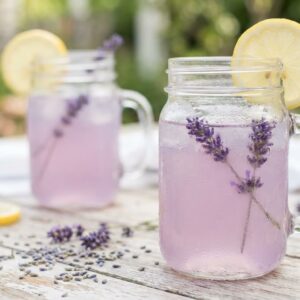
Love your site. Checked it out when a local here in Hawaii was selling their lavender lemonade in a fish take out place. Theirs is pink and very sweet. The lavender was lovely. Linda
Sounds yummy! 🙂