
Every year I always end up planting too little or too much, and for some reason, I just don’t learn from my mistakes.
As I sit here, writing this, looking at my 30+ kale sprouts that I started indoors, and 5+ watermelon sprouts. Yes, I’m laughing at myself.
I do have a feeling, however, that I’m not the only person who doesn’t properly plan out their garden before starting a billion seeds indoors to transplant in summer.
If you are someone who plans out their garden properly before planting – props to you! It takes a lot of time and patience. It took me nearly a week to research and come out with this chart that I’ll reveal to you soon.
On the other hand, if you’re someone who struggles with determining how much to plant in the garden per person for a year’s worth of food, look no further.
Let’s start with how to plan out your garden.
Planning Out Your Garden
Planning out your garden is an essential first step in the gardening process. If you’ve gardened before and kept track of how much you grow versus how much you eat, then planning out a garden is easy!
If you have never done this before, then no need to worry. That’s why I created this post and graphic.
But when it comes to planning out a garden, all of the determining factors are highly variable. That is, most people don’t have the same sized garden or back yard, growing conditions and location of the garden may be different, and even what you like might be different.
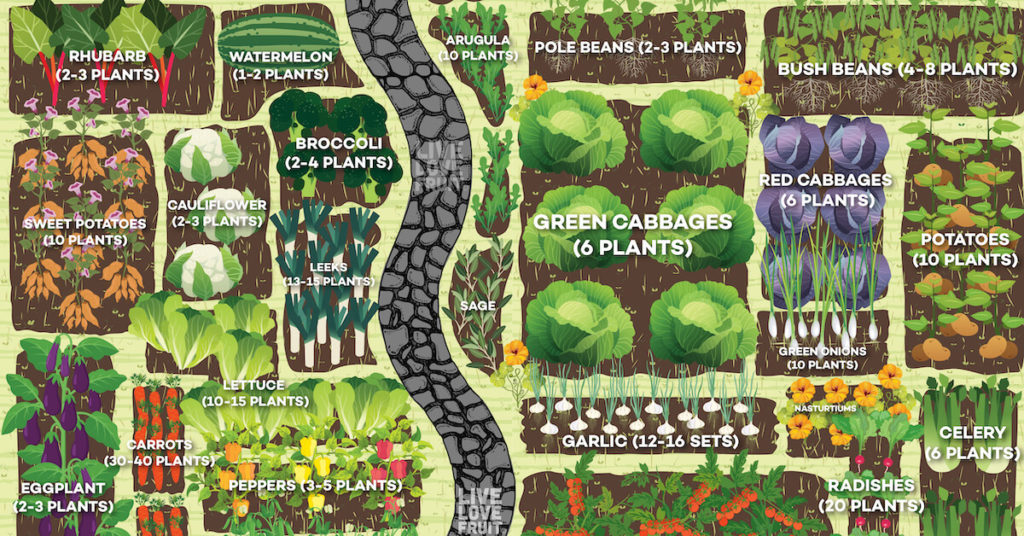
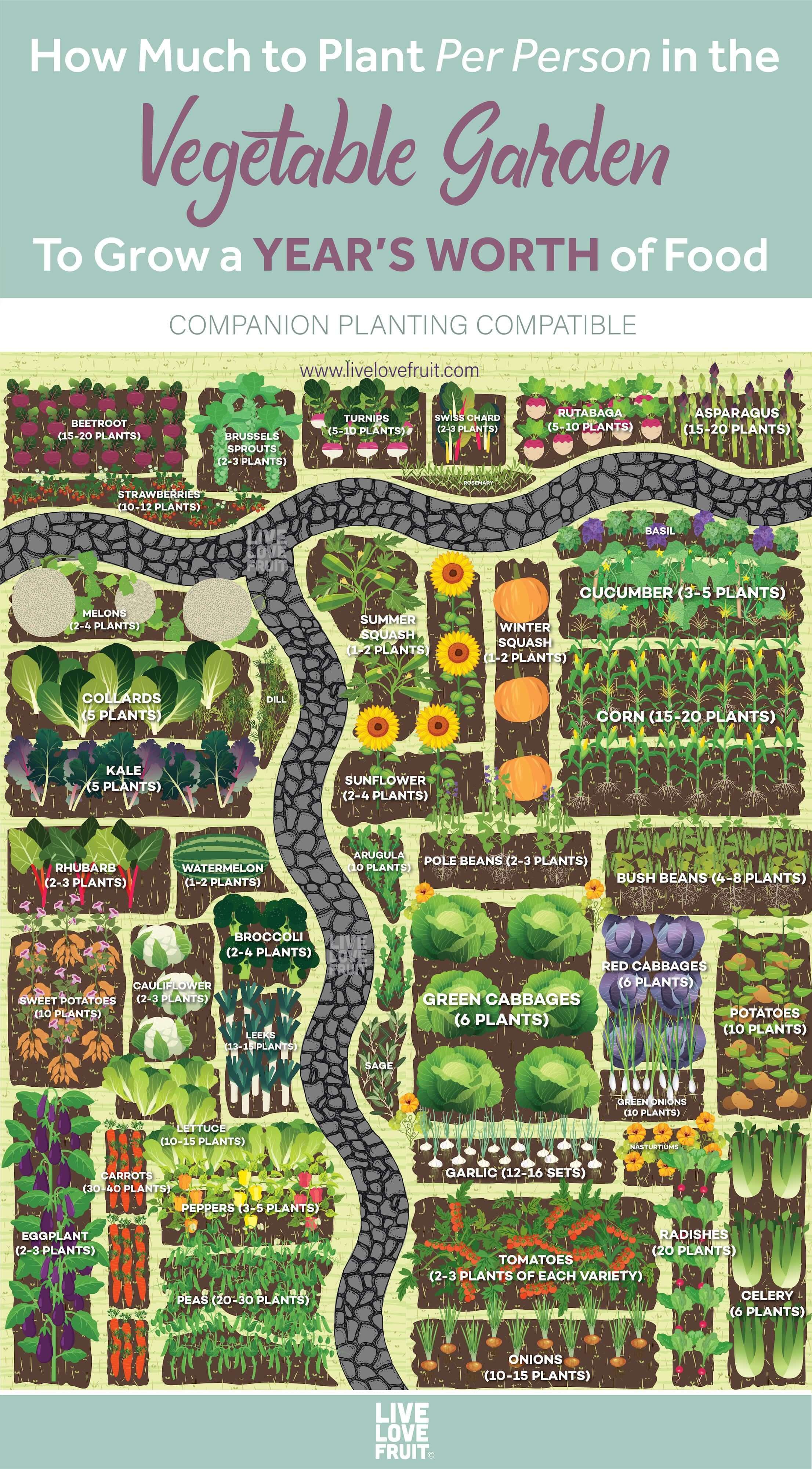
I created the graphic below trying to keep everyone in mind. I added some of the most popular vegetables (and fruit like tomatoes, strawberries, etc.) as part of the graphic, and tried to keep everything as close as possible keeping space in mind.
With that being said, all of these plants can be switched up. If you don’t like red cabbage, sub in more green cabbage. If you don’t like rutabaga, sub in more carrots.
The first step in planning out any garden, of course, depends on its size. So let’s start there.
1. How Big is Your Garden?
When figuring out how much you can plant per person in the garden, you need to look at the size of your garden first.
If you only have a small back yard, then you might not be able to plant enough to sustain you or your family for an entire year.
But that doesn’t mean you should not grow anything entirely!
Sometimes thinking outside the box is the best thing anyone with a small garden can do. If you have a chain-link fence, consider growing some green peas along the side of it so they can use it as a trellis to grow.
If you can, utilize the space in your front yard if your municipality allows it. Some people turn their entire front yards into gardens and manage to be self-sustainable year-round on what they grow.
If you have any extra large planters laying around, turn them into part of your vegetable garden. I personally have at least 6-7 planters on the concrete pad in our backyard, in addition to my lawn-converted garden.
Getting crafty and creative with how you use your space may mean all the difference in how much food you can produce.
2. How Many Vegetables Should You Plant Per Person?
Deciding how many vegetables you should plant per person in the garden depends on what you like to eat, which vegetables and other plants store well long-term and how many people you have in your family.
The graphic and chart below demonstrates how many vegetables (and fruit) you should plant for a single person. If you’re a family of four, then you would have to multiply this number by four!
I know it seems like a lot. If you plan to store these vegetables (or at least the ones that can store) long-term to use for the entire year, then these are the amounts you would need.
You should also keep in mind that people who are younger might need less than someone who is older and requires more caloric intake.
3. What Do You (or Your Family) Like to Eat?
Determining what you or your family likes to eat is another thing to keep in mind before planning out your garden.
If you don’t like kale, then don’t grow kale.
If you only eat rutabaga once or twice a year, don’t waste the space in your garden, and purchase this item when you need it instead.
Focus on what vegetables and fruit you really love and would regularly eat and/or store for one year.
I would personally plant an entire acres worth of strawberries if I could. I normally go out to an organic farm to pick over 30 liters every year, but this costs a lot of money. So for me, it would make sense to grow as many strawberries as I can to store in the freezer throughout winter.
4. Will You Eat Throughout The Season or Grow for Storage?
Some of the vegetables and fruit included in the chart below don’t necessarily store very well over winter.
Take cantaloupe, for example. This would be an item I would enjoy at the end of summer, as it probably wouldn’t store for very long throughout winter.
The chart below is not intended to keep you completely self-sustained on only your garden. It is more of a supplement to reduce the costs of purchasing groceries throughout the year.
For example, you still might need to purchase fruit throughout winter, and greens. But the things that store long like carrots, beets, potatoes, and cabbages should technically last you all winter long if you’re good at planning out your meals for the week.
You can even store things like corn and peas in the freezer if you de-shell the peas and cut off the kernels from the cob.
5. What Does Your Climate Permit?
Another thing to keep in mind is what your climate permits!
Determine what zone you live in, so that you can grow accordingly.
Here in Manitoba, I live in zone 3b, so that means that I live in a ‘temperate warm summer region’. Our growing windows are very short, so many of us have to start seedlings indoors before sowing into the ground.
If you know your planting zone, I found this resource as a great place to find out when to start your seedlings indoors, or if you have to at all.
When it comes down to it, the productivity of your garden and number of plants you can grow may vary based on climate and soil differences.
How Do You Store All of These Vegetables?
If you are planning on storing your produce over winter, then you might want to look at various forms of cold storage, like making your own root cellar out of trashcans or large buckets.
The biggest variables that determine how long your harvest will last are:
- Temperature
- Humidity
- Air Circulation
- Darkness
Cooler temperatures slow the rate at which your vegetables go bad. Most vegetables store well at temperatures between 32 and 50 degrees Fahrenheit or 0 to 10 degrees Celcius.
Humidity levels will also depend on how fresh your produce stays. Most produce stores best in an environment where the relative humidity is high – between 85-95 percent.
Air circulation is also important, as stale air can increase the growth of mold and other pathogens we don’t want.
I highly suggest looking into homemade root cellars, or other methods of cold storage that help fresh produce keep for long periods of time.
Other options for storage are canning, dehydrating, and freezing.
While I have never done any extensive canning in my life, I have dehydrated and frozen much of the harvest I get at the end of the year.
If I have any extra kale, I freeze it to put in smoothies. I also freeze any berries I pick throughout summer so I can eat them all winter.
For my tomatoes, I usually dehydrate them to make “sundried” tomatoes and use them in various raw vegan sauces and meals.
How Much to Plant Per Person in the Garden
Keeping all of the above in mind, now you can plan out your garden accordingly.
The graphic I created below is meant to give you some general guidelines for what would work best. I created it keeping companion planting in mind.
Companion planting is the practice of planting two or more plants together for mutual benefit. For example, certain plants might be grown together to help each other meet their nutrient requirements, growth habits, or pest-repelling abilities.
A classic example of companion planting comes from the Three Sisters trio – maize, climbing beans, and winter squash – which were often planted together by various Indigenous Nations across North America.
I decided to include the most commonly grown vegetables, along with some fruit like strawberries and melons. You can adjust the number of vegetables in the chart as you please. If you don’t like rutabagas, sub in some more carrots. Or, if you don’t want red cabbage, you can plant more green cabbage or beets.
- Arugula: 10 plants per person. Space plants 2 inches apart.
- Asparagus: 15-20 plants per person. Yields 1 to 2 pounds of spears. Space plants 8 inches apart.
- Beans (bush): 4-8 plants per person. Yields 4 to 6 pounds. Plant 3-6 inches apart in rows 25 inches apart.
- Beans (pole): 2-3 plants per person. Yields 4 to 6 pounds. Plant 3-6 inches apart in rows 25 inches apart.
- Beets: 15 – 20 plants per person. Yields 8 to 10 pounds. Thin plants 3 inches apart once the baby shoots sprout up.
- Broccoli: 2-4 plants per person. Yields 4 to 6 pounds. Space plants 20 inches apart in rows 3 feet apart.
- Brussels sprouts: 2-3 plants per person. Yields 5 to 7 pounds. Space plants 20 inches apart in rows 3 feet apart.
- Cabbage (green): 4-6 plants per person. Yields 10 to 25 pounds. Space plants 24-30 inches apart.
- Cabbage (red): 4-6 plants per person. Yields 10 to 25 pounds. Space plants 24-30 inches apart.
- Carrots: 30-40 plants per person. Yields 10 to 14 pounds per 10-foot row. Thin plants 1-2 inches apart once sprouts come up. Make sure rows are 12 inches apart.
- Cauliflower: 2-3 plants per person. Yields 10 to 15 pounds. Space plants 20 inches apart in rows 3 feet apart.
- Celery: 6 plants per person (or more, depending on who you are. I would personally grow 15-20). Yields 10 to 12 stalks per plant. Space plants 5 inches apart in rows 2 feet apart.
- Collards: 5 plants per person. Yields 4 to 8 pounds. Space plants 1 foot apart in rows 1 foot apart.
- Corn: 15-20 plants per person. Yields 1 to 2 ears per plant. Space plant 4-6 inches apart in rows 2 feet apart.
- Cucumber: 3-5 plants per person. Yields 5 to 7 pounds. Space plants 1-3 feet apart in rows 3-6 feet apart.
- Eggplant: 2-3 plants per person. Yields 8 oval fruit. Space plants 25 inches apart in rows 3 feet apart.
- Garlic: 12-16 plants per person. Yields 10-30 bulbs. Space plants 3-6 inches apart in rows 1 foot apart.
- Kale: 5 plants per person. Yields 4 to 8 pounds. Space plants 1 foot apart in rows 1 foot apart.
- Leeks: 13-15 plants per person. Yields 5 to 6 pounds. Space plants 3 inches apart in rows 8 inches apart.
- Lettuce: 10-15 plants per person. Plant new crops each harvest (lettuce grows quickly, and needs to be harvested relatively soon after planting). Yields 10 to 15 pounds. Space looseleaf lettuce 3 inches apart, and all other types 1 foot apart in rows 1 foot apart.
- Melon: 2-4 plants per person. Yields 2 to 3 melons per vine. Space plants 3-4 feet apart in rows 3 feet wide.
- Onion: 10-15 plants per person. Yields 7 to 10 pounds of bulbs. Space onion transplants 4-5 inches apart in rows 18 inches apart.
- Peas: 20-30 plants per person. Yields 2 to 6 pounds. Space plants 2-4 inches apart in rows 2 feet apart for bush or pole.
- Peppers: 3-5 plants per person. Yields 18-23 pounds. Space plants 1 foot apart in rows 2 feet apart.
- Potato: 10 plants per person. One plant will yield around 5-10 potatoes. Space seed potatoes 10-14 inches apart in trenches 2 feet apart.
- Radish: 20 plants per person. Yields 5-8 pounds. Space plants 1 inch apart in rows 6 inches apart.
- Rhubarb: 2-3 plants per person. Yields 2-5 pounds per plant. Space plants 4 feet apart.
- Rutabaga: 5-10 plants per person. Yields 8-30 pounds. Space plants 4-6 inches apart in rows 1 foot apart.
- Squash (summer): 1-2 plants per person. Yields 10-80 pounds. Space plants 2-4 feet apart in rows 5 feet apart.
- Squash (winter): 1-2 plants per person. Yields 50-100 pounds. Space plants 2-4 feet apart in rows 5 feet apart.
- Strawberries: 10-12 plants per person. Yields 10-12 pounds. Space 18-24 inches apart in rows spaced 4 feet apart.
- Sunflower: 2-4 plants per person. Yields 10-12 pounds of seeds. Space plants 12 inches apart in rows 3 feet apart.
- Sweet Potato: 10 plants per person. Yields 15-20 pounds. Space plants 1 foot apart in rows 2 feet apart.
- Swiss Chard: 2-3 plants per person. Yields 7-10 pounds. Space plants 1 foot apart in rows 1 foot apart.
- Tomato: 2-3 plants of each variety you want (Roma, beefsteak, persimmon, pineapple, etc.). This will yield a varying amount of tomatoes, depending on what type. Expect 10-100 tomatoes per plant! Space plants 40 inches apart in rows 30 inches apart.
- Turnip: 5-10 plants per person. Yields 8-12 pounds. Space plants 5-8 inches apart in rows 1 foot apart.
- Watermelon: 1-2 plants per person. Yields 8-40 pounds. Space plants 4 feet apart in rows 4 feet wide and 6 feet apart.
The Bottom Line
Determining how much you can plant per person in the vegetable garden for a year’s worth of food takes some planning and careful consideration.
By understanding how much you can grow in the space you have, what climate you live in, what foods you like to eat and whether you’ll be storing your harvest long-term, you can accurately plan a successful garden.
Utilizing this handy graphic on planning your own vegetable garden will give you a birds-eye view and approximation for how you might want to plan out your own garden this summer.





Do you have problems with your winter squash, summer squash, and cucumbers cross pollinating since you planted them so close together?
Have never had issues with that!
Cucumber will not cross pollinate with squash because they aren’t the same species
Do you plant everything at once or do you do succession planting? I am struggling to figure it out
I would normally just plant everything at once, but some people do succession planting.
Very inspiring graphic. Curious about what you used to make it? 🙂
Adobe Illustrator!