
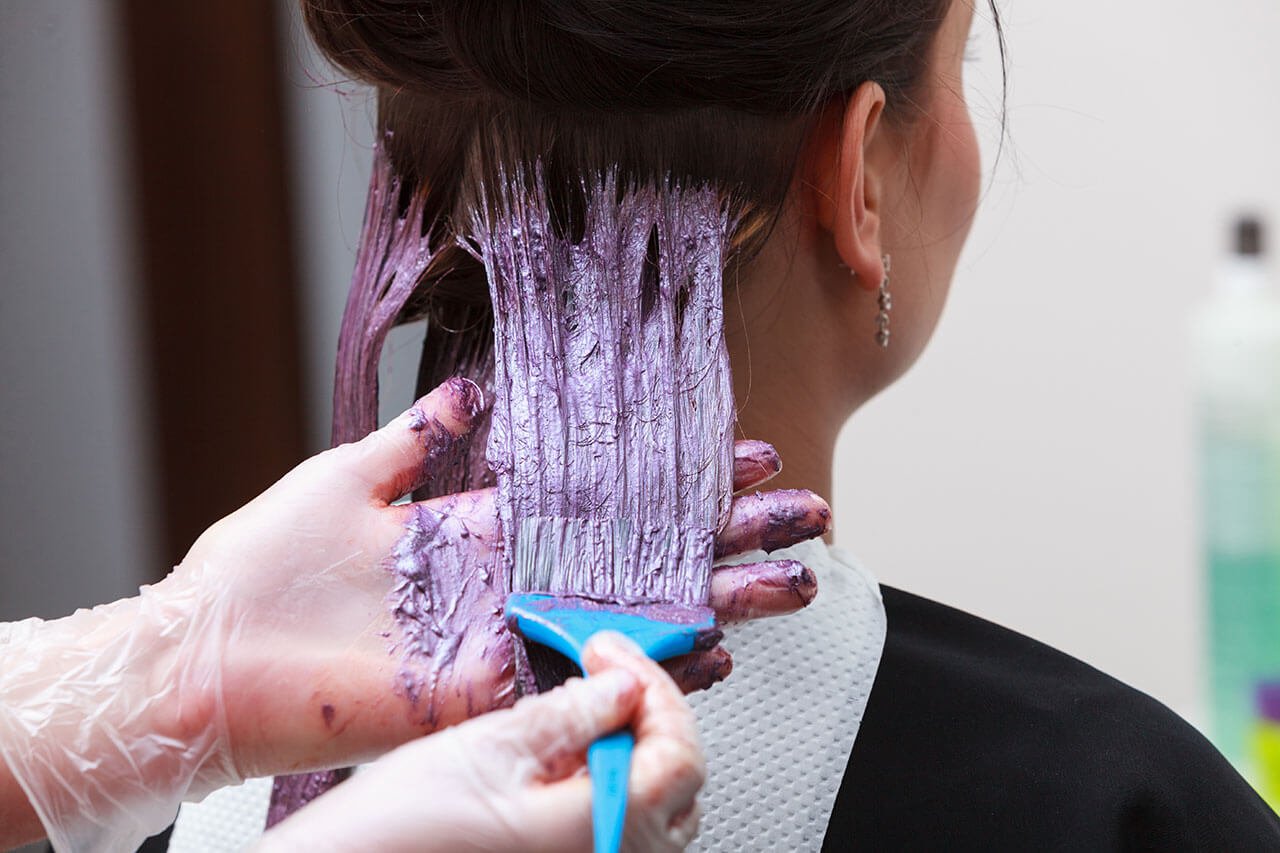
Hair dyes are used by millions of women and men worldwide. From the adventurous “unicorn hair” that has swept the nation, to the more subtle browns and blondes used by those who are graying. Hair dying is an important routine of many individuals’ beauty process – but it comes with a risk.
The dangers of hair dye are rarely considered by those who use it. In fact, the scalp is one area of the body that absorbs toxins and other pollutants (like the chemicals found in hair dye) the fastest. Yet no one is alarmed that over 5000 types of cancer-causing chemicals are being applied on their head?
Even cancer foundations like The Princess Margaret Cancer Foundation encourage the use of hair dyes to conquer cancer. Yes, you read that right folks. Just like they sell hot dogs to raise funds for breast cancer. The irony in this is palpable.
So what makes hair dye so dangerous?
The Dangers of Hair Dye
When the National Cancer Institute (NCI) states that over 5,000 different chemicals are used in hair dye products (some of which are reported to be carcinogenic) (1), you should probably stay away from said products.
Before a color can penetrate the hair shaft, the cuticle (protective coating) must be opened so that chemicals can change the natural pigment molecules of the hair shaft. As you can imagine, some pretty hefty chemicals would be required to achieve this effect.
While many dangerous chemicals like diaminotoulene and diaminoanisole were removed from hair dye products over 20 years ago, they were simply replaced with other, more dangerous chemicals. One of the most common chemical in hair dye products today are phenylenediamines, which vary depending on the desired color (2):
– para-phenylenediamine (black)
– para-toluenediamine (brown)
– ortho-phenylenediamine (brown)
– para-aminophenol (reddish brown)
– ortho-aminophenol (light brown)
These ingredients, along with the hundreds of other combinations like coal tar, formaldehyde, eugenol (fragrance), ammonia, peroxide and lead acetate are major body irritants. They’re known to cause severe allergic reactions when in contact with the skin, like itchy scalp, redness of the scalp, contact dermatitis, conjunctivitis, and even headaches. Not to mention hair breakage and even hair loss.
Other irritant ingredients like resorcinol and 1-naphthol are classified as hazardous chemicals, which when inhaled can cause abdominal pain, nausea and unconsciousness (3). Human studies have shown that exposure to resorcinol was associated with thyroid effects, central nervous system disturbances, and red blood cell changes (4). 1-napthol was given a 7-8 (hazardous) score by the Environmental Working Group, as it is a known lung and skin toxicant, and potential cancer-causing agent (5).
While we’re on the topic of cancer – how do the dangers of hair dye tie in with a disease so many of us are fearful of?
The Daily Mail reported that permanent hair color interacts with pollutants like cigarette smoke to create one of the most carcinogenic compounds known to man (6). The discovery was made by the company, Green Chemical, who conducted the review and ‘connected the dots’ between previous research to examine the true safety of hair dye.
The company discovered that secondary amines (molecules present in all permanent hair dye), create N-nitrosamines when exposed to airborne pollutants. This extremely toxic compound can remain on the scalp and hair shaft for weeks or even years following application.
Both human and animal studies indicate that the body absorbs the carcinogens and other chemicals in permanent and semi-permanent dyes through the skin in just under the 30 minutes the dyes remain on the scalp.
Research on hair dyes began back in the late 1970s, when studies started finding links between the use of hair dyes and breast cancer. In 1976, one study found that 87 of 100 breast cancer patients had been long-term hair dye users (7).
Other studies have found that women who dye their hair to change the color, rather than trying to mask grayness, were at a three-fold risk of developing breast cancer (8).
A study conducted at Harvard University also found that women who dyed their hair one to four times a year had a 70% increased risk for ovarian cancer (compared to women who never dyed their hair) (9). This study also found that women who used hair dye five times or more per year had twice the risk of developing ovarian cancer compared to women who never used hair dye.
Other evidence suggests that if you use hair dye you may also be increasing your risk of non-Hodgkin’s lymphoma, and multiple myeloma anywhere from two to four times over a non-user (10). In 2008, Yale researchers found that women who used hair dye 6-9 times a year had a 60% higher risk of developing lymphocytic leukemia (11).
Other hair ingredients like chlorides are irritating to the mucous membranes in the body (and hence, mucous producing). Chloride fumes are also highly irritating to the lungs and eyes, and can cause burns or rashes on the skin.
Hair dyes also use penetration enhancers (chemicals that can penetrate the hair shaft – and your skin), which makes absorption into the bloodstream that much easier for the chemicals involved. Penetration enhancers include things like propylene glycol, polyethylene glycol, fatty acids and isopropyl alcohol.
Alternatives to Conventional Hair Dye
One of the best natural alternatives to conventional hair dye is henna. It can enhance the blonde or brown in one’s hair, or even turn it a completely different color. Just make sure you choose the right henna. The henna created by Morrocco Method is free of any synthetic colorants, and is 100% natural. I used it myself to make my brown hair a little darker, and it gave me exactly what I wanted. You can find my henna review here.
Another thing you can do to keep your hair luscious is by regularly applying coconut oil. Coconut oil is loaded with healthy fats, vitamins and minerals that are great for your hair and scalp. It also helps strengthen the hair by preventing breakage and encourages hair growth.
There is Nothing Wrong with Gray Hair
In a culture obsessed with youth and beauty, many women, men and all those in between feel pressured to keep their grays hidden. In fact, many hair dyes today are marketed towards covering up grey hair, and for boosting one’s self-esteem.
I wanted to write a little bit about why gray hair is not a bad thing, because I feel like so many women (much more than men) are pressured to keep their locks any color other than grey (who decided that?). Society assumes that when a woman has gray hair, they are less attractive, not taking care of themselves and letting themselves go. It gives the assumption that women with gray hair are no longer worthy – this is far from the real truth.
I only say that gray hair shaming in women is worse than that in men, because when a man goes gray, they’re often referred to as “silver foxes” and become even more good looking than they were before they went gray. In fact, recent studies have shown that going gray ages women twice as fast as men (12).
This stigma not only affects a woman’s confidence, but it has also been shown that women who gray hair are hired less often for jobs in certain fields (13). It is also more difficult for older women to date than older men.
So please, if you have gray hair, don’t dye it because you’re scared what people will think of you. Rock your grays and start dismantling the stigma that gray hair is ugly and unwanted in society. Confidence is sexy.








Does this include hi lighting and going blonde? Most of what I read dealt with dark dyes
Yes, it includes light colors as well.
I have my hair foiled for highlights so the color is not on my scalp. Do you agree that is a good solution?
It still does touch your scalp on the edges, and washing your hair will mean the residue touches your scalp. I’d avoid it altogether.
I think there’s an error in the part about coconut oil being high in carbohydrates. Did you mean to type fatty acids? Oils don’t have carbs. I’d like to share this article, but not with inaccurate info.
Hey Adriane. That is odd, I am not sure why carbohydrates are there, but thanks for pointing it out! Just corrected.
Is bleaching hair-dangerous ? No hair color is involved !
Yes, bleach is incredibly toxic and should be nowhere near your skin, hair or body.