

Many of us take breathing for granted. After all, if you couldn’t breathe, you’d be dead. Your lungs give you life, oxygenate your blood so you don’t go brain-dead, and protect your body from harmful substances.
Given your lungs do all this, it’s good to support them as much as you can to ensure they stay clean and clear. Otherwise, if you don’t, you could end up with different lung-related illnesses down the road, or even systemically given your lungs are so closely connected with the circulatory system.
The Circulatory System and Gas Exchange
The circulatory system consists of three independent systems that work together: the heart (cardiovascular), lungs (pulmonary), and arteries, veins, coronary and portal vessels (systemic). This system is responsible for the flow of blood, oxygen, nutrients, and other gases, as well as hormones that shuttle between cells.
The cells of our body need energy to do their work. They get energy by combining sugars or other food materials with oxygen, thus allowing us to function as a living, breathing human being.
During this creation of energy, carbon dioxide is formed. However, too much carbon dioxide could poison a cell, so instead, the blood brings oxygen (from the lungs) to the body cells and takes away their carbon dioxide. The blood that travels back to the heart and lungs is dark red – meaning it has picked up carbon dioxide from the body cells, leaving most of its oxygen with the cells.
The carbon dioxide in the blood is exchanged for oxygen in the alveoli. These tiny air sacs int he lungs are just one cell thick, and are surrounded by capillaries that are also only one cell thick. Blood from the heart flows through these capillaries and collects oxygen from the alveoli. At this same time, carbon dioxide passes out of the capillaries and into the alveoli. When you breathe out, you get rid of this carbon dioxide.
The bright red, oxygen-rich blood then returns to the heart and is pumped out to different areas of the body.
How Chemicals Enter The Body via The Lungs
There are four major ways that chemicals enter the body:- Inhalation (breathing)
– Skin (or eye) contact
– Swallowing (ingestion or eating)
– Injection
The most common way that chemicals enter the body is via inhalation. Air is drawn through the mouth and nose, and then into the lungs. Each of the 12 breaths brings in about 500 mL of air, corresponding to 6 litres of air per minute, together with any contaminants present in the air (1).
As these chemical vapours, gases and mists reach the alveoli in the lungs, they also pass into the blood and are distributed throughout the body.
This was demonstrated in one controversial study where volunteer participants inhaled gold nanoparticles, which were found in their bloodstream and urine as much as three months later (2). The study wanted to prove just how dangerous air pollution really is, and that not only our lungs, but our entire body, is affected as an outcome.
Even The International Agency for Research on Cancer (IARC) has classified particulate mater and outdoor air pollution as carcinogens, and claimed air pollution as “the most important environmental cancer killer (3).”
Many products used in the home can also interfere with proper lung function. Household cleaners, talcum powder, stuff we track in from outside, fabric softeners, cologne, air fresheners, scented candles, dust, and animal dander are common irritants.
So if the air we breathe is filled with disease-causing substances, what can be done to strengthen and revitalize your lung’s health?
While I highly recommend investing in an air-purifier like Intellipure to keep the air in your home clean from potential bacteria, viruses and micro-particles, you can also utilize food as medicine to heal the lungs.
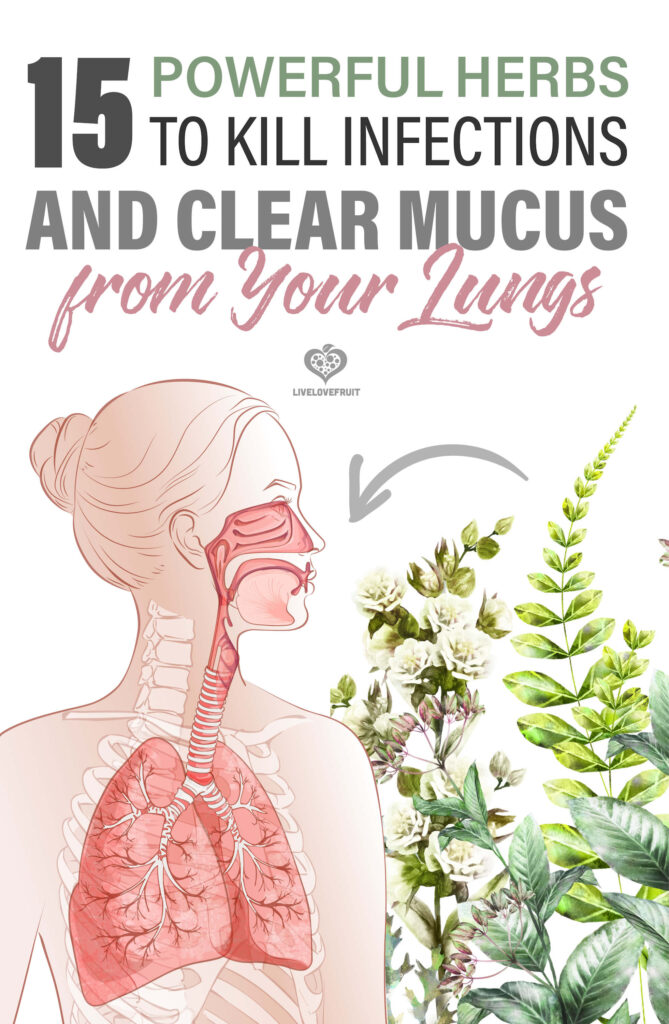
15 Lung-Cleansing Herbs
These 15 lung-cleansing herbs can be easily integrated into your diet. Whether you incorporate them into a salad, drink them as a tea, or take them as a tincture, these herbs will be sure to keep your lungs healthy and happy.
1. Thyme
Thyme is one of the most lung-healing herbs out there. It supports the health of the respiratory tract and fights bacterial infections like pneumonia. One study from 2016 concluded that thyme, without a doubt, is one of the most protective and supportive herbs for the bronchial pathways of the lungs. They explain that thyme possesses expectorant, mucolytic, antitussive and antispasmodic properties. Moreover, when thyme extract was evaluated in a H460 lung cancer cell line, it was demonstrated to induce cell cytotoxicity in addition to reducing inflammatory cell signals (4).
Thyme can be taken as a tincture, as a tea, or used as an essential oil in a diffuser.
2. Mullein
Mullein is an incredibly effective plant for clearing your lungs of mucus, phlegm and inflammation. Mullein acts as an expectorant, meaning is helps the body remove excess mucus from the lungs, and soothes the mucus membranes with its emollient properties. It can help with bronchitis, heavy coughing, chest colds, and even asthma.
My favourite way to take mullein is in a tea by adding 2 teaspoons dried mullein leaves and/or flowers and steeping it in 1.5 cups of water for 15 minutes.
3. Peppermint
Menthol, a compound in peppermint, is an anti-spasmodic and anti-inflammatory compound that helps relax the respiratory tract. Peppermint oil is one of the best ways to use peppermint, as it is high in other lung-healing compounds like caryophyllene, limonene, pinene and pulegone. Peppermint oil can help clear symptoms of upper respiratory congestion that may stem from allergies, asthma, cold, flu bronchitis and the like (5).
To use peppermint oil, you can rub some on your chest (with a carrier oil), or diffuse it in the air.
4. Eucalyptus
Eucalyptus is commonly used to relieve irritations of the throat, and improve the health of the respiratory tract. It contains the active compound cineole, which is an active ingredient found in many syrups and cough medications. It is highly effective for treating asthma, bronchitis, COPD, pneumonia, and even tuberculosis. Using it for asthma is a proven treatment that dilates blood vessels and allows more oxygen into the lungs (6).
To use eucalyptus, you can mix eucalyptus essential oil with a carrier oil like jojoba oil, and then rub it on the upper chest. Alternatively, you can diffuse the oil.
5. Lungwort
This beautiful flowering herb has been used around the world for a variety of respiratory ailments, including colds, coughs, catarrhal problems and bronchial detoxification. The University of North Carolina classifies lungwort as a herb useful for reducing irritation and providing soothing qualities (7). The high mucilage content of lungwort is known to be helpful for respiratory conditions like asthma and chronic bronchitis (8).
To use lungwort to heal lung conditions, take as a tincture, or drink as a tea.
6. Oregano
The active compounds in oregano, carvacrol and rosmarinic acid, provide it with strong decongestant properties that promote good health of the lungs. Rosmarinic acid reduces fluid buildup and even swelling during an allergy attack, making it an all-natural histamine-reducing compound (9). It can help reduce nasal congestion, calm down excess mucous production and alleviate allergy-related sneezing.
You can diffuse oregano essential oil to breathe in the beneficial properties, or you can consume the oil straight (make sure the oil is consumable – most essential oils are not, but those marketed for internal use can be consumed).
7. Lobelia
Lobelia is another great lung-cleansing herb that contains the alkaloid lobeline. Lobeline is an expectorant, diaphoretic, and bronchodilator that supports the respiratory system in a number of different ways. As an expectorant, this herb breaks down congestion and mucus, and helps open the airways, encouraging stronger, deeper breathing. It is believed that lobelia stimulates the adrenal glands to release epinephrine, thereby relaxing the airways and allowing easier breathing (10).
You can take lobelia as a tincture or tea.
8. Plantain
This omnipresent weed that has spiky greens and grows in the wild can actually help our lungs! Plantain leaves stimulate mucus production, making them a great remedy for a dry cough or throat irritation. In fact, studies have found plantain leaf very effective in easing bronchitis, even in children (11). Since you can find this herb in your backyard, this is probably the most convenient home remedies for lung congestion.
Plantain, as stated above, can be harvested from your backyard. You can use 3-4 tablespoons of dried plantain herb and steep in 1 cup hot water for 15-20 minutes. Likewise, you can also use plantain tincture.
9. Chaparral
Note: this herb is not advised for long-term use or for people with liver disorders.
Chaparral relieves lung irritation and moderates the histamine response, making it extremely useful for bronchitis and colds. In addition, this plant contains an antioxidant called nordihydroguaiaretic acid (NDGA) that reduces the ability of abnormal (cancer) cells to generate energy.
Chaparral can be drunk as a tea by steeping 5 tablespoon dried chaparral leaves and stems in one quart of boiling water.
10. Sage
Sage contains potent aromatic oils like thujone, camphor, terpene, and salvene that open your sinuses and relieve lung congestion. Sage even has the ability to inhibit cancer growth and metastasis in the lungs and elsewhere in the body (12).
Sage can be put to good use by inhaling sage essential oil vapours via a diffuser, or by drinking a tea made of dried sage.
11. Liquorice
Liquorice is a herb that is often recommended to treat respiratory problems. It contains strong anti-inflammatory properties that will help loosen and release mucus, making the air passages wider so that oxygen can flow more freely. Drinking liquorice root tea three times a day can help cure a cough, asthma, and congestion.
12. Coltsfoot
This herb has flowers that look very similar to dandelions (and are equally as medicinal). This herb is great as reducing inflammation (13) and effectively treats bronchitis, pneumonia, asthma and tuberculosis. It is best not taken long-term, however, and only medicinally, when needed.
This herb is best taken as a tincture.
13. Marshmallow Root
Marshmallow root is soothing, and helps reduce inflammation, irritation and coughing (14). Its antitussive properties and mucilage abilities allow it to decrease irritation of the throat, reduce swelling in the lymph nodes, speed up healing time and reduce a dry cough. For these reasons, marshmallow extract is often added to many cough syrups and throat lozenges.
You can use marshmallow root as a tea or tincture.
14. Chickweed
Chickweed is very beneficial for the lungs as it contains soapy substances called saponins that increase the permeability of cellular membranes (15). These saponins also dissolve and break down unwanted matter like thickened mucus in the respiratory and digestive systems.
Chickweed can also be used as a tincture or tea to restore moisture and bring cooling relief to the lungs (great for irritated lung tissue which cause spasmodic and unproductive coughs).
15. Elecampane
Note: not recommended for pregnant women.
Also known as horse heal, this plant is great at cleansing the lungs. It is used in Eastern medicine for bronchitis and asthma, as it acts as an effective, natural expectorant. Elecampane contains inulin, a detoxifying phytochemical that coats and soothes the bronchioles of the lungs to help them relax. As a result, wheezing and coughing are relieved.
Elecampane can be consumed via tincture or tea.
No matter what lung-cleansing herb you choose, your lungs will greatly benefit if you consume these herbs throughout the year (especially in the winter!). Let me know in the comments below if you’ve ever used one of these herbs for a respiratory ailment. I’d love to know!







I make a cough extract using Elecampane and Thyme. It is amazing as an expectorant. 💚
Awesome!! That sounds amazing 🙂
I grew thyme to mut on soups or my sons and myself for chest congestion..that and fresh ginger. Yes with honey and lemon are the best “medicines”..thank you for this healing article.
Sharing it with a friend that ussuffering covid effects after
pnenomia .. he has recently has heart surgery after a heart attack so I suggested huswife make him some soup with thyme and sage. Leaf..hoping it helps this dear man.
God bless you.Maryan,
Whetr do you find the fresh herbs to grow????
You can order seeds online or find them in local nurseries.
My spouse & I have COVID. It’s been 4 weeks now. The cough & shortness of breath is relentless!
Any additional ideas or suggestions would be appreciated.
You can check out this article for extra resources: https://livelovefruit.com/15-natural-ways-to-boost-your-immune-system/
Thank you for this very enlightening article. I was recently diagnosis with IPF, and I am desperate.
No problem, Jim. Glad it helps!