

Baking can be healthy, as long as you keep a close eye on the ingredients.
Most conventional cookies and cakes are full of inflammatory ingredients like refined sugar, wheat, and vegetable oil like canola or safflower (yes, even the “healthier” options contain these ingredients).
Fortunately, there are many ways you can make muffins that contain ingredients that heal the body, instead of create disease.
What is Inflammation?
There are two types of inflammation: acute and chronic. Acute inflammation is a healthy bodily response that serves to protect and repair your body from something damaging. This could be an infected cut, strained muscle or bruising. Acute inflammation is often expressed as scabbing, redness, pus and swelling.
Chronic inflammation, on the other hand, is not part of the natural healing process. It is referred to as a prolonged inflammatory response that involves a progressive change in the type of cells present at the site of inflammation (1). This heightened immune activity will eventually cause organ and tissue damage if left unchecked. This can make you more prone to chronic diseases and illnesses like asthma, allergies, arthritis, and autoimmune disorders.
Studies have also found that chronic inflammation may also be at the root of several other diseases. This includes things like cardiovascular disease, diabetes, cancer, depression, premature aging and Alzheimer’s disease.
What Can You Do About Chronic Inflammation
Chronic inflammation can result from a variety of factors. Long-term exposure to chemicals (whether in household products, cleaners, personal care products), polluted air, processed food stuffs, or untreated causes of acute inflammation can result in chronic inflammation.
Getting rid of chemical products and treating your air with a high-quality air purifier would be a great first step. Next, you want to look at what you’re putting inside your body. Inflammatory foods like refined sugar, vegetable oils (like canola), dairy products, wheat products, fried foods, refined flour, red meat, processed corn, artificial chemicals and additives and trans fats are just some of the few things you need to look out for.
Consuming more anti-inflammatory foods like fruits and vegetables, nuts and seeds, and anti-inflammatory herbs is where you’d want to focus next. Making antioxidant-packed smoothies for breakfast and green juices for a mid-day boost are great ways to lessen the inflammatory response.
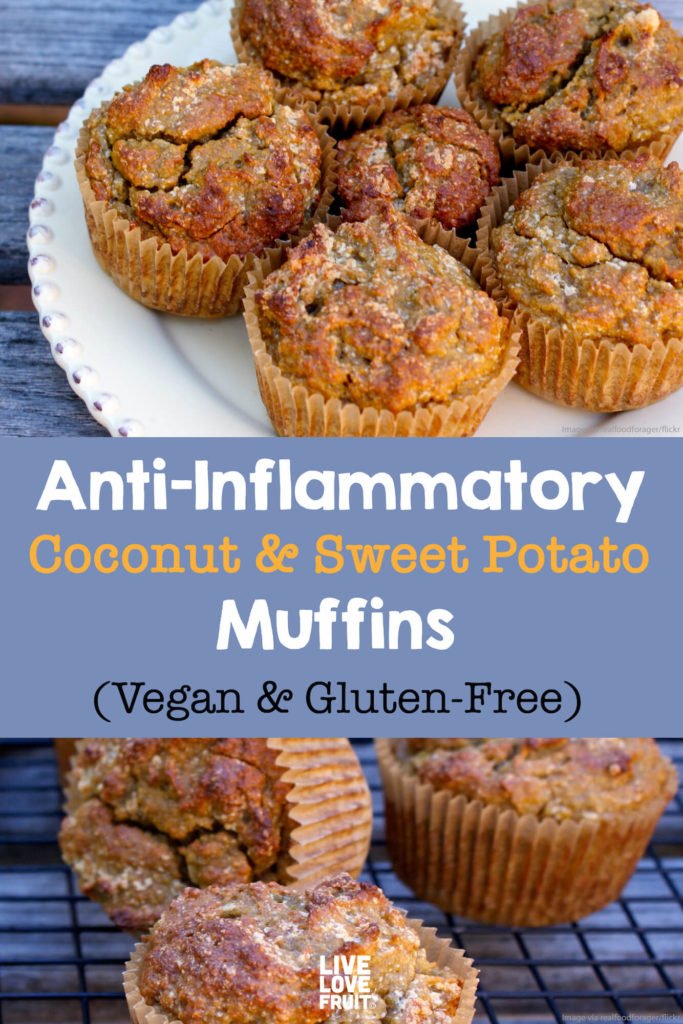
Swapping out your highly processed snacks for some anti-inflammatory coconut and sweet potato muffins in another way to nip inflammation in the bud.
Anti-Inflammatory Properties of These Muffins
Sweet potatoes are an incredibly nutritious food. They’re packed with antioxidants like beta carotene, vitamins C, E & D, as well as minerals like manganese and iron. Beta carotene helps fight oxidative stress, cancer, and inflammation (1).
Coconut milk contains healthy medium-chain fatty acids that improve metabolism and support weight loss. It is rich in nutrients like vitamins C and E, as well as B-complex. It contains iron, selenium, calcium, magnesium, and phosphorous, which nourish and provide strength and integrity to our bones.
Coconut flour is a great substitute for regular flour, too, seeing as how it is naturally sweet, and perfect for diabetics to use. It even helps lower cholesterol and supports a healthy intestinal tract.
Ginger and turmeric are also known inflammation-fighters. They protect against diseases like arthritis, and fight against bacteria, viruses and even cancer. They’ve both been shown to be just as effective (if not more beneficial, seeing as how they come with no side effects) as pharmaceutical drugs to fight pain-related inflammation.
Anti-Inflammatory Coconut and Sweet Potato Muffins
These muffins are naturally gluten-free and vegan. They’re quick to whip up, and can be stored in the freezer to eat throughout the week.
My favorite brand of coconut milk that I use for recipes is called “Real Thai”. Real Thai coconut milk does not contain any fillers or other weird ingredients that take away from the flavor of the milk. All it contains is coconut and water.
The brown rice flour can be substituted with buckwheat flour if you want a heartier muffin with plenty of fiber. All you have to do is pick up some buckwheat groats, grind them up in a blender until you make a flour, and use as you would any other flour.
You always want to make sure that you leave these anti-inflammatory coconut and sweet potato muffins on the counter for at least 30 minutes before consuming. This will ensure the mixture on the inside of the muffins has enough time to cool down and settle.
Often with gluten-free mixes (cookies, muffins, or the like), the flours will still feel sticky and goopy right after being taken out of the oven. Letting them sit before eating will mitigate this effect.
Tips for Making Better Muffins
There are a few rules to keep in mind when creating the perfect muffin. Use these tips when following the recipe below:
- Do NOT Overmix the Batter
While overmixing the batter is more important when baking with gluten-containing flours, stirring less vigorously will still help keep your muffins fluffy instead of rock hard. Mix just until the ingredients are thoroughly combined and homogenous, then move on. - Don’t Over Bake
Overbaking your muffins can dry them out and make the surface too dark. Bake them just until a skewer insterted into the center comes out clean, or with just a few moist crumbs. - Bake Quickly
Baking powder and baking soda are both leavening agents often used in muffins. When the liquid and dry ingredients come together, these agents act quickly to help make the muffins rise. If you want muffins that have a nice dome shape on top, make sure your muffin tins are ready to go. This way you can quickly scoop the mixture inside each tin and get them into the oven much faster. - Let Them Cool
Let your muffins cool until they are almost room temperature. Muffins, especially gluten-free muffins, will often taste gummy when eaten as soon as they are taken out of the oven. Letting them cool will allow them to continue cooking from the heat that remains in them from the oven. - Add in Your Favorite Things
While these muffins don’t contain any extra additions, feel free to add your own favorite toppings or mix-ins. You can add nuts, dried fruit, or even chocolate chips if you please (just make sure they’re good ones, like the ones from Enjoy Life).
So what are you waiting for? The recipe is simple to make and will provide you with body-boosting ingredients to fight disease and inflammation.
Anti-Inflammatory Coconut and Sweet Potato Muffin Recipe
Ingredients
Method
- Preheat your oven to 400 degrees Fahrenheit.
- Use a wooden skewer to make 10-12 holes in your sweet potato and cook it on a baking tray for an hour to soften it.
- Remove the potato and let it cool.
- Oil your muffin tray with coconut oil.
- Cut the potato in half and scoop out the insides into a large bowl (eat the skin for a nutritious snack!).
- Add the flaxseed “egg,” coconut milk, olive oil and maple syrup (or honey) to the bowl and combine until smooth.
- In a separate bowl, mix the dry ingredients together.
- Pour the dry ingredients into the wet ingredients and mix until well combined.
- Pour the batter evenly throughout the muffin tray until each section is 2/3 full.
- Place the tray on the middle rack of the oven and cook for 30-35 minutes.
- Let it cool, then enjoy! You can freeze these and eat them as you please.







These turned out pretty good. I did use almond flour in place of rice flour I used 3/4 of a can of coconut milk because I couldn’t quite figure out what the consistency was supposed to be like. Mine was a little thinner than brownies, but thicker than a cake batter. I also used pumpkin and place of sweet potatoes and bananas in place of maple syrup, also added walnuts, and then made a coconut cream and banana topping, no sugar used! This is a welcome treat for somebody on a fodmap semi restricted sibo protocol!
Hello! Do you bake the muffins at 400 as well? No temp adjustment was mentioned after baking the sweet potato – I debated shifting the temp to 350. I checked the muffins at 18 minutes and they seemed done at that point. Letting them sit now for the 30. Thank you!
Hi Lori – yes, 400 F would be the cooking temp!
Could I used canned sweet potato purée? Also could I use an egg or chia egg as I can’t eat flaxseed meal?
Hi Cheryl – yes, you could use canned sweet potato puree. And yes, you can use egg or chia egg!
These did not turn out. I followed the recipe exactly and triple checked but they wouldn’t come out of the muffin pan, not that they were sticking but they just fell apart in a pile of mealy mush. I’m not sure what happened but it’s frustrating to use expensive ingredients and then have to just throw it away. I’d like to believe it’s not the recipe but I’m stumped. Bummer.
Hi Joan,
So sorry these didn’t turn out for you. They have worked for me every time and multiple commenters as well. Sometimes it helps to let gluten-free items sit in their containers for at least an hour before removing as they can be a bit more delicate and need some time to settle. Otherwise, oven temperatures can vary from household to household and even home temps can have an impact on the baking time. Sounds like they just didn’t cook long enough?
Do these muffins bake at 400 degrees? It doesn’t say to turn down the oven to a lower temperature after baking the sweet potato.
Yes, they cook at 400 F!
I love these muffins! I make them all the time and freeze them! I add a few vegan chocolate chips on top before I bake them (those made with rice milk) and it really helps me get through those days when the sugar cravings hit! I bake mine in tin foil muffin liners, they have never stuck! I have also used pumpkin if I’m out of sweet potatoes. They turn out great, just not the best for anti-inflammatory! Thank you so much for the recipe!
Love that you love them! Such a great recipe 🙂