
If you don’t spend enough time in the sun, then you may not be getting enough vitamin D. In fact, over 40% of the U.S. population has a vitamin d deficiency, meaning higher rates of disease and illness, especially cancer.
Vitamin D deficiency increases the risk of not only cancer, but type I diabetes, cardiovascular disease, and osteoporosis. Exposure to sunlight, which enhances vitamin D3 production in the skin, is important because very few foods naturally contain vitamin D, and not many people supplement, and when they do, they supplement with the wrong type of vitamin D.
What is Vitamin D?
Vitamin D, often called calciferol, is more accurately described as a “prohormone” than a vitamin (1✓)✓ Trusted ResourcePubMed CentralHighly respected database from the National Institutes of HealthRead source. Prohormones are substances that the body converts to a hormone.
Unlike other vitamins, vitamin D is the only vitamin that is produced by our bodies. It is created when our skin is exposed to UV rays from the sun.
When sunlight hits your skin, UV rays change a substance in your skin called provitamin D3 into something called pre-vitamin D3. This new substance can then turn into vitamin D3 or change into two other forms called lymisterol and tachysterol (two by-products of vitamin D3 synthesis that our body can’t really use) (2✓)✓ Trusted ResourcePubMed CentralHighly respected database from the National Institutes of HealthRead source.
Vitamin D is a fat-soluble vitamin, meaning it needs a source of fat to be absorbed. This vitamin therefore accumulates in our fatty tissue, and its levels will decrease over time if we stop getting sunlight or taking supplements.
What Is The Main Purpose of Vitamin D?
Vitamin D can affect the expression of over 1000 genes (3✓)✓ Trusted ResourcePubMed CentralHighly respected database from the National Institutes of HealthRead source. It is produced in your skin in response to sunlight (specifically UVB-rays), and has several important functions.
1. Regulates absorption of calcium and phosphorous
Vitamin D is important for maintaining a healthy skeleton (4✓)✓ Trusted ResourcePubMed CentralHighly respected database from the National Institutes of HealthRead source. Vitamin D helps keep serum calcium and phosphorus concentrations within the normal range to promote mineralization of bones and maintain essential cellular functions. Lack of vitamin D has been recognized as a major cause of metabolic bone diseases in seniors like osteomalacia and osteoporosis.
2. Facilitates normal immune system function
Vitamin D plays a key role in regulating our immune system by boosting the activity of immune cells, including T cells and B cells (5✓)✓ Trusted ResourcePubMed CentralHighly respected database from the National Institutes of HealthRead source. These cells are essential for recognizing and eliminating harmful invaders like bacteria and viruses. In addition, it has been shown to inhibit the development of autoimmune diseases. Several epidemiological studies have linked poor vitamin D levels to higher susceptibility of immune-mediated disorders, like chronic infections and autoimmune diseases (6✓)✓ Trusted ResourcePubMed CentralHighly respected database from the National Institutes of HealthRead source.
3. Muscle function
Vitamin D has the ability to change gene transcription of messenger RNA and subsequent protein synthesis (7). What does this mean? Without enough vitamin D, our bodies won’t be able to build the proteins necessary to support proper muscle growth.
4. Cardiovascular function (reduces your risk of developing heart disease)
Vitamin D is also important for proper heart function. Vitamin D receptors are distributed in the vascular smooth muscle, endothelium, and cardiomyocytes. When you’re vitamin D deficient, these receptor sites are left empty, which increases the chance of developing cardiovascular disease (CVD) (8✓)✓ Trusted ResourcePubMed CentralHighly respected database from the National Institutes of HealthRead source. Not so surprisingly, supplemental vitamin D has been used in the treatment and prevention of these diseases.
5. Brain development (reduces the chance of developing multiple sclerosis)
The vitamin D receptor (VDR) and 1-alpha-hydroxylase (the enzyme responsible for the formation of active vitamin D) have been found in the human brain (9), which suggests an important role for its utilization in the nervous system. Studies have found that high levels of vitamin D are associated with a lower risk of MS (10✓)✓ Trusted ResourcePubMed CentralHighly respected database from the National Institutes of HealthRead source.
6. Significantly reduces your risk of developing cancer
If you do a basic search in the PubMed database, you will find over 63 observational studies that correlate vitamin D consumption with a reduction of cancer risk. Vitamin D has anti-proliferative effects on cancer (11), activating apoptotic pathways that inhibit the growth of cancer cells. A low vitamin D status is associated with an increased risk of various cancers, such as of colon, breast, prostate, and hematological cells (12✓)✓ Trusted ResourcePubMed CentralHighly respected database from the National Institutes of HealthRead source.
7. Improves respiratory function
Observational studies suggest that a lack of vitamin D increases one’s risk of respiratory infections, which may contribute to wheezing illnesses in children and adults, and irritate asthmatic conditions (13✓)✓ Trusted ResourcePubMed CentralHighly respected database from the National Institutes of HealthRead source.
7 Symptoms of Vitamin D Deficiency
If you’re experiencing any of the below, you might be deficient in vitamin D. Ask your doctor for a blood test and get them to check your vitamin D levels. Unless you get outside in the sun daily (and expose a good portion of your skin), and supplement with a vitamin D3 & K2 supplement, it’s likely that your levels are low.
You may also be deficient if your city has high pollution (lower chance of UV penetration), if you use sunscreen, work long office hours, or live in a city where buildings block the sunlight.
Here are 7 symptoms of vitamin D deficiency you should look out for:
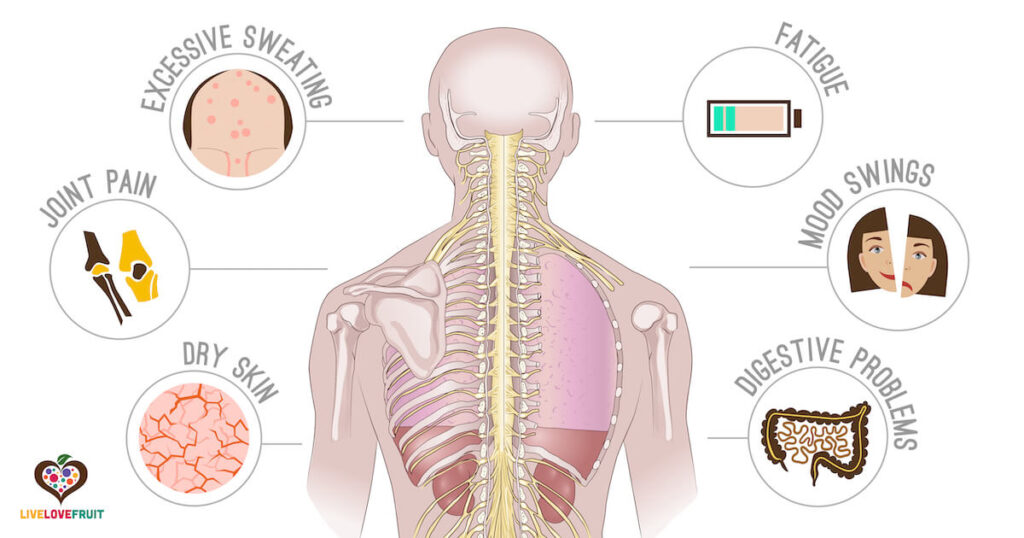
- Mental disorders like schizophrenia and depression
- Infections like tuberculosis, upper respiratory tract infections, asthma and wheezing, and syndrome X
- Autoimmune diseases like type I diabetes, multiple sclerosis, Chron’s disease and rheumatoid arthritis
- Muscle weakness and aches
- Bone and joint problems like osteoarthritis, osteoporosis, osteomalacia, and rickets
- Malabsorption issues which can trigger celiac disease, liver disease, cystic fibrosis, whipples and Chron’s disease
- Cancer of the breast, colon, prostate, and pancreas.
Can Vitamin D Supplementation Replace Sunlight?
So what is better? The sun or supplementation?
While vitamin D supplementation is absolutely no substitute for the sun, sometimes it is necessary, especially if you live in the Northern Hemisphere and get no sun on your body during winter.
Not only does the sun help the skin, one of the largest organs in our body, produce vitamin D, but it helps regulate our circadian rhythm, reduces skin flare-ups like eczema and perioral dermatitis, reduces inflammatory cytokines in the body and so much more (14✓)✓ Trusted ResourcePubMed CentralHighly respected database from the National Institutes of HealthRead source.
If you live in an area where there is plenty of sun exposure (or during summer months in the Northern Hemisphere), there are a few things you need to consider before baking in the sun all day. This includes things like how much skin is exposed to the sun, the color of your skin, and the strength of UV rays.
According to the following recommendations based on your skin color, it is wise to get sun on your whole body at least 3 times a week (15✓)✓ Trusted ResourcePubMed CentralHighly respected database from the National Institutes of HealthRead source:
- Skin Type I (very light skin, freckles; reddish or strawberry blonde hair): 10 minutes
- Skin Type II (light skin, freckles; blonde or brown hair): 20 minutes
- Skin Type III (light or light brown skin; dark blonde or brown hair): 30 minutes
- Skin Type IV (light brown or olive-colored skin; dark brown hair): 50 minutes
- Skin Type V (dark brown skin; dark brown or black hair): more than 60 minutes
- Skin Type VI (dark brown or black skin; black hair): more than 60 minutes
After spending time in the sun, avoid taking a shower right away. It takes over 24 hours for vitamin D3 to penetrate your skin and reach your bloodstream. So, if you shower with soap right after you sunbathe, you’re basically just washing away all of the vitamin D3 your skin just generated.
And if you’re using sunscreen, that will reduce how much vitamin D you’re absorbing. If you need to be out longer than the above recommended times at peak UVB exposure, try to find shaded areas, use a hat, put on loose flowy clothing, and if you must use sunscreen, use a natural one. With so many sunscreens getting recalled for harsh chemical ingredients, it’s best to just stick with ones that are safe and provide an SPF over 30.
I personally love Josh Rosebrook sunscreen for the face, and GreenScreen natural mineral sunscreen for the body.
What Is The Best Form of Vitamin D to Take?
If you do choose to take a vitamin D supplement, make sure it also has vitamin K2. Vitamin D3 ensures that calcium is absorbed easily and K2 (MK-7) activates the protein, osteocalcin, which integrates calcium into bone. Without D3 and K2, calcium cannot do its job effectively (16✓)✓ Trusted ResourcePubMed CentralHighly respected database from the National Institutes of HealthRead source.
Vitamin D formulations without vitamin K2 can cause serious health issues like hypercalcemia. This occurs when elevated levels of vitamin D lead to very high calcium levels in the blood. Without sufficient vitamin K2 to help regulate the calcium, excess amounts can build up, potentially damaging blood vessels and contributing to blocked arteries.
That’s why you need a vitamin D supplement that includes vitamin K.
But you also want to make sure your body is absorbing them. As you might already know, most vitamins and supplements are very poorly manufactured. This means that you’re likely excreting the vitamins and not absorbing them.
Here’s the good news…
This vitamin D supplement takes care of all of this for you: Cymbiotika’s D3+K2.

Cymbiotika formulated an advanced vitamin D3/K2 formulation with enhanced absorption and bioavailability in a liposomal form (studies show your cells can absorb liposomal supplements up to 800% better than standard supplements).
I live in the Northern Hemisphere, so when winter falls, I always make sure I have my Cymbiotika D3+K2 supplement on hand. My vitamin D levels have since stabilized during the winter months, and I feel great!






[…] Vitamin D, an important vitamin that manages calcium in your blood, bones and gut, helps cells all over your body communicate properly and is a major factor in determining how well your body fights cancer. […]