
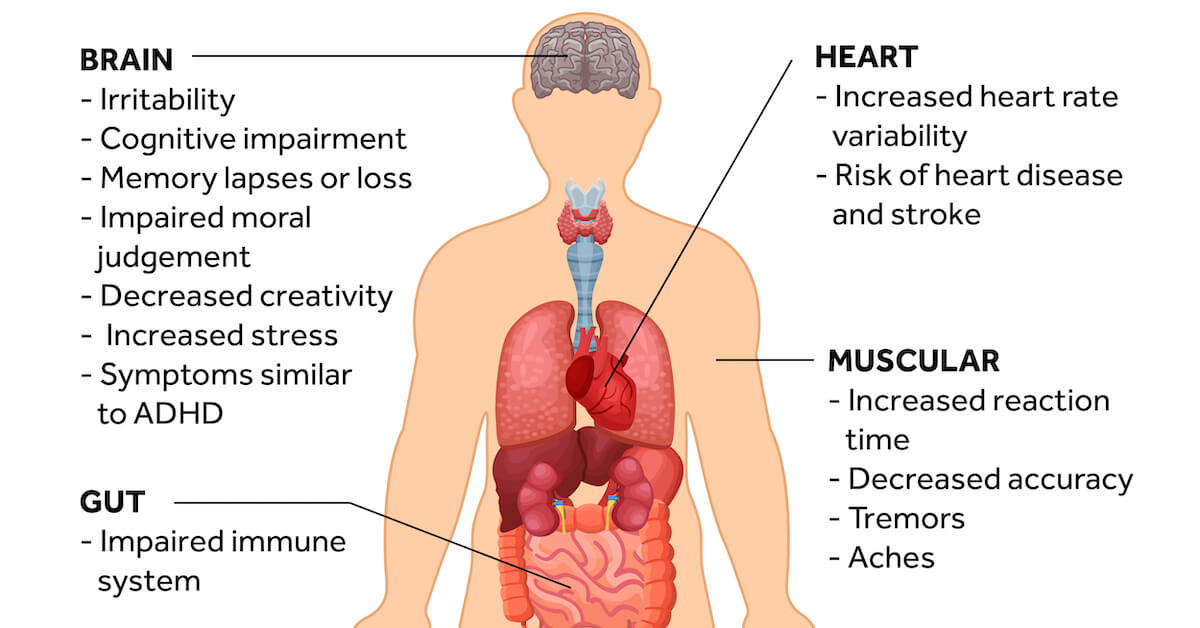
Whether you delay your sleep because of video games, 9Gag or Reddit, your sleep deprivation could have some very serious side effects. Both chronic and partial sleep deprivation affects not only your mood, but it results in daytime sleepiness, headaches, and poor concentration, to name a few.
The hormone melatonin is secreted by the pineal gland in the brain, somewhere between 9 and 10pm. It helps to maintain the body’s circadian rhythm and regulates other hormones like the timing and release of female reproductive hormones. When it is dark, your body produces more melatonin, and when it is light, melatonin production drops.
You can see why learning how to improve and protect your melatonin production is important to your overall state of well-being. But, what happens when we don’t take the necessary steps to ready ourselves for bed, and instead stay up long into the night, only to wake tired, groggy, and moody?
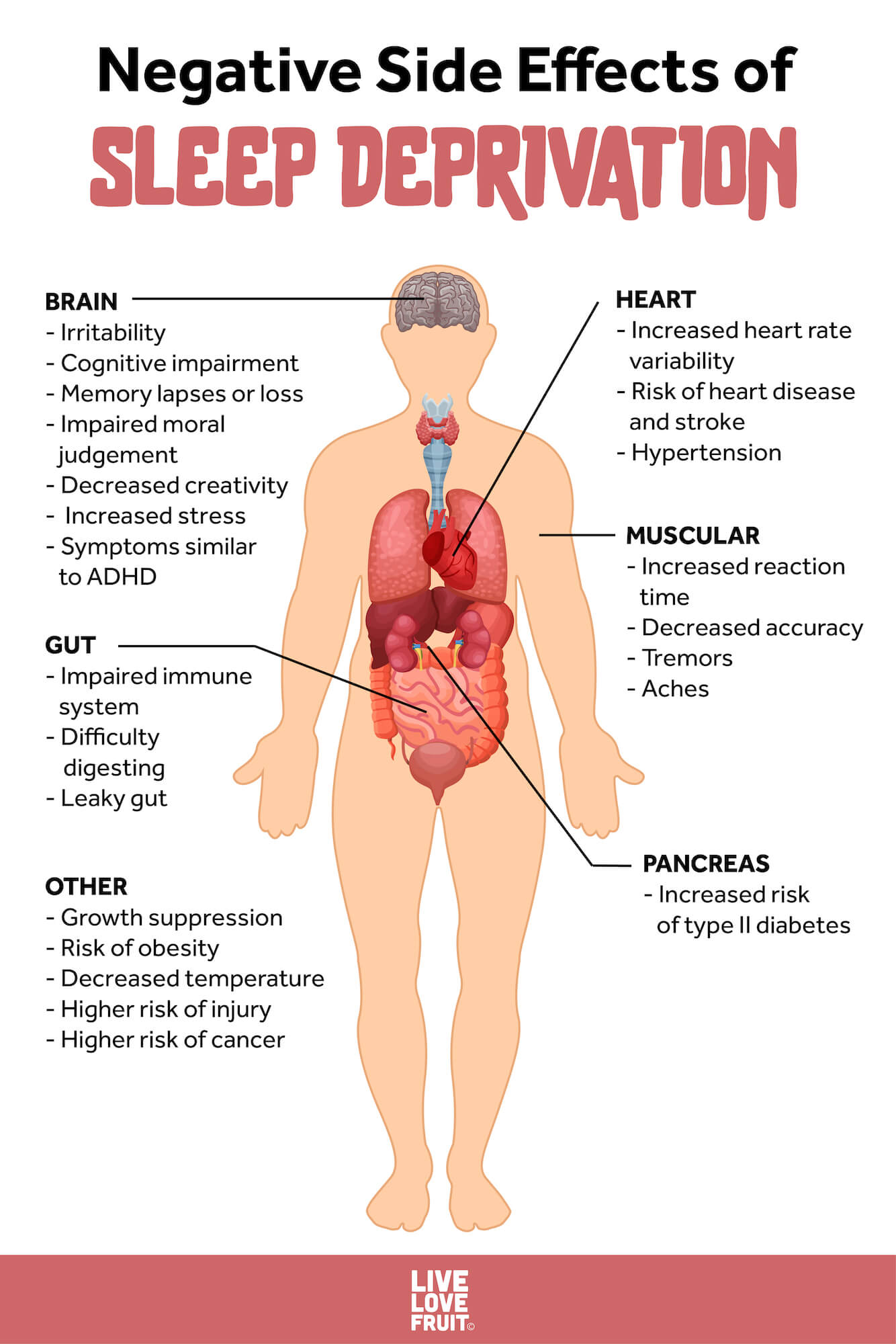
Negative Side Effects of Sleep Deprivation
Increased stress levels, unnatural exposure to blue light from electronics and decreased exposure to natural light are all contributors of sleep deprivation. When we’re bombarded by the effects of an unnatural environment, our sleep becomes compromised.
According to recent research done by the Centers for Disease Control and Prevention (CDC), around 7–19 percent of adults in the United States state that they regularly lack sleep or don’t get enough rest.
However, getting enough sleep is vital for overall wellbeing. The body needs and requires enough sleep to fight off disease, strengthen the immune system, detox, digest, and maintain cognitive health. Without it, our bodies struggle, and could lead to some of these negative side effects:
1. Higher Levels of Anxiety
When we sleep, our body repairs itself and relaxes muscle tension caused by stress. When we slack on our sleep, this stress builds up, and essentially doubles the stress tension for the next day (making it more difficult to cope). The mind body connection is strong, and stress on the body, if not repaired through proper sleep, will lead to stressful thoughts and manifest as anxiety.
Anxiety is also caused by chronic adrenaline release, something that is also linked with those who get little sleep each night.
Research presented at the annual Society for Neuroscience meeting in San Diego revealed that missing just one night of sleep results in a pattern of brain activity that looks just like anxiety.
“If we are chronically sleep deprived, if we keep losing sleep, it could sensitize us to greater anxiety levels and help develop an anxiety disorder,” said Eti Ben-Simon, a postdoctoral fellow in the department of neuroscience at the University of California, Berkeley (1). The study found that when participants were sleep deprived, their anxiety levels increased by 30 percent the next day, with half the participants reaching the threshold for a clinical anxiety disorder.
2. Higher Levels of Depression
Lack of sleep interferes with our neurotransmitters and can ultimately lead to a decline in synaptic signalling between neurons, which normally regulate our mood.
One study on the link between sleep deprivation and depression found that the amygdala (an area of the brain responsible for processing emotions and regulating anxiety) was greatly impacted. It was found that participants who had been sleep deprived for 35 hours showed a greater amygdala response when presented with emotionally negative pictures. Those who had not been sleep deprived had a much lower response (2).
In addition, links with parts of the brain that regulate the amygdala seemed weaker, too. This could signify that the participants were perhaps less able to control their emotions.
These findings point to how sleep deprivation could be a major trigger in developing mental health conditions like depression.
3. Impaired Cognition
Lack of sleep has been directly correlated with less focus during the day and a decline in forming proper memories. The journal, SLEEP, also found that just one night of sleep deprivation was associated with loss of brain tissue (3).
4. Higher Risk of Stroke
Studies have been done, which have found that insomniacs have the highest risk of stoke compared to those with no sleeping problems. Lack of sleep weakens cardiovascular health, raising blood pressure and restricting blood flow to the brain.
5. Risk of Cancer Increases
Studies have linked lack of sleep to both colorectal and deadly breast cancers. People who don’t get enough sleep tend to have lower melatonin levels, and this can lead to low-grade inflammation, a main trigger for almost all cancer types (5).
6. Risk of Obesity Increases
Melatonin also regulates the hormones that make you feel hungry (ghrelin) or full (leptin). When we sleep less, ghrelin levels increase, while leptin levels decrease, setting up a perfect scenario for weight gain and potential obesity. Not to mention, sleep deprived individuals are less likely to exercise, because they are too tired, and since these people are awake longer, they have more opportunities to eat (6).
7. Increased Risk of Diabetes
According to Mark Mahowald, MD, “there is some evidence that sleep deprivation could lead to a pre-diabetic state.” Sleep loss disrupts glucose metabolism, leading to decreases in insulin sensitivity and glucose tolerance, which can eventually result in diabetes if consistently elevated.
One study found that sleep deprived mice had elevated blood glucose in the liver. This was after only sleeping 6 hours each night. The researchers also measured triglyceride levels in the liver, as increased levels are associated with an increase in insulin resistance. As expected, in the sleep-deprived mice, levels were elevated (7).
8. Hypertension
Sleeping only 5-6 hours a night significantly increases blood pressure. Sleep regulates stress hormones, which in turn regulate and ensure a healthy blood pressure. If you have chronic sleep loss, your risk of hypertension increases significantly (8).
9. Higher Risk of Injury
Lack of sleep puts a toll on our perception and judgment. In fact, a study published in the journal, SLEEP, evaluated 1,741 men and women over the duration of 10-14 years. They found that men who slept less than six hours a night had a significant increase in mortality risk, even after diabetes, hypertension and other factors were controlled for (9).
10. Immune System Suppression
Sleep deprivation suppresses the immune system, decreasing your body’s ability to respond to viral or bacterial infections. Many studies have shown that our T-cell production goes down if we are sleep deprived, and these cells normally aid in a healthy functioning immune system (10).
Can’t Sleep? Natural Treatments for Sleep Deprivation
If you’re getting only 5-6 hours of sleep each night, you’re probably sleep deprived. Here are things you can do to get more sleep, while helping your health in the process:
- Turn off the lights: try to put down all of your electronics at least 2 hours before bed. The blue light on computers, tablets and smart phones tricks our body into believing it’s still day time, and melatonin doesn’t get released (you know, the chemical that makes us want to sleep). This also applies to any very bright light around the house. Dim your lights before bed to ensure your body gets sleepy at the right time.
- Darken your room: using black-out blinds to keep the room pitch-black is great for a good nights rest. The issue with most black-out blinds, however, is that they use PVC plastic, which off-gasses and reduces indoor air quality. Opt for a comfortable sleeping mask like Manta if you’re not open to purchasing heavy cotton blinds that keep the light out. I use their Pro Sleep Mask, which feels like I am essentially wearing nothing. If you’re having issues falling sleep or if you fall asleep to noise, they also have a Bluetooth Sound Sleep Mask. This mask allows you to effortlessly, and comfortably, sleep while listening to relaxing music – it could also be used for meditation purposes as well!
- Essential oils for sleep: there are many essential oils out there that help calm the body and ready it for sleep. Lavender and frankincense are some of my favourites. Check out my article on essential oils for sleep for a full list of oils you can use in your sleep routine.
- Reduce caffeine intake: caffeine consumed up to six hours before sleep can disrupt our sleeping patterns and throw us off. If you do decide to drink coffee, drink one cup in the morning, and don’t drink past 12 p.m.
- Engage in regular exercise: getting regular exercise can help you fall asleep faster, and ensure your sleep is deep. Make sure it is done several hours before you go to bed though, as exercise releases the stress hormone cortisol which can keep you awake.
- Don’t eat before bed: try not to eat at least 2-3 hours before you sleep. When our body is digesting, it can disrupt sleep, or prevent you from getting any sleep at all.



[…] 10 Negative Side Effects of Sleep Deprivation […]