• Skip to primary navigation
  • Skip to main content
  • Skip to primary sidebar
  • Skip to footer
live love fruit logo

Live Love Fruit

Eat Vibrantly. Live Vibrantly

About Start Here Work With Me

  • Home
  • Start Here
  • About
  • Health
  • Remedies
  • Recipes
  • A-Z Conditions
  • Fitness
  • Environment
  • Self Improvement
  • My LLF
  • Shop
Category: > Remedies > How To Grow Your Own Antibacterial Bandages for FREE

How To Grow Your Own Antibacterial Bandages for FREE

Sep 14, 2017 Carly Fraser Save For Later Print

Last Updated: May 25, 2020

6.5K shares
  • Facebook6.5K
  • Twitter3
  • LinkedIn

When most people accidentally scrape or cut themselves, they go straight for the store-bought bandaid. Not only are bandaids convenient, but we’ve been taught since we were little that putting a bandaid on our “boo-boo’s” will help them heal faster and protect the cut from outside forces.

Bandaids are also conveniently geared towards children, with many coming in bright colours or feature images of cartoon characters (I’m not gunna lie, even I like the cartoon bandages!).

However, bandaids aren’t really all that great at what they do. I mean, yes, they do protect the cut from immediate dangers like bacteria and the like, but the slogan “Heals cuts twice as fast,” isn’t really that believable. Even Johnson & Johnson Pacific Pty Ltd., can’t live up to their claims (1):

“With regards to the “heals two times faster” claim, we stand by our position that evidence does exist to support the claim.”

However, they don’t clarify what exactly this evidence relates to, namely whether that is comparing Band-Aids to other adhesive bandages or to using no bandage at all.

What if you could simply save money and grow your own natural antibacterial bandage instead? What would you do if you couldn’t get the medical supplies or help you needed for a very long time? How would you manage?

The answer might be in your backyard right now…

Homegrown Antibacterial Bandages

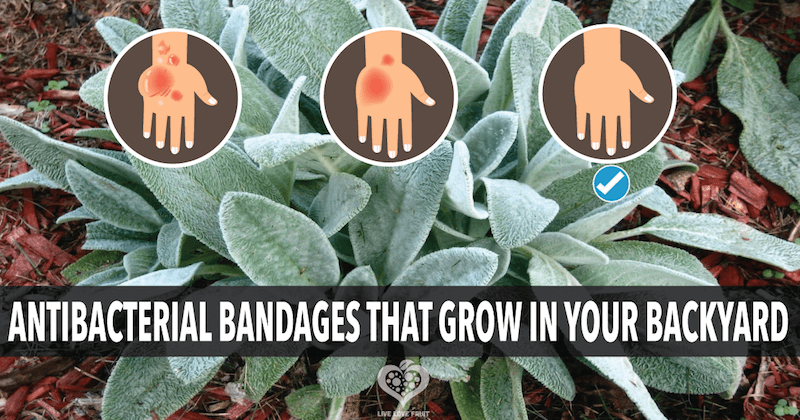
It is no doubt that these antibacterial bandages are much healthier than store-bought ones. Our ancestors used them to heal scrapes and wounds, and now we can too. The plant is called Wooly Lamb’s Ear, and it’s the next best thing when it comes to healing our wounds.

My favourite thing about these bandages is that they’re extremely soft. Plus, they double as a medicine and an edible (how cool is that?).

Wooly Lamb’s Ear (botanical name Stachys byzantina), has been used for centuries as a wound dressing on battlefields (2). It contains both antiseptic and antibacterial properties, and works as a wonderful anti-inflammatory (basically everything you need for a wound that needs a little extra TLC). Their extra soft texture makes them great blood absorbers, and helps blood clot more quickly. These facts alone make the plant a great alternative to store-bought bandages (especially since a lot of bandages are made in China!).

If you’re wanting to use the Lamb’s Ear on a wound, simply pluck some leaves from a plant, and layer on top of a wound with some surgical tape to keep it in place. Replace once a day, or as needed.

Medicinal Uses of Wooly Lamb’s Ear

Aside from helping our wounds heal faster, Wooly Lamb’s Ear can help treat:

• Pinkeye and Styes: heat a few bruised leaves in a pot of simmering water, and use the cooled infusion as an eyewash.

• Fevers, Diarrhea, Sore Mouth & Throat, Internal Bleeding, Weakness of Liver & Heart: drink a tea made from young dried Wooly Lamb’s Ear leaves.

• Bee Stings & Insect Bites: reduce the swelling by rubbing a paste of squished leaves so that the healing juices are released onto the bite or sting.

• Hemorrhoids: rub a paste of squished leaves onto the affected area so that the healing juices are released.

• Postpartum Recovery: rub a paste of squished leaves onto the affected area so that the healing juices are released.

Not only does the plant help with these ailments, but it can double as a menstrual pad, if you can find a leaf large enough! Being super soft and absorbent, the leaves are also great for use as a cotton ball or toilet paper.

The plant can also be consumed – the young, tender leaves can be eaten fresh in a salad, or gently steamed.

How To Grow Wooly Lamb’s Ear

If you can’t find the plant in your backyard, you can get some seeds and start growing it! If you can’t find any plants locally, buy some seeds and grow them yourself. It is easy, and much cheaper, too! It grows well in containers, and makes a beautiful landscaping border.

If you’re starting from seed, here’s how to grow it (3):

1. Fill a well-draining container (like a yogurt cup with holes poked in the bottom) with rich organic soil.
2. Wet the soil until it is soaked (please use filtered water for your plants so they grow better).
3. Plant 1-2 seeds per small container (thinning out the weakest seedling), or plant seeds six inches apart in a larger pot. Bury them 1/4” below the soil.
4. Keep the soil moist and the containers our of direct sunlight until the seedlings start germinating. As soon as you can see the seedlings popping out of the soil, put them somewhere where they can get at least 6 hours of sunlight daily (or under a grow light).
5. When the plants have at least three sets of leaves, you can transplant them to a semi-shady place in your yard. Space them 12” apart, and watch them readily multiply.

How To Identify Wooly Lamb’s Ear

If you’re looking for Lamb’s Ear in your backyard, here are some good tips in identifying it. Wooly lamb’s ear often gets confused with mullein (both have velvety, wooly leaves).

Wooly Lamb’s Ear

Lamb’s ear forms a low, uniform mat of blue-green leaves with white wooly hairs. The leaves are usually 2-6 inches long and in the shape of a tongue. Later in summer, the plant should sprout twelve to 18-inch tall flower spikes with small purplish flowers.

Mullein on the other hand form a rosette of wooly green leaves that may be 6-15 inches long. The second year they send up flower spikes that are 15 inches to 5 feet tall! The flowers are yellow, purple, white or red. Mullein also has some great medicinal uses too!
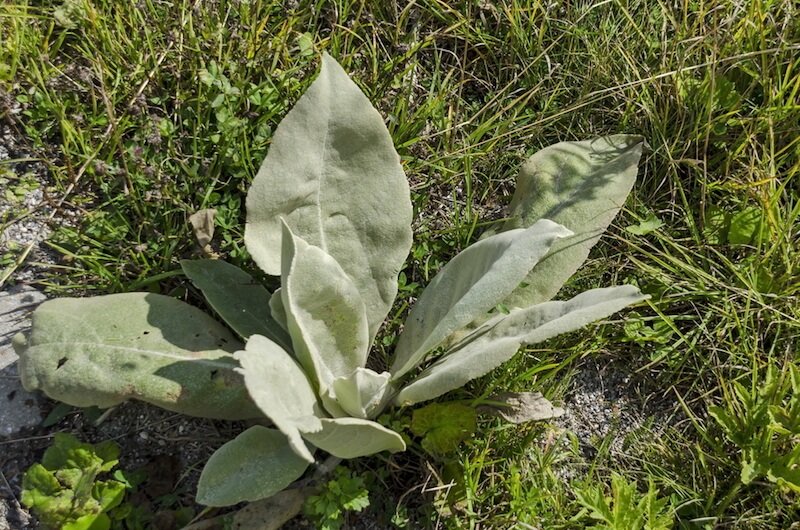
Mullein

You will be able to tell near the end of summer what the plant is you’re looking at, based on the flowers, and the size of the plant. Mullein will always be much larger, where lamb’s ear will be smaller and have shorter flower stalks with small purple flowers.

6.5K shares
  • Facebook6.5K
  • Twitter3
  • LinkedIn

Filed Under: Gardening, Herbs & Spices, Remedies Tagged With: antibacterial bandage, band-aid, herbalism, medicinal, wooly lamb's ear

Carly Fraser

About the Author

Carly Fraser has her BSc (Hons.) Degree in Neuroscience, and is the owner and founder at Live Love Fruit. She currently lives in Winnipeg, Manitoba, with a determined life mission to help inspire and motivate individuals to critically think about what they put in their bodies and to find balance through nutrition and lifestyle. She has helped hundreds of thousands of individuals to re-connect with their bodies and learn self-love through proper eating habits and natural living. She loves to do yoga, dance, and immerse herself in nature.

View Profile

Reader Interactions

Related Posts

  • chemical-free sunscreen
    How to Make Your Own Chemical-Free Sunscreen This Summer
  • woman picking strawberries from raingutter strawberry garden
    How to Grow Strawberries in Rain Gutters
  • gmo free sign on field
    Be A Smart Consumer, and Buy From These GMO-Free Companies
  • How To Make Your Own Blueberry Infused Lemon Iced Tea
  • Drink This and Be Pain-Free: Effective Anti-Inflammatory Smoothie
  • Açaí bowl with granola, blueberries and bananas
    How To Make Your Own Acai Breakfast Berry Bowl
  • celery sprouting from base
    12 Vegetables You Can Grow From Scraps

Comments

  1. Deb Sullivan says

    Sep 15, 2017 at 8:52 pm

    Do you know if Wooly Lamb's Ear can be used to draw out the root of a boil? My grandmother used the leaves of some common plant for this purpose but unfortunately, she passed and we do not remember the name of the plant.

    Reply
    • Carly Fraser says

      Sep 16, 2017 at 8:38 am

      Darn, I'm not sure! I haven't heard of Wooly Lamb's Ear being able to do that. I know a lot of different remedies can help with boils like tea tree oil, castor oil, epsom salts and a hot compress. If you ever do find out, that'd be really good knowledge to have!

      Reply
  2. Carol Rossi says

    Jun 24, 2019 at 8:00 am

    I loved reading about Lamb’s Ear, I have them all over my garden and had no idea they could b
    medicinal, thank you

    Reply
    • Carly Fraser says

      Jun 24, 2019 at 11:00 am

      Definitely! Glad you found it useful!

      Reply

Leave a Reply Cancel reply

Your email address will not be published. Required fields are marked *

Primary Sidebar

Free Ebook

Success! Please check your inbox to download your FREE eBook.

Reduce Chronic Inflammation Naturally!

The Ultimate Guide to Fight Inflammation and Restore Your Health!

21 Ways to Reduce Chronic Inflammation

Recent Posts

Glow salt lamp, dark vintage wooden background, selective focus

Fake Himalayan Salt Lamps: What You Need To Know

foods that cause gout flare ups

10 Foods That Cause Gout Flare Ups

Conceptual health image combining nutrition and human anatomy. A realistic bowl of fresh leafy greens (spinach) on a rustic wooden surface, photographed in soft natural light. To the right, a semi-transparent blue human anatomical figure with visible internal organs and circulatory system highlighted in red at the chest and upper torso.

25 Magnesium-Rich Plant Foods and Why You’re Probably Magnesium Deficient

Ultra-realistic food and wellness photography, natural daylight. Clear glass mason jar filled with a warm golden-orange homemade tonic, slightly cloudy liquid, realistic texture. Ingredients arranged naturally around the jar on a rustic wooden kitchen surface: fresh ginger root slices, fresh turmeric root, lemon halves and slices, ground cinnamon and cinnamon sticks, cayenne pepper powder, small bowl of maple syrup, unbranded glass bottle of apple cider vinegar with label turned away, and a clear glass of water. Soft steam rising gently from the drink.

This Ginger Lemon Tonic Supports Natural Detox Pathways in the Lymph, Colon, and Bladder

Fresh Medjool Dates in bowl. Grey wooden background. Close up.

10 Amazing Health Benefits of Dates (and Why You Need To Start Eating Them!)

Panic Attacks and Anxiety Linked To Low Vitamin B6 and Iron Levels

Popular Posts

bowl of cereal being sprayed with pesticide

Glyphosate in Food: Complete List of Products and Brands Filled with Dangerous Weed-Killer

Man spraying pesticides on tea plants with other side of image showing dry loose tea bags

Pesticides in Tea: Is Your Favorite Tea Contaminated with Harmful Chemicals?

Monsanto’s Harmful Chemical Glyphosate Found In 100% Of California Wines Tested

whole dandelion plant with flowers and roots on cutting board on a table

Dandelions Are Not Weeds! Top 10 Health Benefits of Dandelion

A brightly lit store shelf filled with colorful baby care bottles in pastel and vibrant shades of yellow, teal, blue, pink, and white. All bottles are unbranded with smooth, generic shapes and blank labels. The liquids inside are glossy and translucent, giving a polished retail look. The scene is sharp and high-resolution with shallow depth of field, realistic reflections, and clean packaging. Subtle unease added by one bottle faintly cracked and leaking a dark liquid, contrasting with the cheerful colors.

Johnson & Johnson Finally Admits: Our Baby Products Contain Cancer-Causing Ingredients

10 Plants That Attract Dragonflies for Mosquito Control

companion planting chart

Use This Companion Planting Chart to Help Your Garden Thrive

France Bans Neonicotinoid Pesticides

France Bans All Five Neonicotinoid Pesticides Linked to Bee Deaths

A powerful, photorealistic underwater scene showing a large whale swimming slowly through a dark blue ocean filled with floating plastic waste such as bottles, bags, fishing nets, and debris. The whale appears weakened and distressed, with plastic tangled around its body.

Whales Dying From Plastic Pollution Are a Grave Reminder to Give Up Our Addiction to Plastics

illustrated piriformis muscle showing trigger points and radiating pain

How To Get A Deep Piriformis Stretch To Get Rid of Sciatica, Hip & Lower Back Pain

RECOMMENDED

Cymbiotika B12
Cymbiotika the omega
Cymbiotika D3+K2+CoQ10
Cymbiotika coated silver

Thank you! Please check your inbox to confirm your subscription!

Want to reduce inflammation and restore your health?

Join Live Love Fruit and we'll show you how!

Footer

Stay Connected!

Follows
  • 316k Followers
  • 1.9k Followers
  • 138k Followers
  • 696 Followers
  • 11.3k Followers
  • Home
  • About
  • Start Here
  • Write For LLF
  • Contact

Any medical information published on this website is not intended as a substitute for informed medical advice and you should not take any action before consulting with a healthcare professional.
Content on Live Love Fruit may not be reproduced in any form.
Ads provided by AdThrive. Displayed ads do not constitute endorsement or recommendation by Live Love Fruit.

Copyright © 2012 - 2026 Privacy Policy | Terms of Service | Full Disclaimer | Affiliate Disclosure

6.5K shares
  • 6.5K
  • 3