

Every year people start fresh seeds, plant, harvest, and then tear it all out at the end of the season. But what if your garden produced an edible return, year after year? Thanks to perennial vegetables, you can have just that.
Planting perennial vegetables means that you only have to sow them once. After that, they’ll crop year after year with practically any effort on your part.
Why Plant Perennials?
Aside from reducing the amount of work in the garden, there are so many reasons why you should be planting perennial vegetables. Compared to annual crops, perennials tend to be more nutritious, easier to grow, more beneficial for the environment, and are less dependent on water and other inputs.
1. Low Maintenance
For starters, perennial vegetables literally take care of themselves. They don’t require annual planting and can be left in the ground for next season. They thrive and produce abundant and nutritious crops throughout the season, and once established, are virtually indestructible. Perennials are typically more resistant to pests, weeds, and diseases, making them much more reliable producers. In fact, some perennials are so great at reproducing that they require frequent harvesting to prevent them from becoming weeds themselves.
2. Extend The Harvest Window
Additionally, perennial vegetables extend the harvest window. Since previously planted perennials are already established at the beginning of the growing season, they are usually ready to harvest by the time you start planting your first annual vegetables in spring (like asparagus for instance).
3. Serve Multiple Purposes
While perennial vegetables provide food to be eaten, they also serve as beautiful ornamental plants for your landscape. Other perennials can function as hedges, ground-covers or erosion control for slopes. Some perennials even fix nitrogen in the soil, making them excellent fertilizers for themselves, as well as neighboring plants. Others provide habitat for beneficial insects and pollinators, while some can climb trellises and provide shade for other crops.
4. They Enhance The Soil
A few perennial vegetables actually enhance the health of the soil for themselves and surrounding plants. When provided with plenty of mulch, perennials improve the soil’s structure, organic matter, porosity, and water-holding capacity. Perennial vegetables help gardens build soil, too. As the leaves and roots of the plants slowly decompose, more and more organic matter is added to the soil. As the plant matures, they help build topsoil and sequester atmospheric carbon.
Perennials as Annuals
Some perennials are grown as annuals because they are easier to care for. For example, potatoes are technically perennials, but they’ve grown as annuals because pests and disease pressure in North America require us to rotate potatoes often.
On the other hand, some plants we grow as annuals do great as perennials, like kale, which is considered a “biennial.”
12 Perennial Vegetables You Can Plant Once, and Pick Forever
There are over 100 different perennial crops out there, but for ease of reference and familiarity, these are some of the most sought-after perennials.
1. Asparagus
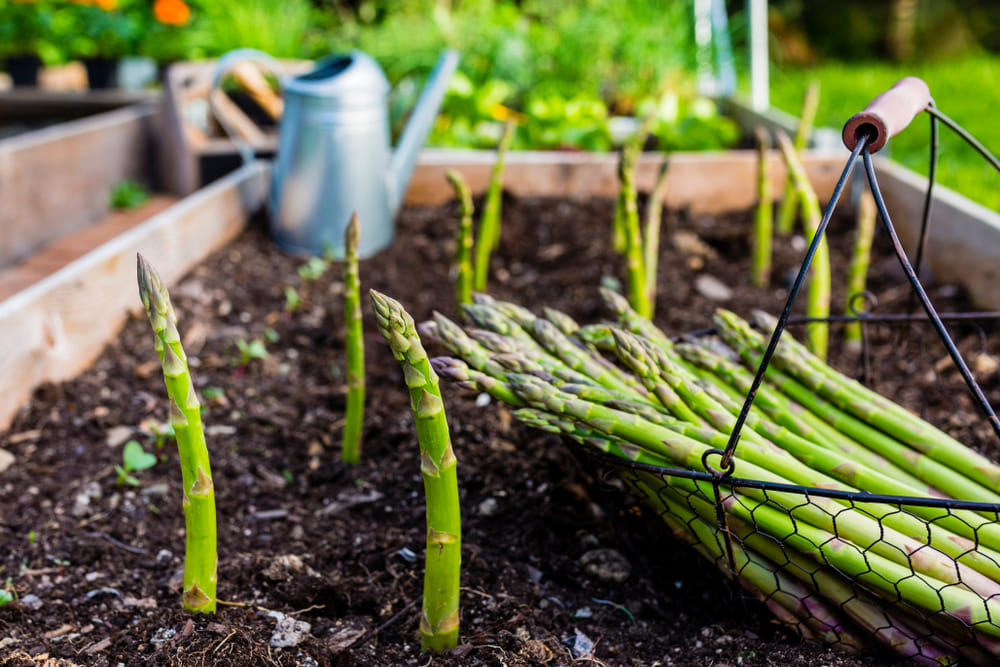
If you’ve never had fresh-picked asparagus, you’ll definitely want to plant some of this in your garden. Asparagus does require a bit of patience, however, as it can take over three years for them to become well established. The good news is that you can speed up the process by buying two-year-old crowns. This allows you to enjoy at least a small harvest after the first growing season, with the promise of much more to come the following year.
When planting asparagus, choose a sunny spot, but don’t worry too much about what kind of soil you’re using. If you’re planting crowns, plant them on a peak-shaped trench, covering the roots with soil and leaving the bud tips just showing.
2. Rhubarb
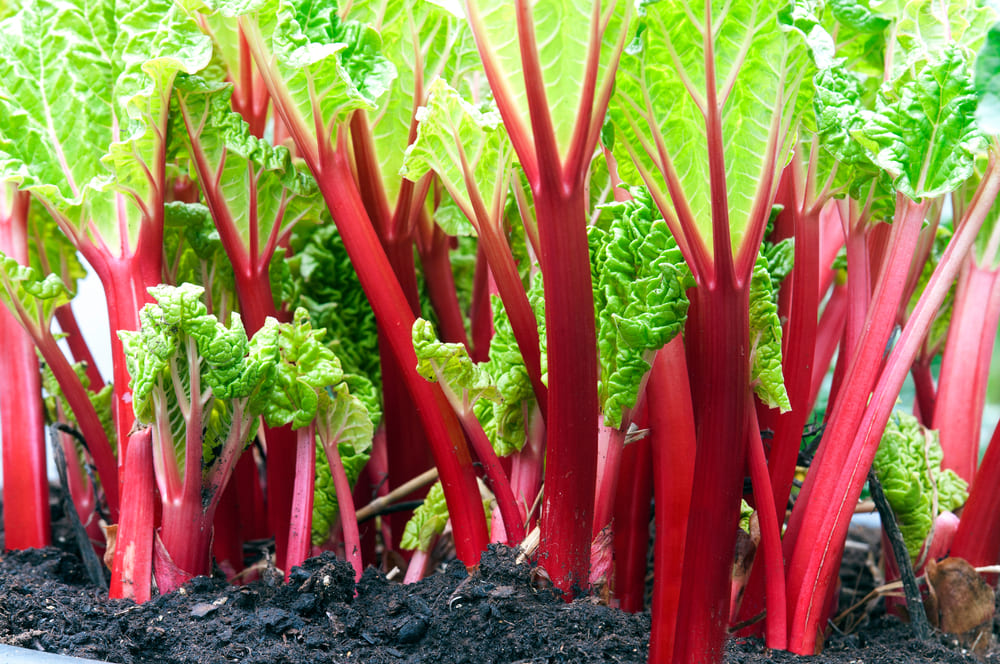
This hearty plant is delicious in muffins and can even be juiced raw! Be sure not to eat the leaves, though, as they are poisonous.
Rhubarb does best in full sunlight and does best when the average temperature falls below 40ºF in the winter, and below 75ºF in the summer. Plant one-year rhubarb crowns in early spring, as soon as you can work the ground. Rhubarb can also be planted in the fall after dormancy has set in.
3. Kale
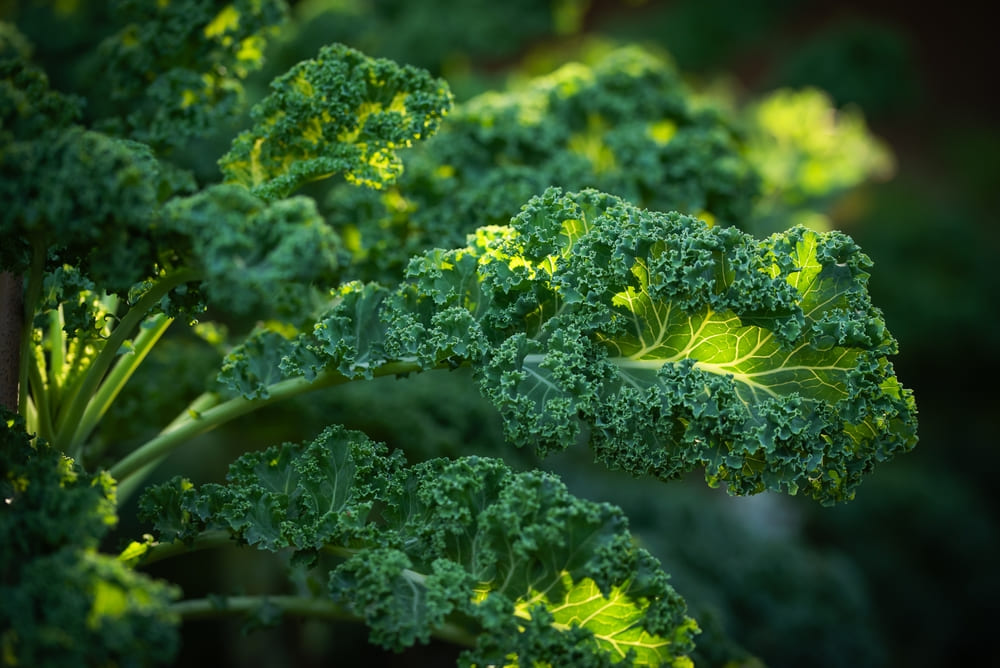
Kale is normally grown as an annual, even though kale actually has a biennial life cycle that takes two years to complete. In the first year, kale produces an abundance of leaves, and it keeps producing leaves through the winter in zones 7 through 10. In colder climate zones, kale can survive deep freezes if it is well mulched, or kept under row covers. In the spring of its second year, kale buds pretty yellow flowers. Once the flowers die, they leave seed pods that you can break open when ripe for a new crop of kale seeds. Most gardeners don’t allow kale to flower, however, and lose out on the seeding.
Kale is easily planted anytime from spring to early summer. They don’t need much light, as I’ve successfully grown mine in an area that only gets 5-6 hours of sunlight a day (the plants grew massive!). Water them regularly, but be sure to not overwater!
4. Garlic
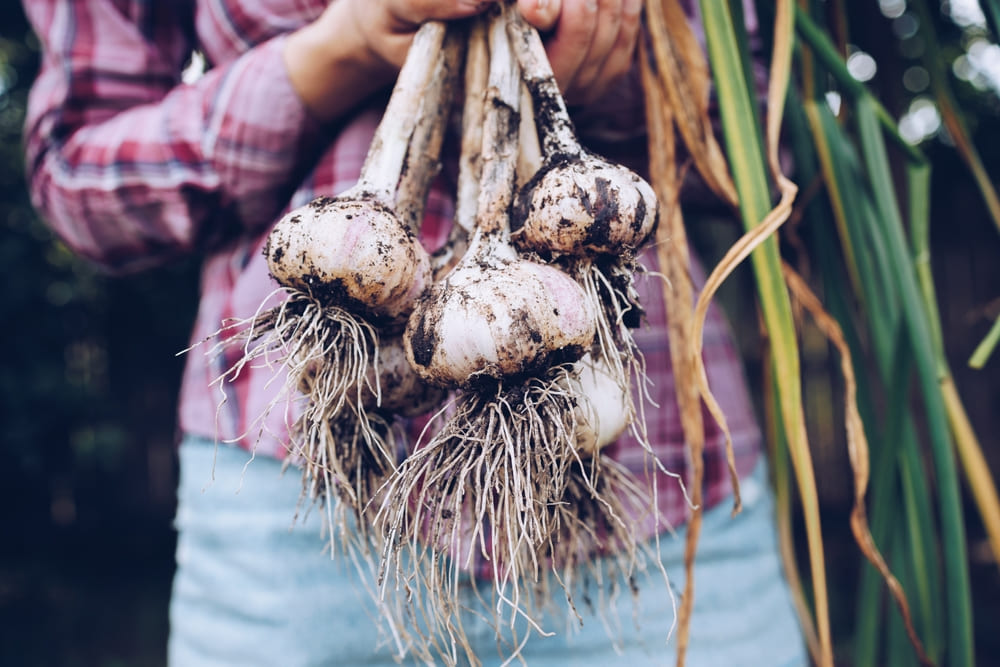
Garlic needs a sunny location to grow, and will not crop properly with less than 6 hours of sunlight a day. Garlic is normally planted in the fall and is a crop for regions that have a cool winter since it needs a cold period of at least 1 month when the temperature is around or below freezing to grow properly. In regions where winters are cold and there is little snow cover, plant in spring, as soon as the soil can be worked. If the growing season in your zone is short, the coves can be started indoors in individual pots. They should be placed outdoors in a sheltered location to receive the necessary cold period and planted in spring.
Garlic, like kale, is also a biennial but will act like a perennial since the new cloves will grow the following year.
5. Radicchio
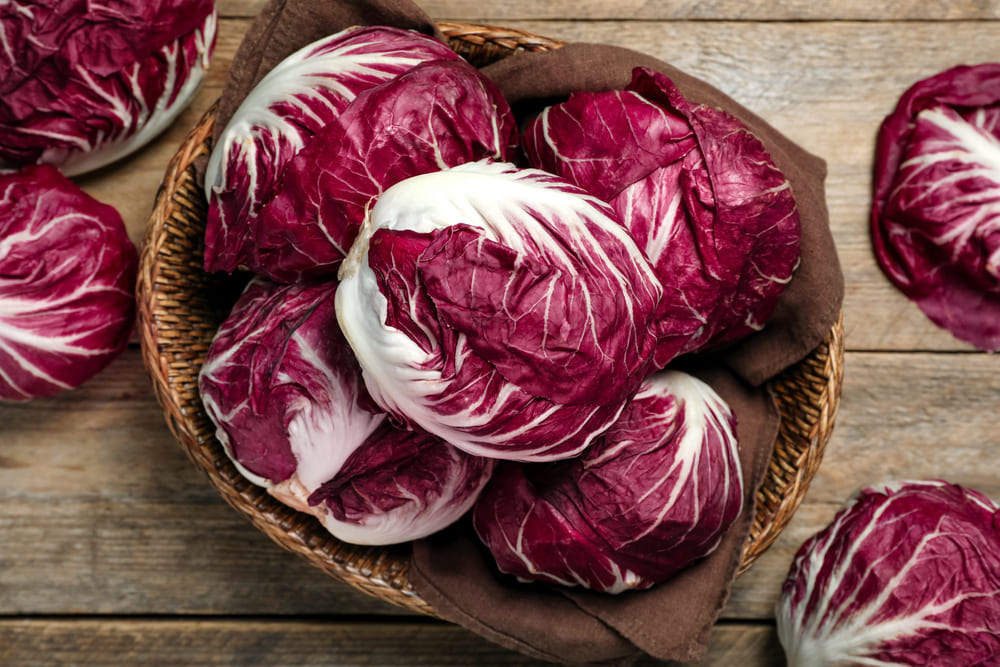
Radicchio is very easy to grow. It can be planted in the spring or fall, direct sown or started indoors and transplanted in early April. Summer harvested radicchio has a slight nutty bitterness, but if it is harvested in the fall or winter, the flavor is much milder, even with a hint of sweetness. The outer leaves may fall away from the center, much like a head of lettuce, and then a solid cabbage-like ball forms at the plant’s heart.
Although most people grow radicchio as an annual, it is actually a biennial, so if the head of the plant is cut cleanly from the stem, just above ground level, it may produce a second one. Being cold-hardy, radicchio may simply produce all winter long in mild years.
6. Horseradish
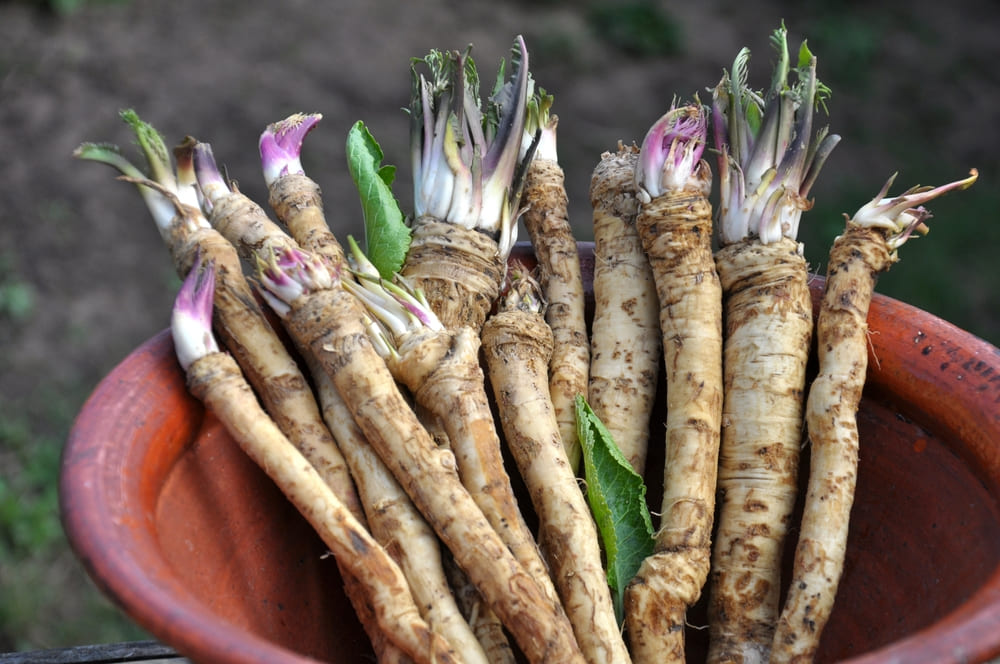
This is a must-grow vegetable for those who love all things spicy. The large underground root of the horseradish plant is the part of the plant that is consumed and possesses a strong, spicy flavor that is known to clear blocked sinuses.
Horseradish is so easy to grow that it can become invasive, especially in your garden. This is why it is good to plant horseradish in an isolated area or container – not in the garden or in your flower bed. If you’re planting horseradish crowns, keep the growing crown pointing up. Plant the top of the roots about two inches deep, and the crowns just below the soil surface. The more you weed and water, the thicker the roots will grow. Harvest your horseradish in the late fall after a few cold snaps. Always be sure to leave some small roots behind, so that they pop back up in spring.
7. Globe Artichokes
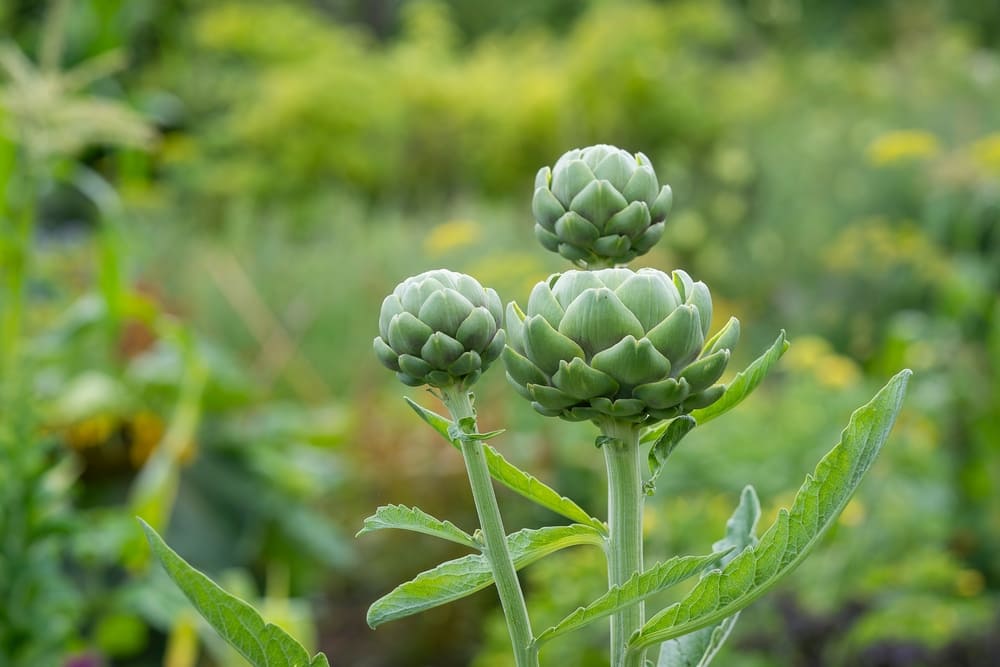
These plants are large, perennial plants that are grown for their large edible flower buds. They’re also ornamental in their looks, producing beautiful purple flowers if you leave them to bloom. Artichokes require consistent, ample moisture for best growth. They can survive a drought, but don’t produce as well in dry conditions.
Start your artichokes from root divisions, or seeds (seed-grown plants don’t produce as well as root divisions). Plant in rows about 36 inches apart. If you’re growing as a perennial, amend the soil around the plants each spring with a 1- to 2-inch layer of compost. Cut back the plant in fall if it has become overly boisterous, and cover with a 6-inch-thick layer of straw. Harvest perennial artichokes in spring, with a secondary peak in fall.
8. Chives
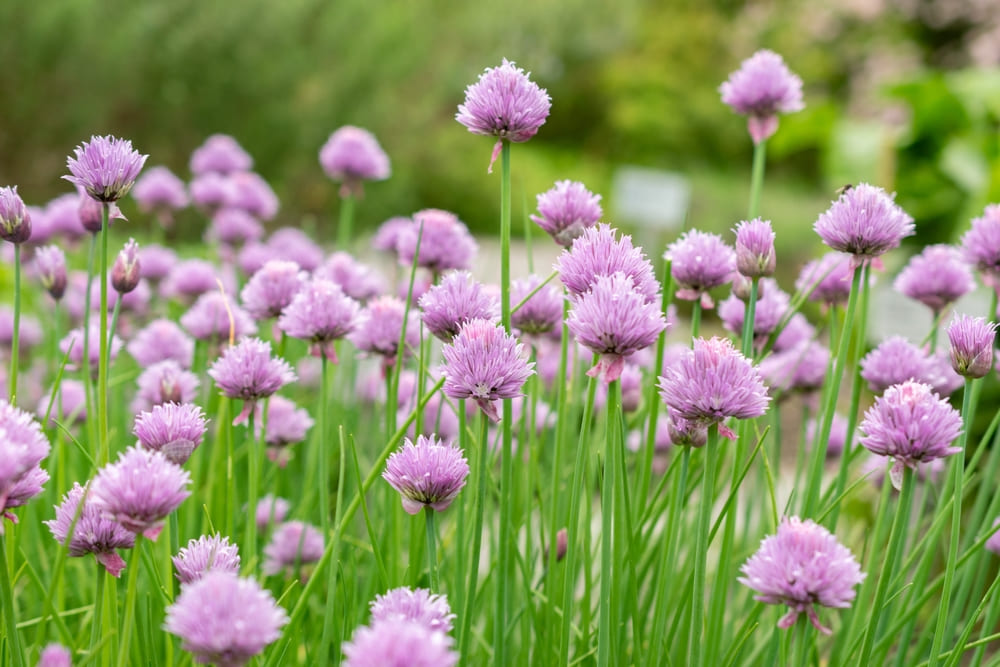
Chives are one of the easiest and most useful of all perennial vegetables. The plants themselves look like long blades of grass and are quite attractive when grown just about anywhere in the garden. They are also great apartment plants and can be grown indoors in front of a sunny window. Even the chive flowers are edible!
You can start chives from seed in small pots in spring, and transfer them outdoors around May-June. You can harvest them when they are about four-inches tall, before the flowers bud. I usually just pick them with my hands, but you can cut them with kitchen scissors. If you let your chives go on to flower, they will drop new seeds, and your chive plant will come back twice as big the following spring.
9. Watercress
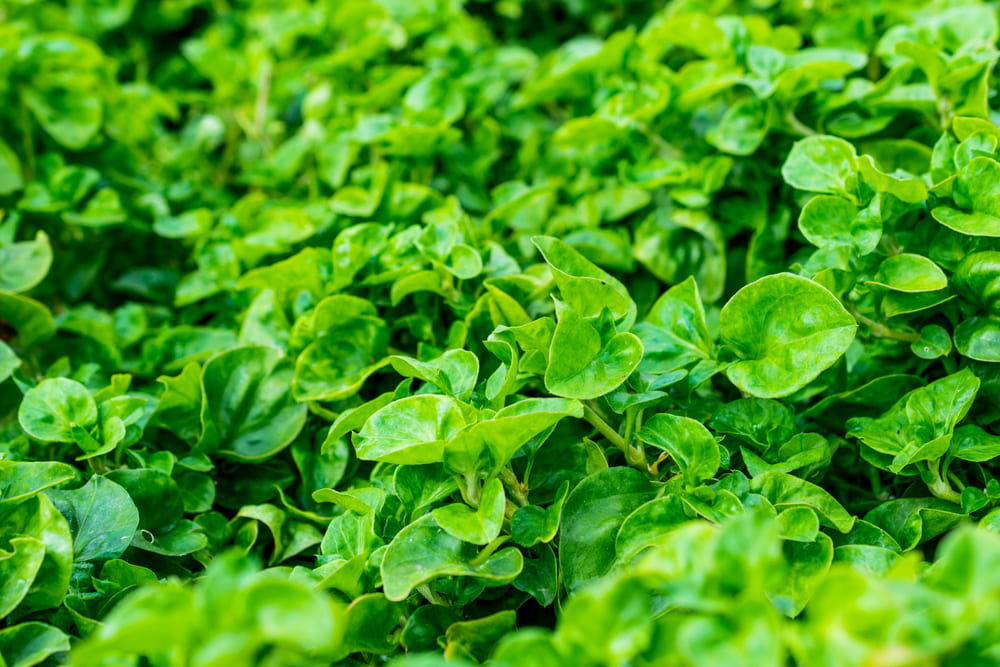
Watercress is a perennial plant with small heart-shaped leaves. It has a peppery flavor that is sharp, but not bitter and is a great herb for anyone suffering from respiratory-related conditions.
As the name suggests, watercress is a water-loving plant and is typically found near creeks and ponds. So in order to thrive, watercress must be kept permanently wet. It can grow submerged in water but will do just as well in damp soil. The best way to do this is to sit your container in a deep saucer filled with water. Periodically flush the container with fresh water to keep the pot from becoming stagnant. By March or April, you can direct sow watercress seeds into a pot. It can be sown year-round, even as a windowsill micro-green.
10. Berries
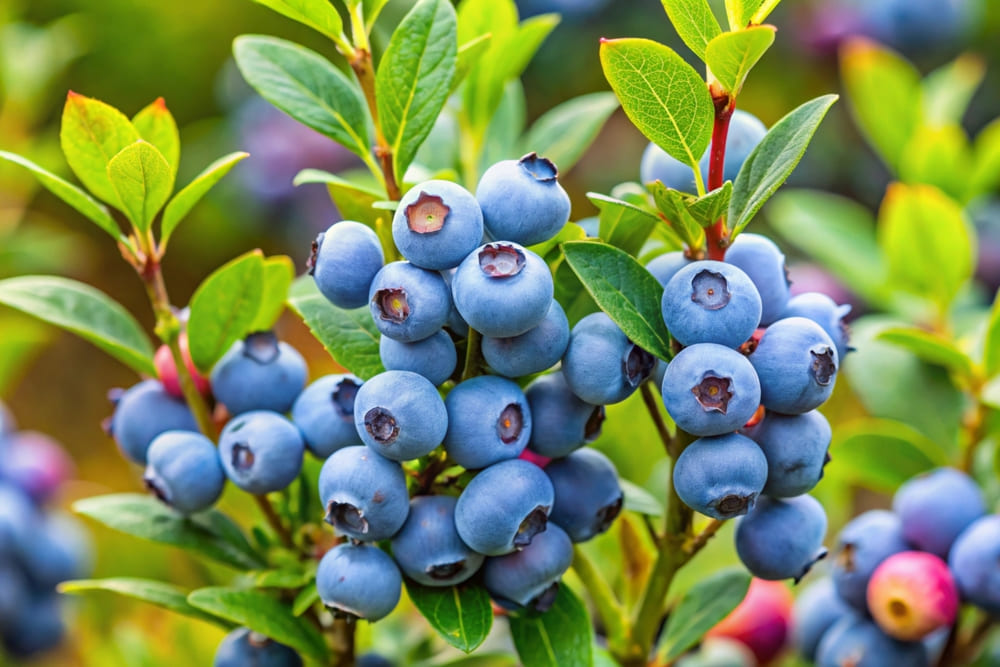
All berry bushes are perennial, and the cooler, the better. Whether you’re planting blueberries, raspberries, strawberries or gooseberries, you’ll be sure to have a bounty harvest after a few years planted.
For blueberries to thrive, there must be adequate water, the weather must not be too hot, and the soil should be slightly acidic. Blueberries thrive in a pH around four. Therefore, when planting blueberries, remove the original soil and replace it with a mix of 50 percent peat moss and 50 percent potting soil (or a mixture of compost and vermiculite).
Raspberries are similar and prefer well-drained, nutrient-rich soil with a slightly acidic pH.
11. Jerusalem Artichokes
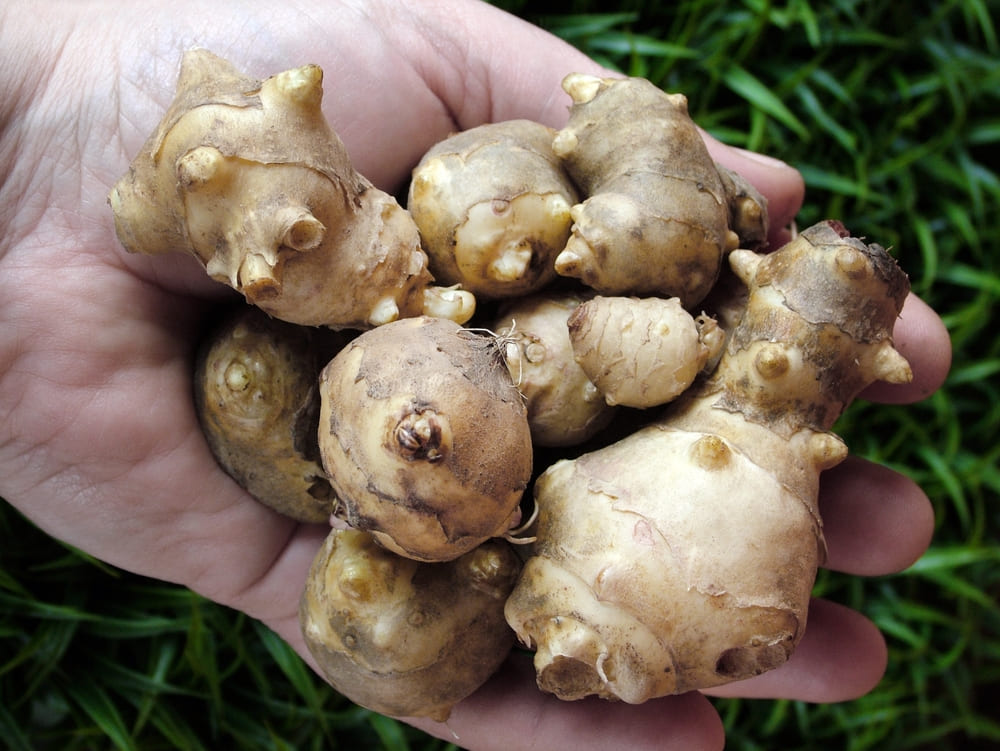
Jerusalem artichokes, also called sunchokes, are crunchy, sweet, and a great addition to stir-fries. They are not from Jerusalem, nor are they an artichoke, but instead are a member of the sunflower family and native to North America. They produce many large tubers per plant, along with a bunch of smaller ones. While you dig the large ones in the fall, always be sure to leave some of the smaller ones in the ground so that they come up in spring.
You can plant these tubers along your house, or across one end of your yard, as a tall privacy hedge that will give you plenty of good eats. They’re pretty easy to plant, too. Just dig up a spot, then plant a small tuber about three-inches deep. Water, and soon, plants will emerge and begin to grow in full. Once planted, they will produce for years.
12. Sorrel
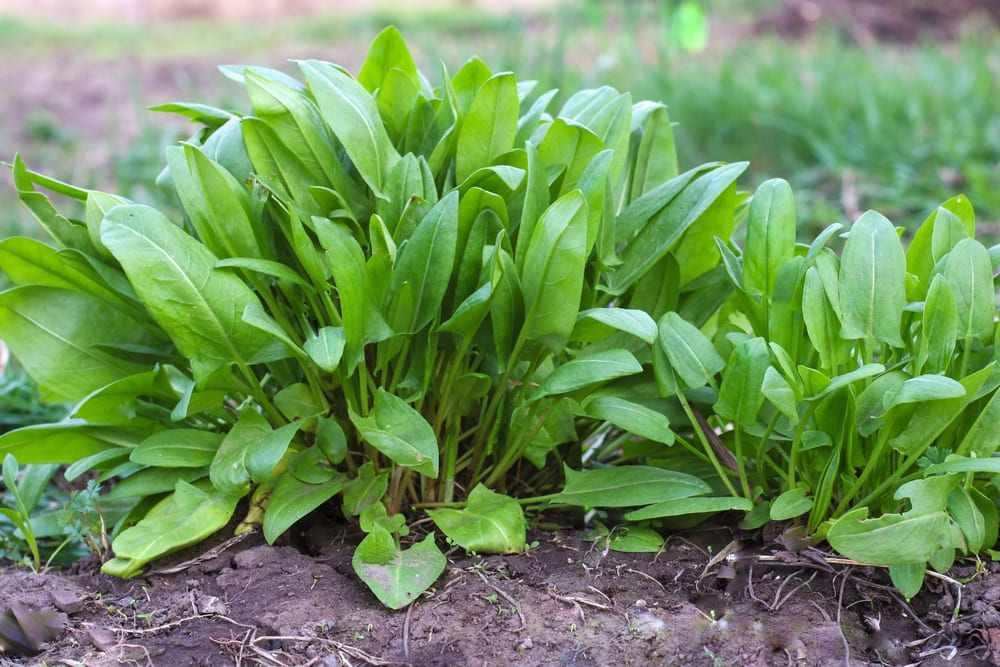
A great alternative to spinach, you can eat the young, succulent sorrel leaves in salads, as well as using the tougher larger leaves to make a delicious soup. All sorrel varieties prefer a bit of shade and will need plenty of watering during hot spells, otherwise, they will run to seed. Sow the seeds from March to May, thinning seedlings out to about 30cm apart to give them lots of room to bulk up over the years. This plant will come back every year, so long as you don’t pluck out the roots every fall.
The Bottom Line
Perennials are plants that you plant once and harvest forever. They’re more nutritious, easier to grow, more beneficial for the environment and are less water-dependent.
Perennials are the perfect plants to grow if you want to save money and put little effort into your garden year after year.






Love your articles and information
Good article! I just want to say that in regards to the Jerusalem artichokes, you don’t have to worry about trying to leave a few tubers in the ground to grow back. It is totally impossible to get them all out. I know, I’ve tried. I encourage everyone to grow some, but make sure it is in a place where you don’t want to grow anything else. They will take over. I don’t want to scare anybody from growing them. They are beautiful, tasty and very easy to grow. I’ve never had any kind of insects on them either. Anybody can grow them!
Good idea Don! I am sure they would work well in a raised bed separate from everything else!
Hello! Will these come back yearly in any climate? We get pretty long, harsh WInters where I live.
Yes, absolutely! We also have very long winters in Manitoba and these always come up in spring year after year.
I would like to know if i can plant red peppers in my 5gal bucket? I planted tomatoes last year and had too many…
Yes, you should be able to!
…hello there…I wonder, could I make alcohol from any of these?, if so, I could live out in the wild and forget that anything ever actually happened…
Haha, I’m not sure if you could make alcohol from these.
You can make a type of wine from berries. Quite tasty too!
Can asparagus be transplanted? I planted some last year and we sold our house and I would like to move them.
You can transplant the fern, potentially, but it’s usually easier to start by seed. The actual asparagus itself you can’t transplant.