
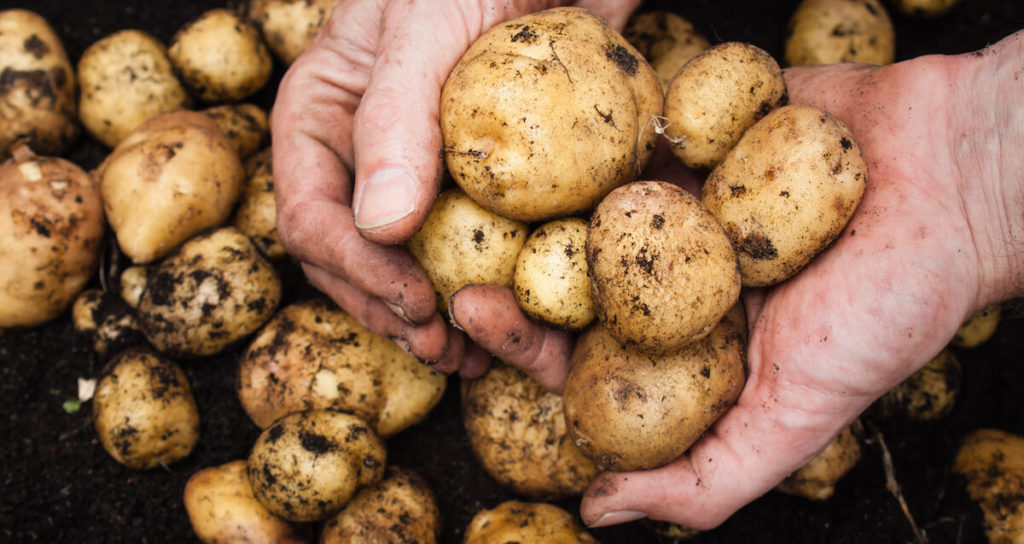
Have limited space? Trying to save some money? Why not try going a bunch of potatoes? It’s not that hard to grow a hundred pounds of potatoes, and once you read the steps, you’ll be surprised just how easy it is.
Growing potatoes in a barrel (or bucket) prevent having to dig them up during harvest (which can damage the delicate potatoes) – instead, all you have to do is tip over the container and voila!
Why Grow Potatoes?
People often look down on potatoes for not being all that healthy, but when you get your hands on some good-quality, organic potatoes, you’ll be surprised by the benefits your body receives.
1. They’re loaded with nutrition
Potatoes are a very good source of vitamin B6, as well as potassium, copper, vitamin C, manganese, phosphorous, niacin, dietary fiber, and pantothenic acid. They also contain a hefty amount of antioxidants, which protects the body against various forms of disease and illness.
2. They nourish our cardiovascular system
Potatoes are great for the cardiovascular system. They’re naturally very high in potassium and magnesium, making them a good option for helping lower blood pressure. They’re also a great source of vitamin B6, which naturally helps relieve stress and as a result, lowers high blood pressure.
3. They support our nervous system
As mentioned above, potatoes are loaded with vitamin B6. This vitamin is essential for proper function of our nervous system and brain. It also helps aid in the formation of virtually all the new cells in your body.
4. They reduce inflammation
Another benefit of including potatoes in your diet is that they help lower levels of inflammation in the body. One study suggests that eating purple or yellow potatoes may reduce inflammation and DNA damage. These varieties contain high levels of antioxidants like carotenoids, which the researchers suggest may prevent cell damage (1).
5. They improve digestive health
Potatoes are loaded with dietary fiber which adds bulk to stools and helps relieve symptoms of digestive distress like constipation or diarrhea. They’re also a great source of resistant starch, which acts as food for our gut bacteria. These bacteria digest it and turn it into short-chain fatty acids, mainly butyrate (2). This fatty acid has also been shown to reduce inflammation in the colon, and even protect against colorectal cancer (3).
Now that you know a few of the top benefits of potatoes, it’s time to learn how to grow your own crop!
How to Grow A Hundred Pounds of Potatoes in a Barrel
My favorite thing about growing potatoes is that they don’t require a lot of effort – especially for the yield you get at the end of the year.
By following these simple steps, you can ensure that your household is fully stocked with potatoes when times are tough. And really, who doesn’t love free food?
The first step starts with finding a good growing container, so let’s start there.
1. Select a good container
Picking a good container is important for growing a large concentration of potatoes in a small space. Half whiskey barrel planters work really well, but people have also had success with food-grade barrels or commercially available potato planters. Just make sure it is about 2-3 feet tall, and that it has holes in it, or it would be okay to cut holes in it. Clean your container really well with a solution of vinegar and water – you don’t want to use bleach, because that could be absorbed by the potato roots.
If your container does not already have holes in it, cut or drill large drainage holes in the bottom and sides of your container. If you want a healthy, and hearty potato harvest, you’ll want these drainage holes. If you’re growing indoors, make sure you have a large enough tray with edges to put underneath your container. This way, water won’t get everywhere.
2. Planting the potatoes – choose variety!
You can find seed potatoes in nurseries, which is probably the best way to buy them (and you will only have to buy them once). This way you can choose from a variety of heritage potatoes, and also grow a variety of different colors.
Sprout your potatoes before planting them. Set them out in an egg carton, with the side that has the most sprouts, facing up. Put them in a cool room with indirect sunlight, and they’ll start to sprout after a couple of days. Alternatively, you can place your potatoes in an open brown paper bag – they will sprout this way too!.
Fill in 6 inches of your container with an organic soil-compost mix. Peat moss and soil combined is a really great mix to use. It will keep the soil from becoming too compact and will allow for optimal moisture storage for the roots. Add your sprouted potatoes (sprouts UP!) on the layer of soil, leaving around 4 inches between each potato sprout. If you’re using whole potatoes, cut into 1-2 inch cubes for planting (of course, cut the potato so that each cube as a sprout). Loosely cover the potatoes with another 6 inches of soil and compost, and water to dampen (but not soak) the potatoes. Always make sure the soil is damp, but never over-watered.
3. Add more soil
Once your potatoes have started growing (about 6-8 inches of foliage), add another layer of soil-compost mix. You want to cover 1/2-3/4 of the visible stems and foliage. Continue repeating this process, allowing new sprouts to grow, covering the sprouts, and watering the soil as the plants grow higher and higher up the barrel.
4. Harvest!
Once the fresh greens on top start to look yellow and dull (around 10 weeks or so), the potatoes are ready to harvest. Inspect the topsoil layer by carefully digging down with your hands to ensure your intuition is right! Once potatoes have been confirmed, dump the barrel, or bucket, on a large sheet of plastic, like a tarp. Surprise! Look at all your potatoes!
How to Store Potatoes
If you want your bounty to last longer than a month, then learning how to properly store potatoes is key.
Making your own barrel cellar is a great way to store potatoes over an entire winter without them going bad. It does require you to dig into the ground to accommodate the size of the barrel you choose to use.
However, if you have enough space in your house or even an area that stays relatively cold over the winter months, then you very well could make your potatoes last for months inside.
Here are a few tips and tricks to keep in mind when storing potatoes:
- First things first: do not wash your potatoes after you dig them out of the soil. Washing with water encourages the growth of fungus and bacteria. Wait until you are ready to use them to scrub off the dirt.
- Potatoes should be cured in a dark place for 1-2 weeks at 45-50 degrees Fahrenheit. After this, they prefer cold temperatures of 32-41 (0-5ºC) degrees Fahrenheit, and moist relative humidity of 80-90%. When stored between these temperatures, raw potatoes will keep for many months without spoiling (4).
- You can also store potatoes outdoors by piling an insulating material like straw or hay on top of unused winter garden space with a few inches of dirt on top. Keep a ventilation hole, clear of dirt, on one side of the pile and a drainage ditch around the perimeter equipped with a small runoff canal. Throughout the winter, you can reach through the ventilation hole and fish out the produce. If you have a tarp, you can cover the top of the pile (not the ventilation hole) to prevent the storage mound from eroding away.
- If you have lots of potatoes that need storing, and more than one pile is not an option, layer the pile with 4-6 inches of the insulating medium, followed by a single layer of potatoes, followed by 4 inches of soil. Repeat the layering process.
- You can store your potatoes indoors for a few months by layering straw with potatoes in a wooden or plastic bucket or barrel. Make sure you keep it in a cool place indoors.
You should also keep your potatoes away from other produce, as the ripening of other fruit and vegetables can encourage potatoes to sprout.






Leave a Reply