

With spring in the air, the birds are returning, and many people look forward to refilling their feeders to attract more of the bright, feathery critters to their yards and patios. Many people take particular delight in watching hummingbirds, with their supersonic wing speed, zipping about their garden like tiny Cirque de Soliel acrobats. They use special feeding nectar to help coax more of these delightful flutter-bys to their abodes.
As well-meaning as many bird watchers are, they unwittingly may be poisoning their feathered friends. Many hoping to attract the birds to their area use a special nectar containing a red dye, which many mistakenly believe attracts the birds visually. However, in doing so, they may poison the creatures they dearly love, causing them to grow tumors or starve and perish.
The Issue of the Red Dye
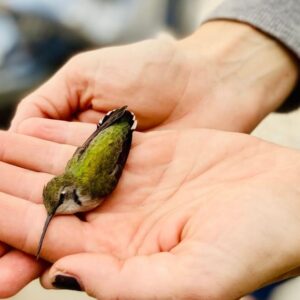
The Happinest Wildlife Rehabilitation and Rescue recently discovered how toxic red dye nectar is to hummingbirds [1]. The group recently took in several ailing hummingbirds suffering from symptoms such as lethargy and an inability to fly. Rescuers noticed the birds’ droppings all had a distinct red tint.
Suspecting the red dye in the commercial nectar given the birds previously, the rescue team began feeding the hummingbirds a diet of clear sugar water, as well as a prescribed protein nectar. Sadly, not all the hummers made it.
Fortunately, though, with rest and care, the majority of the birds returned to normal within 48 hours of rest and their new diet. The team at Happinest reached out to other rescue groups to see if others could corroborate their findings. Indeed, several animal rehabilitation organizations indicated they also experienced hummingbird sickness and death related to the red dye.
Happinest took to social media to spread the word and warn fellow hummingbird enthusiasts. The post went viral, with over 100,000 shares. Other rescues, bird-watching groups and animal lovers continued to warn others of the dangers of the red dye.
A lot of anecdotal evidence strongly suggests a connection between the dye and the harm being done to hummingbirds, especially considering many professional rescuers have reported the same health effects [2]. Why take the risk of harming these magnificent creatures by continuing to use red dye nectar?
Other Potential Hazards for Hummingbirds
Those who ignore the need for properly caring for their hummingbird feeder may do harm even if they refrain from using red dye. Hummingbird feeders require regular cleaning lest they become contaminated with black mold and other fungi that can harm these beautiful creatures [3]. Mold and fungus can cause lung infection and makes the birds’ tongues swell, leading to a slow, excruciating death from starvation.
When purchasing a hummingbird feeder, seek one that comes apart easily for cleaning. Once a week, remove the nectar from the feeder and wash it thoroughly with mild soapy water and a washcloth or sponge. Allow the feeder to dry before reassembling it. Weekly washes help prevent dangerous mold and keep birds safe.
How to Make Natural Nectar for Your Feeder
Fortunately, those who adore hummingbirds can easily make their own nectar for hummingbirds [4]. Simply mixing sugar and water alone is insufficient — the water must be brought to a boil to kill any bacteria.
Here are the steps you’ll want to follow to make the perfect sugar nectar for our beautiful feathery pollinators:
1. Bring 4.5 cups of water to a boil. Let it boil for about 2 minutes. Try using filtered, fluoride-free and chlorine-free water. Boiling will not remove fluoride, but it will remove chlorine, so I always suggest using filtered water that is free of these contaminants.
2. Take the boiling water off the heat and measure out 4 cups. Add 1 cup of unbleached pure cane sugar to the 4 cups of freshly boiled water. You don’t want to boil the water and sugar together as this can concentrate the mixture too much, which can be toxic to hummingbirds.
3. Stir sugar and water until completely dissolved.
4. Allow the mixture to cool thoroughly before adding it to a glass feeder.
5. Do not add food coloring, as the red color on most feeders attracts birds effectively (and red dye is toxic to hummingbirds).
The correct ratio is 1 part sugar to 4 parts water (aka. 1 cup sugar to 4 cups water). Also, make sure the sugar is pure cane sugar.
Hummingbirds cannot metabolize other sugars like those mentioned below. They can cause kidney damage/failure and a slow, painful death.
DO NOT USE:
– Dyes
– Organic/raw sugar
– Artificial sweeteners
– Honey
– Koolaid
– Juices
– Sports Drinks
– Brown Sugar
– Maple Syrup
– Any type of syrup
– Store bought nectar
What You’re Really Protecting When You Protect Hummingbirds
Given the beauty of hummingbirds, is it any wonder that humans have an interest in attracting them to their properties? And when we take the time to make sure we’re doing it right, we help keep alive a historically diverse and captivating bird species. Many myths and legends have arisen about this fascinating creature. In many areas of the Americas, storytellers spin yarns as colorful as the birds themselves.
In many Native American cultures, the hummingbird represents positive feelings and good fortune. In Cherokee tradition, hummingbirds serve as a symbol of improved health for those suffering any host of ailments [5]. One legend tells the tale of an old woman who needed a heavily guarded plant to survive. Only the hummingbird was fast enough to harvest the nectar and bring the woman back from the dead.
The Aztecs considered the hummingbird as a symbol of rebirth, and worshiped the bird as their god of the sun and war. The Mayans believed God created hummingbirds from the leftover bits of all the other birds he made. They also felt the very first wedding on earth was between two hummingbirds.
One myth surrounding hummingbirds is they lack feet. Hummingbirds do have feet, but they cannot walk, only shuffle sideways when perched. Hummingbirds lack a sense of smell, but they have very sharp vision, which is why the color red attracts them. Hummingbirds have fewer feathers than any other avian friends, which aids in their ability to fly so quickly. Their feathers are very compact, like a penguin’s.
Hummingbirds fly 30 mph — and during a dive, they can reach speeds as high as 60 mph when seeking a mate [6]. These avian Usain Bolts can flap their wings up to 200 times in one minute. Because hummingbirds spend most of the day hovering, they burn a tremendous number of calories, meaning they need to consume a lot of sugar water to keep their energy high.
Over 300 species of hummingbird exist, but the colorful birds only grace the western hemisphere [7]. Twice a year, hummingbirds migrate, covering up to 2,000 miles. The birds have incredible memories, allowing them to remember where their favorite food flowers are.
Hummingbird eggs are the smallest in the bird family at only half an inch long. They have a relatively short gestation period, requiring less than three weeks to hatch. Hummingbirds do not mate for life, and once the female lays eggs, she fights off the father and any other males getting too close to the nest.
These captivating birds have a beautiful and unique background, and we should take every measure to keep them thriving!
Help Hummingbirds Safely
Hummingbirds are fascinating to watch and to learn about, so it’s no wonder many people do what they can to attract them to brighten their patios and garden with their riotous colors. However, bird enthusiasts should exercise caution by avoiding commercial nectar containing red dye. By keeping our feathered friends safe, we can continue to enjoy their beautiful presence.




Unfortunately you are missing an ever more harmful problem in sugar now. GLYPHOSATE. It has been revealed that cane sugar companies are spraying their sugar cane with Glyphosate to hasten the drying process of the canes. Cane sugar is just as toxic as the GMO-Glyphosate sprayed sugar beets. Glyphosate is considered toxic in Europe. Toxic to everything.
How about promoting Organic flower seeds to attract Hummingbirds?
Remember, 80% of a Hummingbird’s diet is actually small insects.
Great idea Lena – yes, wild organic flowers to attract hummingbirds is what is also needed! The non-organic sugar is also concerning, due to glyphosate exposure.
Oh dear! Why not organic sugar?
If cane sugar is not PURE WHITE (which most organic sugars are not), it may not have been sufficiently purified to remove trace amounts of molasses. As we know, molasses is rich in iron; this is helpful to humans but is a toxin to hummingbirds in all but the tiniest, tightly monitored amounts.
1) Do you have any links you can post about how molasses is toxic in even tiny amounts? I have a friend trying to avoid glyphosate by using Costco organic sugar and she’s read online that it is okay to use. I’ve received varying opinions when I’ve talked to people from the Audubon Society on this subject. Some say to keep using C&H white sugar and some have said the Costco sugar has such a tiny amount of molasses that it is okay to use. 2) Also, as I understand it, it is not okay to wash hummingbird feeders with soap. What’s recommended is very hot water and just rubbing with a finger. I use a pipe cleaner or small bottle brush for the holes.
Molasses will kill hummingbirds, even if in small amounts. Only use pure cane sugar (not bleached). https://fieldguidetohummingbirds.wordpress.com/2012/08/15/search-of-the-week-is-molasses-ok-to-feed-hummingbirds/
Read above, about the danger of Glyphosate, which is used by mainstream cane sugar industry.
All non-GMO sugar cane is sprayed with Roundup/Glyphosate at harvest time to kill the cane which dries it out so it can be harvested earlier. There is a claim that the Roundup herbicide makes the sugar sweeter. What this process does is put Glyphosate herbicide directly into the finished sugar product. The only safe sugar is USDA ORGANIC sugar. It costs a few pennies more but is safe. As you already know all sugar beet sugar is GMO so it also contains Roundup/Glyphosate. Be safe use only USDA ORGANIC sugar and be healthy. Keep the birds healthy too. We use USDA ORGANIC sugar when we make up our hummingbird nectar.
A lot of the organic sugar is not fully processed to remove all of the molasses (hence why it is kind of brown). From what I’ve read, this is toxic to hummingbirds (hence why they suggest against using organic). This is just information that has been relayed to me from many hummingbird websites and protection agencies. I totally agree that conventional sugar likely has high levels of glyphosate. I am just not sure the way around this..
Everything we eat today has been modified in some form.
What ever happened to regular homesteading farming that is chemical free?
I feel the same Monica! I hope we all turn back to our ways of traditional food growing and such!
What about organic coconut sugar?
No, that is too high in molasses.
Ok I understand that it has to be inbleached pure cane sugar, but you also mentioned a prescribed protein nectar. Is there anything over-the -counter that we can use as well? If not, how does one come across a high protein nectar?
I am not sure exactly what the researchers used as high-protein nectar. I wouldn’t worry too much about that, just source out pure, unbleached cane sugar. Might need to do some digging on Google to find out exactly where to find that.