
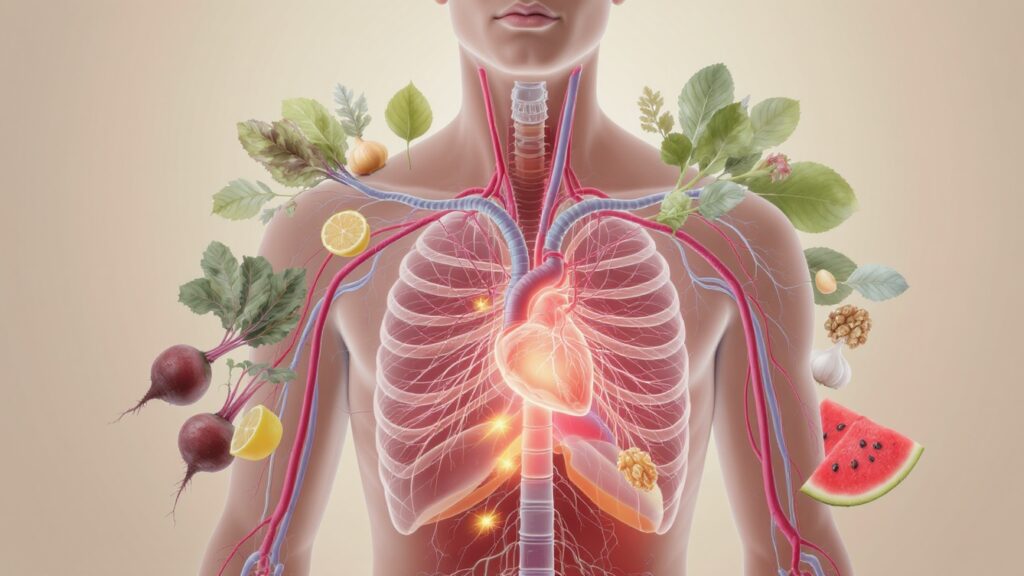
Blood circulation is what keeps everything in your body alive and functioning. It’s how oxygen, nutrients, and hormones are delivered to your cells… and how waste is carried away.
When circulation is strong, you feel it. Your energy is steady. Your brain is clear. Your skin has color. Your body feels warm and responsive.
When it’s not, things start to feel off in subtle ways at first. Cold hands and feet. Brain fog. Low energy. Slower recovery. Over time, poor circulation can contribute to more serious issues like varicose veins and high blood pressure.
And while there are many factors that affect circulation, what you eat every day plays a much bigger role than most people realize.
Certain plant foods contain compounds that support blood vessel function, reduce inflammation, and help your body maintain healthy blood flow.
Below are 10 of the most studied and effective ones to start incorporating.
What Is Blood Circulation (And Why It Matters)
Blood circulation is the continuous movement of blood throughout your body.
Your heart pumps blood through arteries, which branch into smaller vessels called capillaries. These capillaries deliver oxygen and nutrients to your cells. The blood then returns through the veins back to the heart.
It sounds simple, but this system impacts nearly everything:
- Energy production
- Brain function
- Skin health
- Muscle performance
- Cardiovascular health
When circulation is compromised, your cells simply don’t get what they need.
Signs of Poor Blood Circulation
Poor circulation doesn’t always show up dramatically. Often, it’s subtle at first
(1✓)✓ Trusted ResourcePubMed CentralHighly respected database from the National Institutes of HealthRead source:
- Cold hands and feet
- Numbness or tingling
- Fatigue or low energy
- Muscle cramps
- Varicose veins
- Slow wound healing
These are easy to ignore, but they’re worth paying attention to.
What Causes Poor Circulation
There’s rarely just one clear cause of poor circulation. In most cases, it develops gradually from a combination of habits, environmental factors, and underlying imbalances in the body.
Over time, these factors can affect the health of your blood vessels, the thickness of your blood, and how efficiently your heart can move blood throughout your system.
Some of the most common contributors include:
- Sedentary lifestyle
When you’re not moving regularly, blood flow naturally slows down. Muscle contractions help push blood back toward the heart, especially from the lower body. Without that movement, circulation can become sluggish. - Diet high in processed foods and sugar
Diets high in refined sugars, industrial oils, and ultra-processed foods can contribute to inflammation and oxidative stress, both of which damage the inner lining of blood vessels over time. - Smoking
Smoking directly damages blood vessels, reduces blood oxygen levels, and promotes arterial narrowing, all of which impair circulation. - High blood pressure
Chronically elevated blood pressure puts strain on artery walls, making them less flexible and less able to respond to changes in blood flow. - Plaque buildup in arteries (atherosclerosis)
Over time, cholesterol and other substances can accumulate along artery walls, narrowing the space blood has to flow through. This is one of the most significant drivers of poor circulation and cardiovascular disease. - Chronic inflammation
Low-grade, ongoing inflammation can damage blood vessels and interfere with normal vascular function. A combination of diet, stress, and lifestyle factors often drives this.
What’s important to understand is that these don’t act in isolation. They tend to reinforce each other. A poor diet can increase inflammation, which contributes to plaque buildup, which then impacts blood pressure and vessel function.
Food plays a meaningful role in this process, especially when it comes to reducing inflammation and supporting blood vessel health. But it works best alongside movement, stress management, and overall lifestyle habits that support your cardiovascular system.
How Diet Impacts Blood Flow
What you eat directly influences how well your blood moves through your body.
Certain nutrients and compounds support circulation in key ways:
- Nitric oxide production helps blood vessels relax and widen
- Antioxidants protect vessels from damage
- Anti-inflammatory compounds reduce stress on the vascular system
- Healthy fats and minerals support vessel flexibility and blood pressure
This is where food becomes powerful. Not as a quick fix, but as consistent support.
10 Best Plant Foods to Improve Blood Circulation
These are some of the most well-studied plant foods when it comes to improving blood flow and supporting cardiovascular health.
1. Beets
Beets are one of the most well-studied foods when it comes to circulation, and for good reason.
They’re naturally rich in nitrates, which your body converts into nitric oxide. This compound helps relax and widen your blood vessels, allowing blood to flow more easily and efficiently (2✓)✓ Trusted ResourcePubMed CentralHighly respected database from the National Institutes of HealthRead source.
This is why beet juice shows up so often in athletic performance research. When blood flow improves, oxygen delivery improves, and that impacts everything from endurance to energy (3✓)✓ Trusted ResourcePubMed CentralHighly respected database from the National Institutes of HealthRead source.
Even outside of performance, regularly including beets can support overall vascular function in a meaningful way.
2. Leafy Greens (Spinach, Arugula, Kale)
Leafy greens work in a similar way to beets, but they’re often overlooked.
They’re another major source of natural nitrates, along with minerals like magnesium that help regulate blood pressure and support healthy vessel function (4✓)✓ Trusted ResourcePubMed CentralHighly respected database from the National Institutes of HealthRead source.
Arugula stands out here. It’s one of the most concentrated sources of nitrates you can eat, which makes it especially effective for supporting circulation.
The key is consistency. These aren’t foods you eat once. They work best when they’re part of your daily baseline.
3. Citrus Fruits (Oranges, Grapefruit, Lemons)
Citrus fruits are known for their vitamin C, but what matters more here is how that vitamin C works in the body.
It helps protect the lining of your blood vessels from damage and supports the strength and flexibility of capillaries, the smallest blood vessels responsible for delivering oxygen and nutrients to your tissues (5✓)✓ Trusted ResourcePubMed CentralHighly respected database from the National Institutes of HealthRead source.
They also contain flavonoids, which have been linked to improved vascular function and reduced oxidative stress (6✓)✓ Trusted ResourcePubMed CentralHighly respected database from the National Institutes of HealthRead source.
4. Pomegranate
Pomegranate is one of those foods that consistently shows up in research around heart health.
It’s rich in polyphenols, compounds that help reduce oxidative stress and support the function of your blood vessels.
Some studies suggest pomegranate may help improve blood flow and reduce arterial stiffness, which is a key factor in long-term circulation issues (7✓)✓ Trusted ResourcePubMed CentralHighly respected database from the National Institutes of HealthRead source.
It’s not magic, but it’s one of the more targeted foods when it comes to supporting vascular health.
5. Dark Chocolate (High-Flavanol Cacao)
This is where quality matters.
Dark chocolate, specifically high-flavanol cacao, has been shown to support nitric oxide production (8✓)✓ Trusted ResourcePubMed CentralHighly respected database from the National Institutes of HealthRead source. That means better blood vessel relaxation and improved circulation.
But most chocolate on the market is heavily processed and stripped of these compounds.
If you’re using it for health benefits, you want at least 70% cacao, ideally higher, and as minimally processed as possible.
Done right, it’s one of the more enjoyable ways to support circulation.
6. Garlic
Garlic has a long history of use for supporting heart health, and modern research continues to support its role in vascular function and circulation.
It contains sulfur compounds that support nitric oxide production and improve blood vessel flexibility (9✓)✓ Trusted ResourcePubMed CentralHighly respected database from the National Institutes of HealthRead source.
There’s also evidence linking garlic intake to reduced arterial stiffness and improved overall vascular function (10✓)✓ Trusted ResourcePubMed CentralHighly respected database from the National Institutes of HealthRead source.
It’s one of those foundational foods that quietly supports many systems in the body, including circulation.
7. Ginger
Ginger has a warming effect in the body, and that’s not just a coincidence.
It supports circulation through a combination of anti-inflammatory effects and its ability to help blood vessels relax (11✓)✓ Trusted ResourcePubMed CentralHighly respected database from the National Institutes of HealthRead source.
It’s also helpful for digestion, which indirectly supports circulation by improving how nutrients are absorbed and used.
It’s subtle, but when used regularly, it adds up.
8. Watermelon
Watermelon is more functional than people give it credit for.
It contains citrulline, an amino acid that helps your body produce nitric oxide, which supports better blood flow (12✓)✓ Trusted ResourcePubMed CentralHighly respected database from the National Institutes of HealthRead source.
It’s also a source of lycopene, an antioxidant associated with improved cardiovascular health and reduced oxidative stress (13✓)✓ Trusted ResourcePubMed CentralHighly respected database from the National Institutes of HealthRead source.
It’s one of the lighter, easier foods to incorporate, especially in warmer months.
9. Tomatoes
Tomatoes are one of the most reliable sources of lycopene, which has been studied for its role in supporting blood vessel health.
Lycopene helps reduce oxidative stress and may improve endothelial function, which is essentially how well your blood vessels expand and contract (14✓)✓ Trusted ResourcePubMed CentralHighly respected database from the National Institutes of HealthRead source.
Interestingly, cooked tomatoes tend to provide more bioavailable lycopene than raw ones, so things like sauces and stews actually work in your favor here.
10. Walnuts & Flax Seeds
These are two of the best plant-based sources of omega-3 fatty acids.
Omega-3s help reduce inflammation and support the flexibility of blood vessels, both of which are important for healthy circulation (15✓)✓ Trusted ResourcePubMed CentralHighly respected database from the National Institutes of HealthRead source, (16✓)✓ Trusted ResourcePubMed CentralHighly respected database from the National Institutes of HealthRead source.
They also play a role in maintaining balanced blood pressure and overall heart health.
This is less about a quick effect and more about long-term support. Over time, these small additions make a real difference.
Other Plant Foods That Support Circulation
While the foods above are some of the strongest, these are also worth including regularly:
- Turmeric (anti-inflammatory support)
- Berries (high in antioxidants)
- Green tea (supports vascular function)
- Chili peppers (capsaicin may support blood flow)
The key is variety and consistency.
How to Add These Foods Into Your Daily Routine
This doesn’t need to be complicated:
- Add leafy greens and citrus to smoothies
- Use garlic and ginger in cooking
- Snack on walnuts or flax-based foods
- Add beets or arugula to salads
- Drink pomegranate juice or green tea
Small, consistent changes are what actually move the needle.
When Poor Circulation Might Be Something More Serious
If symptoms are persistent or worsening, it’s worth looking deeper.
Things like:
- Ongoing numbness
- Swelling
- Pain in limbs
- Underlying conditions like diabetes or vascular disease
These may require more targeted support beyond diet.
FAQs
What foods increase blood circulation quickly?
Foods rich in nitrates, like beets and leafy greens, can support nitric oxide production, which helps improve blood flow relatively quickly.
What vitamin is best for circulation?
Vitamin C and vitamin E are both important for supporting blood vessel health and protecting against oxidative damage.
Do bananas help circulation?
Bananas contain potassium, which helps regulate blood pressure, but they are not one of the most potent foods specifically for improving circulation.
How can I improve circulation naturally?
Focus on a combination of diet, movement, hydration, and stress management. No single food replaces these fundamentals.
The Bottom Line
Circulation affects every system in your body, whether you notice it or not.
The foods you eat can either support that system or slowly work against it.
By consistently choosing plant foods that support blood vessel health, reduce inflammation, and promote healthy blood flow, you’re giving your body a strong foundation to function the way it’s meant to.
It doesn’t have to be extreme. It just has to be consistent




Love this article. Is the garlic eaten raw?
Yes, raw garlic is the best!
Thank you so much for your article on circulation. I am going to start eating more foods to help with my varicose veins and three partially clogged arteries.
Thanks for stopping by!